"Many officials at Singha Durbar said the campaign was launched by developed nations to test the medicine, and simply refused to take it," Seema Pokharel, a second-year Bachelor of Nursing (BN) student at the Asian College for Advance Studies, said recounting her experience.
Pokharel was among 34 BN students deployed in the campaign at the request of the District Public Health Office (DPHO), Kathmandu. They were deployed in the field to distribute the medicine after all efforts to persuade the elites and the educated to take it failed miserably in Kathmandu Valley.
"Lower level government employees, security personnel and other members of the general public easily accepted the medicine and asked family members to take it also. But officials such as government secretaries and others refused outright to take the medicine," complained Pokharel, who was deployed to distribute the medicine within Singha Durbar, the government's central secretariat.
An official at the Ministry of Culture, Tourism and Civil Aviation even called up his family doctor to confirm whether he should take the medicine when volunteers tried to persuade him to do so. "He called his family doctor in our presence but refused to take the drug," Pokharel informed.
Chandu Khatri, another nursing student deployed in the MDA campaign at Singha Durbar, said it was hard for her to persuade top bureaucrats about the importance of the campaign, as compared to members of the general public. "Initially, we hoped that officials at Singha Durbar were aware already about the campaign launched by the government to eradicate the disease from the country. But we did not find it that way," she said.
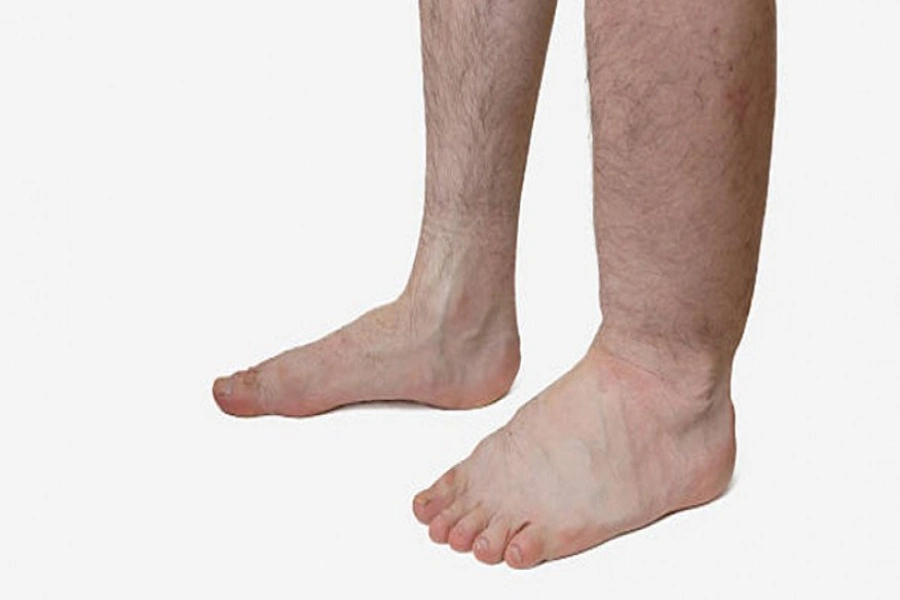
Elephantiasis is the second leading cause of disability after leprosy. A study conducted in the past showed that elephantiasis is prevalent among 23 percent of population of the Valley. The government of Nepal is committed to eliminating the disease from the country by 2020, as per its commitment at international forums.
Volunteers deployed to distribute the medicine in Kathmandu complained that the capital''s educated folks were uncooperative towards the campaign. "We found it tough to convince educated people," said Geeta Acharya, DPHO focal person for the campaign. The DPHO has now sought the help of the District Education Office (DEO) and the Ministry of Education to help administer the medicine across all schools and colleges in the Valley.
Sri Krishna Bhatta, chief of Kathmandu DPHO, said the urban population and the so-called elites are not supportive towards the campaign. "They think that elephantiasis does not occur among relatively well-off people. This is a misconception," said Bhatta. As a result the coverage of the MDA campaign in Kathmandu district is very low.
In the past also, Kathmanduites had not responded positively to the government's campaign against elephantiasis. Volunteers mobilized during a similar campaign some three years ago had complained that they were denied access to big shopping malls, apartment buildings and housing colonies.
So much so that some house owners in Kathmandu even let their dogs loose to chase away the volunteers. Private schools and colleges had also barred health volunteers from administering the elephantiasis drug to students last year.
Health officials believe many people are reluctant to take the medicine as they think they need not take it as the symptoms are not seen easily. "One might be infected with elephantiasis. But it may take 15 years for the symptoms to appear. Treatment of the disease is impossible once the symptoms appear," Bhatta warned.
Related story
Elephantiasis virus found in Narayansthan and Kushmisera in Bag...


_20220312102535.jpg)