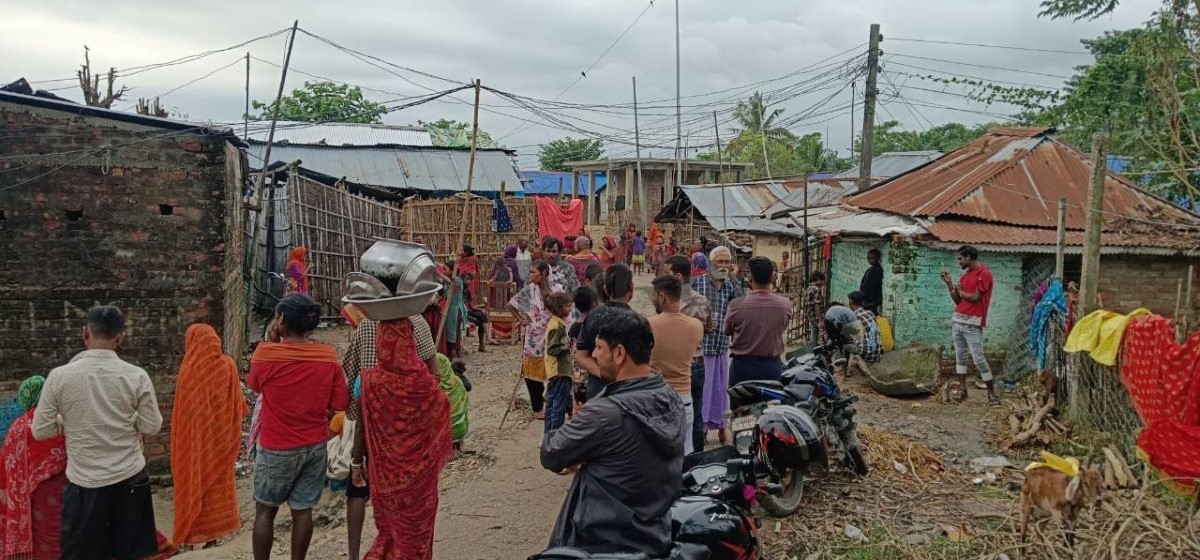
“The death toll has reached 71 today. But many cases in remote areas from previous dates are only now being reported. So, we can´t say all the additional fatalities are of today,” Chief District Officer (CDO) of Jajarkot Resham Bahadur Panday said.
The combined death toll in Jajarkot, Rukum and Salyan districts has now crossed 80 since April, with eight in Rukum and five in Salyan, Panday said.
There have been reports about scarcity of medicines in the villages of Jajarkot but the Epidemiology and Disease Control Division refutes the reports. “All 25 sub-health posts and seven health posts in the district have sufficient medicine. But we can do nothing if the patients refuse to even take jeevan jal (rehydration solution),” Director of the Division Dr Senendra Raj Uprety said.
CDO Panday concurred, maintaining that all the health centers have sufficient manpower and medicines to deal with the problem, but he did not rule out an increase in the death toll figure due to the time lag in reporting.
Health officials believe that the outbreak, with 1,200 reported cases in Jajarkot since April, is due to contamination of drinking water and poor sanitation. “We have brought two samples of water from the district and have found a very high concentration of coliform bacteria (more than 180 colonies per ml) upon tests,” said Senior Public Health Officer Dr Pranaya Kumar Upadhyaya.
“The sample of rice we have collected from the district is OK,” Dr Upadhyaya added, refuting suggestions that the outbreak might also be due to the rice distributed by the government.
Dr Upadhyaya says much of the problem is the tendency of locals not to go to health posts when they fall sick. “As the houses are scattered in the hill areas, health workers cannot reach every house. They [villagers] are also reluctant to take medicines,” Dr Upadhyaya added.
“We are also creating awareness about sanitation to tackle the problem,” Dr Upadhyaya disclosed.
Related story
Jajarkot section of Mid-Hills Highway in sorry state