How much uncertainty can people live with—individually? collectively? With the country buffeted by one after another wave of modernization and globalization, Nepalis have been forced to revisit even their most strongly held personal values. Collectively, they are living through one of the toughest periods in the country’s history. Nothing is certain. After the egregious failure of the Constituent Assembly last May, people eagerly await new polls to exercise their franchise again, to bring a final end to years of uncertainties. Regrettably, there appears to be no immediate relief in sight.
Uncertainty breeds frustration. Where do they go from here? Youngsters fret: Do they stay back in the country and jeopardize their career prospects, or do they take the plunge into the unknown to maximize their earnings? Old people complain: Why are they being left to fend for themselves after spending all their lives worrying over proper upbringing of their children? [break]
People are so fed up with lack of progress in the country since the fall of monarchy in 2008, many already long for the certainties of the yore. All the symbols they once identified with are gone. The vacuum is uncomfortable in itself; the dread of ‘what next’ is excruciating.

sphotos.net
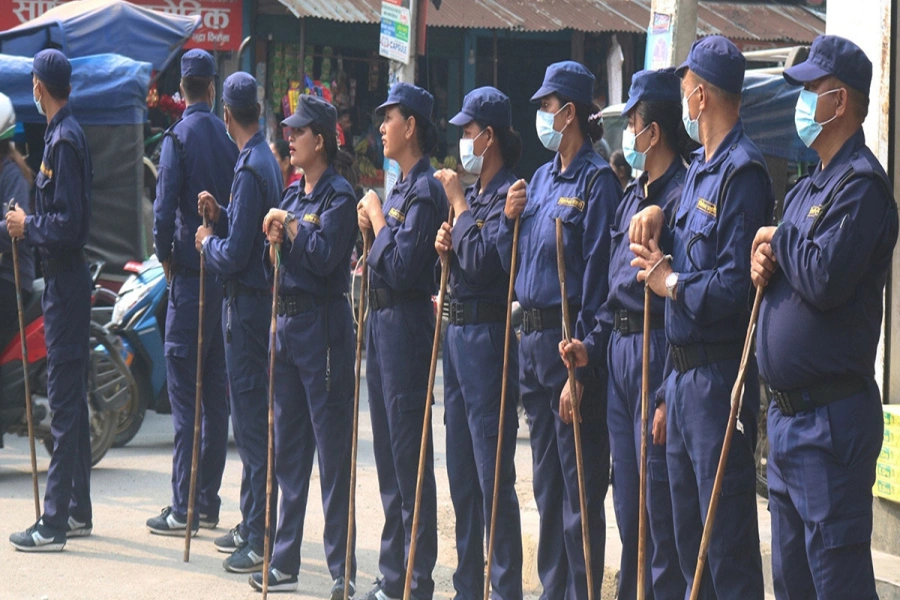
This frustration that is born of the realization of a highly uncertain course ahead boils over once a while. Criminal activities and substance abuse are at an all-time high. The recent uproar over the hike of cooking gas price suggests people are on the edge, ready to explode at first provocation. The ongoing protest against violence on women which has entered 50 days and which continues to enjoy the support from all sections of the society can also be interpreted as a manifestation of people’s rage against a dysfunctional state that is incapable of protecting its own people.
Of course, life itself is uncertain. The human body is a complicated machine, operating with a delicate balance between thousands of interrelated cogs. Any one of these can stop functioning any time, bringing the whole machine to a grinding stop. A person can go from a pauper to a billionaire in a minute, and vice versa.
The remarkable thing is that some people are perfectly at home with these uncertainties, while others fret over them endlessly. Psychologists believe both nature and nurture play a part. Children of anxious parents are likely to be anxious themselves; likewise, children raised in dysfunctional homes are much more prone to anxiety than those raised in healthy homes. Extrapolate this over effect over millions of families and you get a measure of the nation’s mood.
As much as we might like to believe we are perfectly rational beings, we are at heart highly emotional creatures, liable to making decisions, even those which prove to be the most important in our lives, based on our transient moods. We choose everything, from the biscuit we munch at sun up, to the person we have to spend the rest of our life with, to our election candidate more on how we feel at the time of the decision, rather than on the option’s intellectual appeal. The great aura Prachanda carried with him when he first emerged from the hiding in 2006 made many people overlook even his egregious failings as a leader. American women reported ‘feeling’ Barack Obama was the right candidate for the US President in 2012, even when they had very little knowledge about Democratic policies.
This reliance on our gut instinct to make sense of the turbulent world we live in is not necessarily a bad thing. It has been demonstrated that those with good understanding of their emotions do better in the course of their lives than those who rely on hardcore reasoning to get ahead. The people with higher emotional quotient are also likely to be more adept at handling the unpredictability of modern living. And who minds a degree of unpredictability? After all, don’t uncertainties spice up our otherwise humdrum lives?
The writer is the op-ed editor at Republica.
biswas.baral@gmail.co
Related story
Unknown group tries to torch two vehicles in Birendranagar