The envoy said that all the political changes that have occurred since 1951 have taken place due to the people´s desire for change in Nepal. "The issue of 12-point understanding, which is raised time and again in Nepal, was also not done by India. India had used her goodwill to help political party leaders to reach an agreement," Prasad told Republica. [break]
Then SPA and the Maoist party had reached the 12-point understanding in November, 2005 in New Delhi that subsequently ushered in a peaceful democratic movement in April, 2006. "All the political parties, which were fighting each others, were ready to reach an agreement for peace. They wanted to restore democracy. The changes in Nepal did not come because of us," the envoy said. "Whenever people in Nepal strived for changes, we just extended our support to them. And it is totally wrong to say that whatever social and political changes have occurred in Nepal they were all caused by us."
"Nepal witnessed changes in Nepal in 1959. Democracy was established and election was held. But in 1960 Panchayati system was introduced. All those who supported democracy then were termed as puppets of India," he said. "And after 30 years, Nepal witnessed a movement. Again there was an election in 1991. Democracy was restored."
The envoy said there is a section of people which tends to say that all the changes that have occurred in Nepal are brought about by India. "Do you agree that the 1991 change was brought about by India? Was the kind of movement that took place in Nepal in 2005 caused by us?" he questioned.
The envoy also refuted that there was the hand of India in the formation of Khil Raj Regmi-led Interim Election Council and subsequent political appointments including the appointment of Lok Man Singh Karki as the chief of the Commission for the Investigation of Abuse of Authority. "Everyone is aware that all these appointments are made by the [High Level] Political Committee. Do you think that the leaders of the political parties which are fighting each other would just do things as signaled from outside? All these things moved forward through the Constitutional Council, Supreme Court and Cabinet and endorsement from the President´s Office. Where is our hand in this? I feel this is all like a myth," he said.
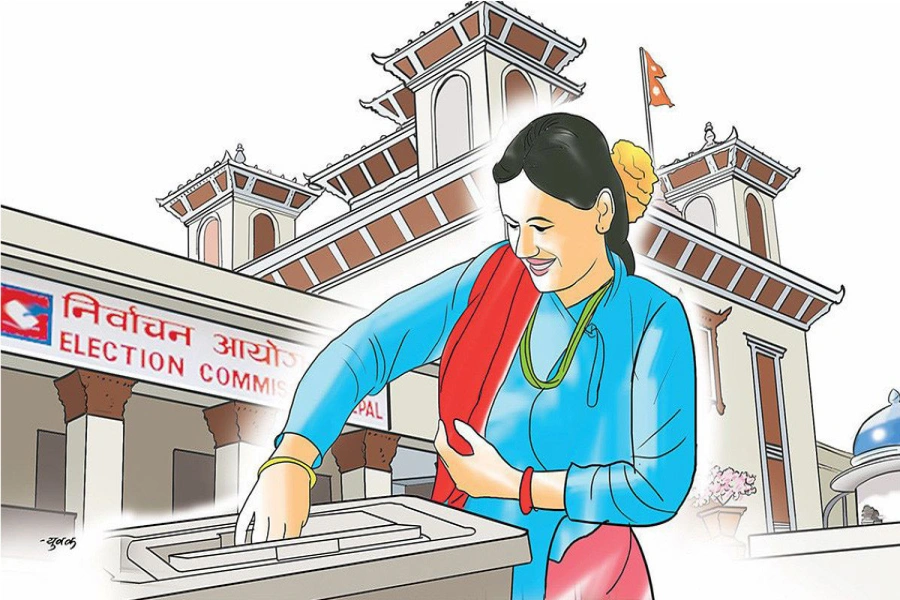
The envoy, who is soon completing his diplomatic assignment in Kathmandu, also expressed confidence that election will be held anytime soon in Nepal. "Why not? There is no alternative to this," said the envoy when asked if he thinks elections will be held.
The envoy said that since the issue of federalism was completely new to Nepal there has been little delay in the promulgation in the new statute. "But this problem will be resolved eventually. This is because all leaders have committed to the idea that this problem should be resolved democratically. Election is a must in democracy," he said.
The envoy also brushed aside the speculations from various quarters that there could be revival of monarchy or establishment of military rule. "Human civilization is changeable. It is human desire to move forward instead of backward. The geographical location of Nepal also matters a lot in this regard. While China is one side, India is on the other side," he said. "The economic conditions of both the countries are strengthening. Both the countries have witnessed social changes. Obviously, there will be positive impact in Nepal as well."
Related story
Buddha Air to begin direct flights Pokhara – Nepalgunj – Pokhar...