The topic under discussion revolved around the tribulations of being a woman and then a male speaker treated us to a monologue on his views, the gist of which was that 'there has never been a better time to be a woman in Nepal and that they should consider themselves lucky.' The fact that no one played the devil's advocate could well have been a case of trying not to provoke an argument against the joyous backdrop of a wedding celebration. However, it also got me wondering whether the people present there were giving him the benefit of doubt or even worse, actually agreeing with the speaker's sentiment. I had a serious reservations with his assertion but I was not about to be embroiled in an argument with an opinionated drunk.
The effects of alcohol aside, in terms of being a sweeping generalization, it was a statement that could probably sweep the Bagmati clean with its inference, and that is no mean feat. Presumably, the speaker was referring to the preferential treatment and the resulting opportunities now available for women due to the government's policy of positive discrimination.
For the uninitiated, positive discrimination or affirmative action (in some countries) is a policy of addressing structural inequalities in the system and it involves taking steps to increase the representation of women, minorities and those who have been discriminated against in all spheres of life and provide them with access to resources and opportunities. It usually manifests itself in the form of representation quotas and certain degrees of preferential treatment, especially with regard to economic opportunities.
If positive discrimination was the basis for his judgment, then it was seriously flawed. I'm sure this policy has its fair share of advocates and detractors. I happen to be one of the latter – not really a seditious revolutionary but more of an armchair dissenter.
My grievance against it lies not in the obvious fact that it stacks up the odds against men in an increasingly competitive nation (which it invariably does) but simply in the fact that it does not benefit the core demographic for which it was intended.
There exists within every disadvantaged community an elite group, if you will, that reaps the benefits of various policies. It is no different for gender-based positive discrimination. Not everyone from the majority groups are born with a silver spoon and not everyone from the minority groups are underprivileged. It holds back qualified women, often undermining their individual accomplishments and replaces old wrongs with new wrongs, thus becoming counterproductive to its own cause of achieving true social equality and empowerment.
If not positive discrimination, I can only assume his opinion was based on some other fact and that he has seen or heard something that has evidently escaped everyone else's attention. What could it be? It does stretch the imagination to think of things the government has really done for women. Don't get me wrong, we are good at paper exercises, it's just the implementation bit that we're lacking in.
There have been some commendable efforts like the all-women public transport, reservations in employment (armed forces and civil service), tax breaks on buying property, maternity kits in public hospitals (of dubious quality, I'm told), priority in foreign scholarships, representation in the political sphere, among many.
We have made giant strides towards empowering women through education; the ratio of girls to boys in schools and colleges is not as lopsided as it used to be before. This however has more to do with a change in social attitudes, education and globalization rather than due to direct effects of government intervention.
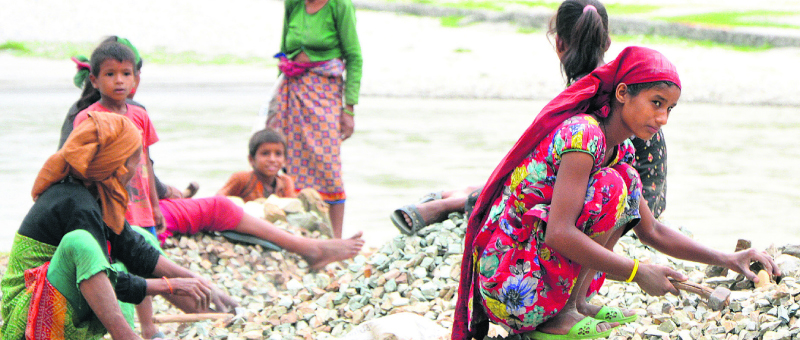
The advantages are pale in comparison to the odds that are stacked up against women. Violence against women shows no signs of abating. Women continue to face, on a daily basis, the indignities of travel on public transport, are victims of dowry and sexual violence, struggle to obtain citizenships for their children on the basis of maternity, still await justice (bonded laborers), and are generally treated unfairly in all aspects of life.
And these are just the points off the top of my head, without any specialized research. The stark reality is that reservation or not, quota or not, a woman's opportunities or lack thereof is a very subjective concept which still hinges on the most unfair lottery of them all: the accident of birth. The resulting factors that accompany it such as caste, ethnicity, schooling, economic status, geographical location go a long way to determining a women's prospects.
Yes, we do have the requisite laws, policies, plans, guidelines, numerous international conventions that we are party to, but as anyone with a rudimentary understanding of Nepali society and administration will know, it is akin to chalk and cheese when it comes to implementation of the said policies. The 13th Plan, for example, is very general and vague on the issue of gender equality and inclusion. There is also the vexed issue of citizenships in the name of mothers, or the equal right to ancestral property.
The list is endless. We live in a culture where irony permeates our social fabric; we worship women as deities but still subject them to subordination in every sphere of life. The Interim Constitution has promised equal treatment for all regardless of gender but we are a long way away from it. In the meantime, I would really recommend that those prone to making such statements take off their rose-tinted glasses. One swallow does not a summer make.
gunjan.u@gmail.com
Related story
#Sexploration Episode 3 Discussion on Gender Markers