

Nepal and India enjoy excellent bilateral relations, and share very close and multidimensional ties. The relations are further strengthened by the age-old ties of history, culture, tradition and religion. Our unswerving commitment to the principles of peaceful coexistence, sovereign equality, and understanding of each other’s aspirations and interests has been the bedrock of our relations. [break]

In pursuance of our solemn desire to cultivate cordial ties with its neighbors, Nepal has been not allowed its territory to be misused by undesirable elements against its neighbors, including India, and expects the same kind of reciprocity and assurance from the neighbors. The Government of India, Indian political parties and people of India strongly supported peaceful People’s Movement in April 2006 for the restoration of democracy. The GOI welcomed the promulgation of the Interim Constitution and the formation of the Interim Legislature in Nepal on January 15, 2007, the Constituent Assembly elections on April 10, 2008, and the peace process as well as subsequent political developments.
While talking about Nepal-India relations, we have come to understand that we have to work together in some new areas. The recent natural calamities in Western Nepal and Uttarakhand of India, caused by incessant rains and floods, have resulted in loss of precious lives and destruction of properties. Citizens of both Nepal and India have died. We appreciate the rescue and rehabilitation of Nepali citizens in Uttarakhand by the Indian authorities. The disasters have also starkly reminded us of the necessity to work together in new areas like climate change.
After the popular uprising of April 2006, Nepal has been in a prolonged transition. We are in the threshold of holding election for the second Constituent Assembly, after the failure of the first elected body to deliver a constitution incorporating popular aspirations of the masses expressed during the uprising.
The goal of popular people’s movement was to establish democratic system based on social justice and economic prosperity for the people, on the one hand, and to bring the armed Maoist combatants into peaceful democratic political process, on the other. In this direction, the restored parliament of 2006 made some remarkable decisions for the consolidation of newly achieved democratic rights and freedom.
Likewise, the much awaited CA election was held on April 10, 2008 which elected the 601-member Constituent Assembly. The Constituent Assembly took a number of historic decisions, including abolition of Monarchy and declaration of Nepal as a Federal Democratic Republic, thus paving the way for ending the 10-year armed conflict.
The Constitution Assembly was one of the most inclusive forums in the history of Nepal which included significant number of people from various ethnic groups, Dalits and women. More than 33 percent seats were secured by women. Likewise Dalits, Madhesi and other minority groups also secured substantial numbers. It was the first time in Nepali history that people of such diverse backgrounds in terms of gender, ethnicity, class, cultures, castes, religions and regions were allowed into the highest decision making body of the country. In order to consolidate democratic system, abolish exclusionary practices and ensure equal rights and opportunities for the people, the unitary system of governance was replaced by the federal system.
However, the CA, which had generated much hope and expectations among the people, failed to fulfill its assigned task. Differences between various political parties and their inability to reach consensus on a number of pertinent issues, and lack of flexibility among them, ultimately led to its dissolution. The demise of the first CA pushed the country into further uncertainties. However, the major parties once again engaged in sustained dialogue and have now reached an understanding that the only way to end the prevailing political crisis is election for another Constituent Assembly. The parties agreed to amend the Interim Constitution, and formed a new non-party government under the leadership of the Chief Justice.
The most important task at this stage for the government and political parties is to hold the election on stipulated date in a free and fair manner, and in a fearless environment. They have to bring disgruntled parties and groups into the election process through dialogue. I am sure, through our collective efforts, we can generate enough trust and get their confidence and ensure their participation in the election.
Holding election on the scheduled date will help institutionalize democracy and draft a new democratic constitution. Although the differences that emerged in the last CA among the major political parties on a number of pertinent issues remain, I hope the demise of the previous CA has given us a lesson. But the last CA also made certain achievements. It made some decisions, arrived at some agreements, and developed some understandings. My Party strongly feels that we have to own up and build upon those decisions, agreements and understandings. It will help the next Constituent Assembly draft the constitution within the stipulated time.
My Party strongly believes that only holding election can enable us to consolidate peace and establish democratic society. We are also convinced this is the only way to end the unstable political environment and create conducive environment for much needed economic development and social transformation. I believe that only through a process of regular consultation, understanding and consensus among political parties can we complete these tasks.
Therefore, broader understanding on national, political and developmental issues and mutual trust and confidence among the parties and leaders, particularly among the major parties, are the need of the hour. Only through this can we resolve the most delicate and contentious issues and hold the election on slated date in a fair and peaceful environment.
It is our view that the future government should focus on economic development by enhancing the roles of public, private and cooperative sectors, which are the key players in our society; their proper mobilization will result in the much desired economic growth and sustainable development. We must focus on economic growth but also address the distribution aspects of the economy. The new constitution should incorporate progressive agendas. At the same time, some fundamental rights of the people in the areas of education, health, shelter, food security, drinking water and employment have to be guaranteed.
Special consideration has to be given in the Nepali context as the country recently witnessed a decade-long conflict, and is still confronting various forms of social contradictions. A parallel drive towards progressive socio-economic transformation will be essential for equitable growth and development.
It can consolidate our centuries-old social harmony. Still, there are some forces bent on continuing with status quo, which are not conducive to consolidating durable peace, democracy and social justice. In this process, not only will strengthening the system of consultation and building political consensus be necessary, there is also a need for continued generous support from members of international community, including India.
We have to strengthen professionally weak state structures such as security agencies, bureaucracy and other state organs. They must be involved in planning and setting priorities and improving the quality of life of the people. If security situation is stabilized and democratically elected government can mobilize societal forces for national collective action in areas of CA election, drafting of new constitution, peace-building, economic development and social reform, we can make tangible progress in those areas.
As we are still passing through a transitional period, building national consensus and maintaining it among main political parties on major political and socio-economic issues is the need of the hour. For this, all of us have to be honest and dedicated. To draft and promulgate a new democratic constitution by encompassing people from various walks of life and transform Nepal into a peaceful, stable, democratic, prosperous and harmonious society are the major tasks before us. To achieve them, all national forces must come to the same table. To achieve this, we need cooperation and solidarity of our international friends, particularly neighbors like India.
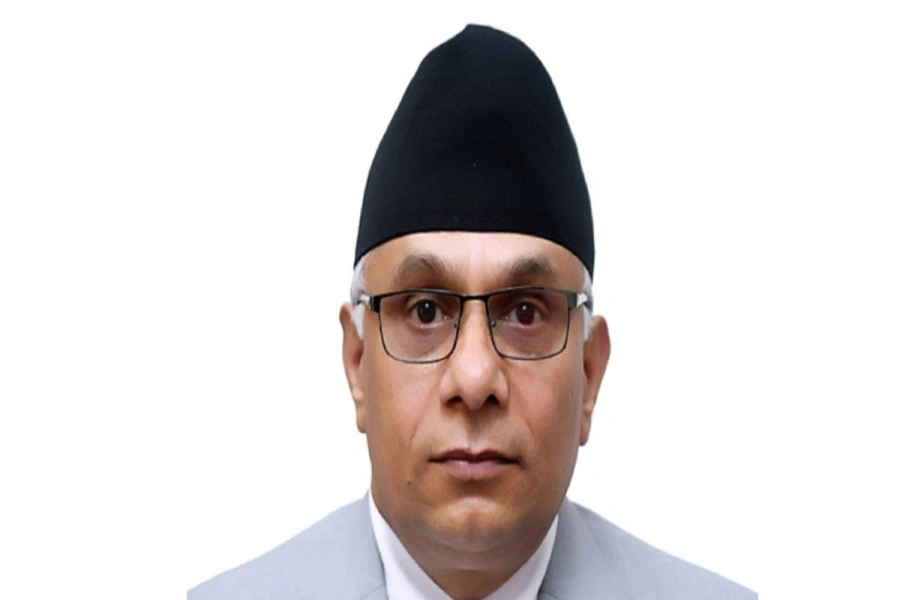
Edited excerpts of the
statement by the former Prime Minister and Senior CPN-UML leader at the Indian Council of World Affairs on July 26
Related story
ICC T20 World Cup: England set Nepal a challenging 185-run targ...








-1200x560-1774606010.webp)


