Hundreds of youngsters, possibly computer wizards in the making, were queuing for tickets to the exhibition. Scores were coming and going in a seemingly unending flow. But none recognized the man who has, so far, connected 42 villages in Nepal’s hills to the World Wide Web.
Half-an-hour ago, he had answered a call from this scribe saying he had reached Padma Kanya College and would reach Bhrikutimandap “soon”.
Twenty-five minutes after that conversation, this scribe called him again to make sure not to lose the man to be interviewed in the crowd. “Mahabirji, where are you? Are you in a car or on a motorbike?”
“On foot,” was his curt reply.
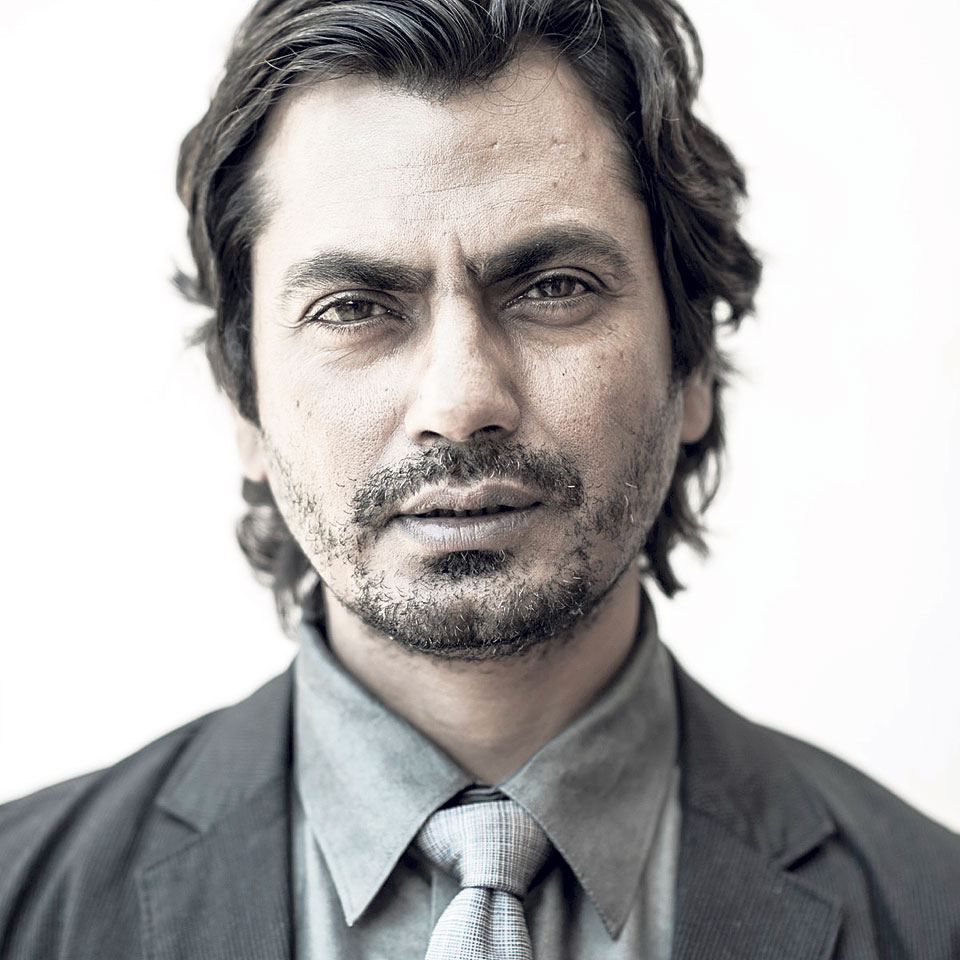
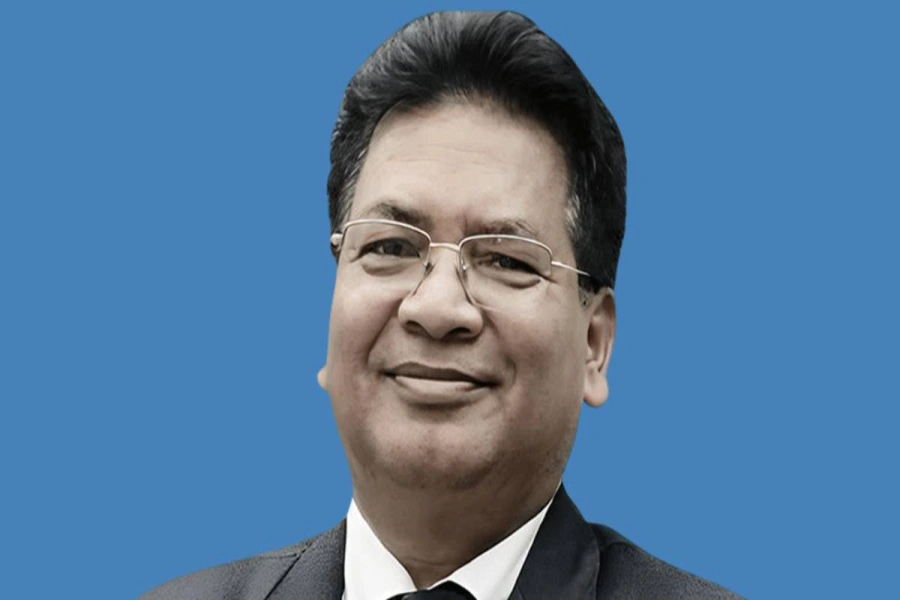
 Mahabir Pun
Bikash Karki
Related story
No network in Jumla, but fear not—Minister promises ‘Free WiFi’...
IT STARTED WITH A DREAM
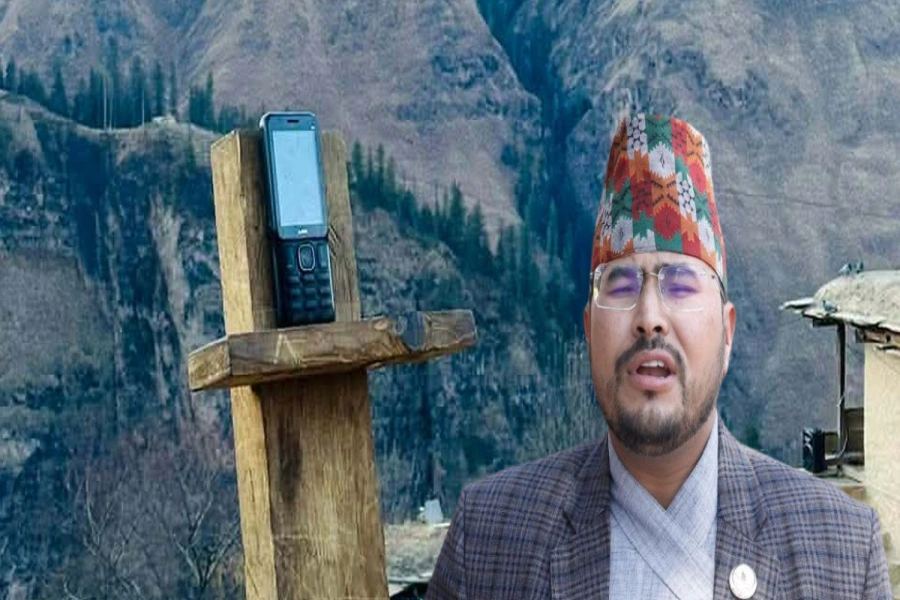
Self-effacing and dreamy at times, the 2007 Ramon Magsaysay awardee Mahabir Pun, best known for introducing Wi-Fi technology to the villages of Nepal’s western hills, said bringing internet connectivity to the villages was never his objective.
“My primary goal remains providing better education and health facilities to villagers,” said Pun sipping black tea in a noisy teashop along Exhibition Road. “I started working on connectivity in 1997 after realizing that without communication my goal would not be fulfilled.”
Pun, 54, was born in Nangi village, Myagdi district, in western Nepal. He grew up in the hilly slopes of the village grazing cattle. The village is a seven hour climb from the nearest road, and has no telephone connection. Pun studied from grade one to seven in the local Himanchal High School, which would later become the site for his first Wi-Fi project. He saw pencils and paper for the first time in the seventh grade, and textbooks in the eighth grade.
While doing a Bachelor in Education at the University of Nebraska, Pun was gripped by a dream which has continued to fuel him to undertake tough treks in the hills where he lives for the better part of a year. He dreamt of improving health and education services in the hills to make sure that the newer generation have an easier time than he had.
He returned to Nangi in 1992, over two decades after leaving it.
To fulfill his dream, Pun started out by helping upgrade his childhood school in Nangi to High School level. He also worked to start income-generation activities in the village with the support of friends and several organizations.
“But for the success of these works, communication proved indispensable,” he said.
When Pun came up with the idea of bringing internet connectivity to the school in 1997 after the school had been donated four computers by students of Billanook College in Melbourne, Australia, he had no technical know-how of setting up an internet connection.
It took seven years, several failed tests, and the help of volunteers from Belgium, Finland, US, New Zealand, England, Singapore, and Canada for the students of Himanchal High School to finally be able to exchange emails with the Australian students.
By now, Pun has managed to introduce wireless internet technology to villages in Myagdi, Kaski, Parbat, Makwanpur, Dolakha, Palpa, Bajhang and Khumbu districts.
 Mahabir Pun
Bikash Karki
“The villagers are now able to communicate with their family members abroad using messengers, emails and internet phones,” he said. “Also, they can communicate for free within the network comprising the villages using the local VOIP (Voice over Internet Protocol) system.”
With his five full-time staff, Pun is currently working to do the same in 19 villages in Rasuwa, Nuwakot, Gorakha, Tanahun, Myagdi and Baglung districts, under World Bank assistance. He is also working to connect 13 villages in Mustang, Myagdi, Parbat and Kaski under assistance from the Asia Pacific Tele-community.
WI-FI FOR HEALTH, COMMERCE, EDUCATION
Thanks to internet connectivity, three villages in Myagdi and the Gaurishanker Hospital in Dolakha enjoy a tele-medicine facility from Model Hospital in Kathmandu.
“Health workers in Dolakha receive live trainings from Model Hospital,” he said.
Pun plans to connect Jomsom Hospital to Model Hospital once his project to introduce wireless internet in Mustang succeeds.
Work is also underway to provide digital interactive textbooks to students in the villages, based on textbooks subscribed by the Department of Education.
“We are also working to set-up an e-library where villagers can get useful information on agriculture, health and job vacancies, among others,” he said.
Virtual ATM machines have also been introduced in the villages with tourist inflow.
“Tourists can undertake credit card transactions from the internet through this facility,” he said.
In the near future, the villages will also benefit from remittance services via the internet.
 Mahabir Pun
Bikash Karki
REQUESTS FOR CONNECTING VILLAGES
With the word of his work spreading across the globe, Pun has received requests from Nepali people residing abroad to install wireless internet technology in their villages.
“Nepalese living in the UK, US and Japan have asked me to introduce the technology in eight villages where they come from,” he said.
Pun has also started a “One Dollar a Month” campaign which has already collected US $ 16,000 from Nepalese living abroad. With this, he plans to expand internet connectivity to villages in Ramecchap district in eastern Nepal, and some villages in Madhes.
The technology introduced to the hills by Pun depends on electricity mostly supplied by the national grid, though the relay stations have solar power.
“Some villages are lucky to enjoy uninterrupted power as they have micro-hydro,” he said, grinning. But such villages are few in number. These days, most of the villages employ the powered hours to the fullest to benefit from the internet.
Pun spends little time with his family in Kathmandu. He has a wife and two daughters.
He arrived in Kathmandu earlier this week and is leaving on Sunday.
“Probably to Mustang,” he said, when asked about his destination. This isn’t hard to understand as the soft-spoken man still has many, many villages to connect to the World Wide Web.