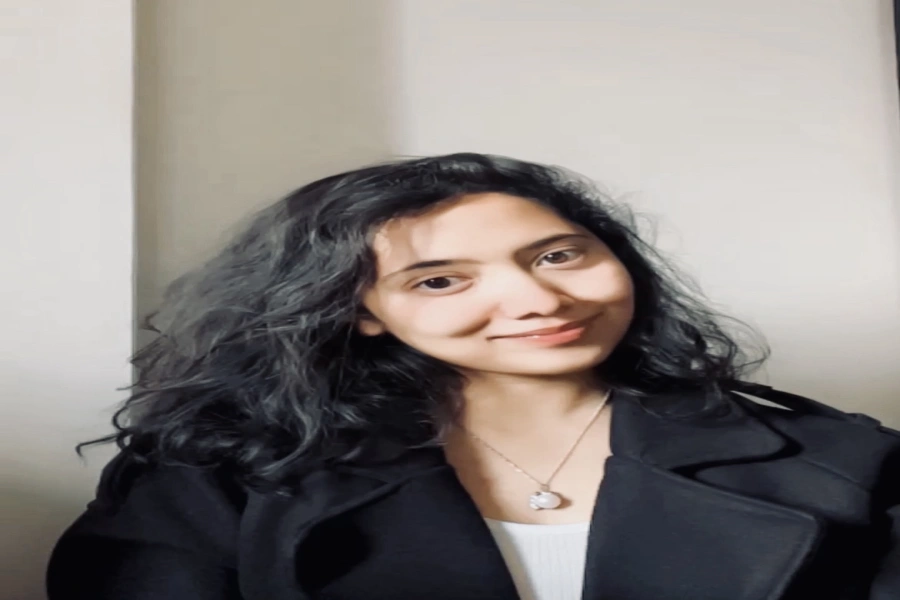
Rumi Rajbhandari, 27, is Project Coordinator at Burn Violence Survivor Nepal, an NGO working for the rehabilitation and counseling of burns victims.
Related story
Hamro Kitab: For the book-loving society

Sachi Mulmi sat down with her about the books she has read and her reading habits. Excerpts:
I used to stay in a hostel as a child and we had to study rigorously. Hence, I used to read textbooks more than anything. When at home, I used to wonder why my cousins, who devoured comics and fiction, read those kinds of books. I never understood their liking for them. So you can say I'm more into course books. But of course, this has changed now.
What kinds of books grab your attention?
Because of my friends circle, I indulge myself in books like Summer Love, autobiographies like I am Malala, China Harayeko Manchhe and even Chetan Bhagat's books. I've found that coming home from a hectic time at the office, these book serve well as light readers. So I've become a fan of them. Besides that, I look for words of encouragement and inspiration in books and read anything that motivates me in doing my work.
Is there a way of instilling reading habit in one? What does your experience say?
I definitely think there is. During my school years, I stumbled upon a book from the series of Sweet Valley Twins which was apparently very famous then. I read and halfway through it, I realized that I couldn't go any further. This had me stay away from such works for a long time. But there are a lot of interesting books out there that will make you a reader.
Your work gives you many instances to work with women who have experienced bad to worse. Don't their stories need to be heard?
There are books concerning women's issues, but every issue therein is different from one another and needs equal attention. There are fewer books written about such kind of cases in Nepal. And yes, their stories need to be heard. We can follow the example of an NGO who released a booklet about trafficked girls about how they were trafficked, their experiences and such. These not only let people know of what's happening but will also, in a way, direct towards a solution to these kind of problems.
What kind of books have you found to be impactful in this case?
People tend to digest stories and fiction easier than those that are labeled as real-life events. Fiction can make someone feel comfortable about what's happening because it's fiction. But it doesn't mean that what happened should be ignored. Hence, I find that fiction that has solutions for real-life problems have a lot of impact.
How can books contribute to making society a place where no harm is inflicted on anyone?
There are a lot of things that we don't know about and don't try to understand. In the cases I've had to deal with, I've found that people have many deep issues but don't know how to express them. If you keep on suppressing them, it's going to come out in bad ways. We're fortunate in that way as we're given many opportunities to understand our problems and articulate them with each other in many ways. Books help in this sense because it helps you face your problems and deal with them sooner when things can still be saved.