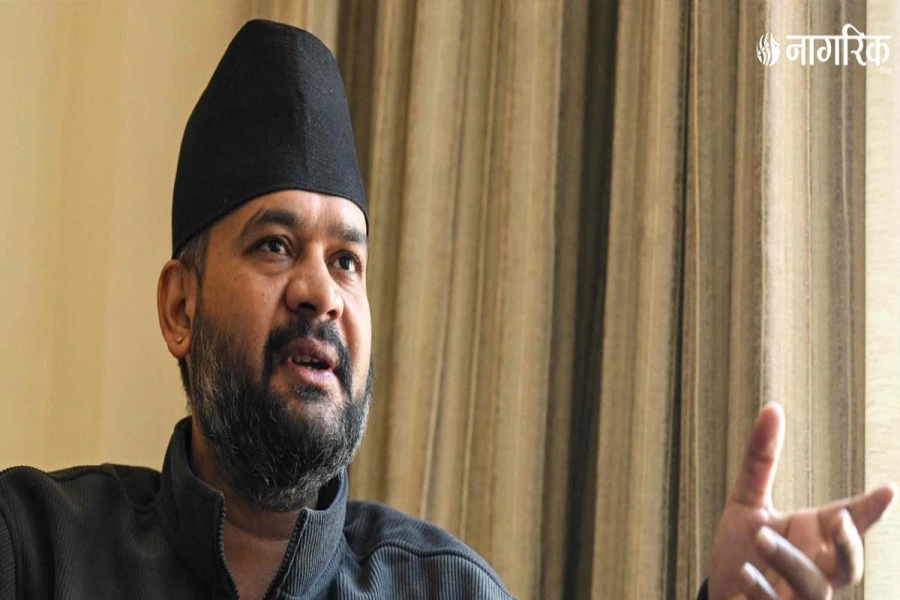
However, Manandhar doesn’t want to forget his experiences, which opened new chapters in his life.[break]

“I felt I could do something after I was out [of rehab],” he said.
Manandhar, who now is the president of Alcoholic Recovering Team Nepal, is not the only one. He, with others, works to make people aware of the negativities of alcohol, and also has a rehab center in Bhainsepati where he says he sees a shadow of his past.
Though Manandhar, in a short time, realized his dependence on alcohol and escaped without harming himself, people have gone through worst stages.
Ravi Maharjan, 24, a former alcoholic, began drinking from a young age, and got addicted by 14.
“Growing up in a Newar family, it was a part of the culture,” he said.
Dr Bishwa B. Sharma, a psychiatrist at Medicare Hospital, said that in some cultures, alcohol is an essential component and is socially acceptable. But it takes a wrong turn when people use it excessively.
Maharjan worked in construction after dumping school and started his day with a drink.
“It worked as painkillers, too,” he said, which reduced his stress and pain from work.
But after years of drinking, Maharjan said the effects were apparent—swollen face and body shivers, to name a few.
Dr Ganesh Gurung, an orthopedic surgeon at Bir Hospital and the general secretary for Physicians for with Social Responsibility Nepal, cited these as the results of excessive alcohol.
After a person is dependant on alcohol, they develop a tendency to drink more, and when they try stopping, they face various psychiatric problems like anger, depression, and body shivers, Gurung said.
He pointed at the acetylic and methyl component of alcohol, which gradually produces the microsomal enzymes, which are the drug metabolizing enzymes in the liver that increases alcohol resistance. Alcohol thereby produces various long-term effects in the brain and nervous system, impacting the person’s work performance, memory, and intellectuality.
Sharma also listed the mental health problems that alcoholism invites. He said the effects to be “multidimensional.”
He said mentally disturbed people tend to be prone to alcohol. “Mental disease is a predisposition to causative factor for alcohol dependence,” he said.
However, Sharma said, mental disease and alcohol, sometimes, coexist independently. “Alcohol causes mental illness and it aggravates alcohol.”
Manandhar consented.
Drowned in his addiction, he disassociated with his business and left it to shatter. He cared less about his family and indulged himself mostly in drinking. Not sane while drinking, Manandhar confessed that he even tried to throw his daughter from the window.
His wife, Shova Manandhar, sitting next to him, who also helps him with ART Nepal’s coordination, adds.
“We never thought he’d be out of this.” She also shared about his mood swings and depression.
But life changed for Manandhar and Maharjan after they made a will to fight alcoholism.
And Dipu Rauniyar, another former alcoholic, shares the same notion. He also started drinking and became addicted, tried the rehab as well as the Alcoholics Anonymous meetings at Dashrath Rangashala.
In a closed room in one of the sports facilities, a group of alcoholics and former alcoholics gather weekly to share their stories, express their feelings and find ways to get out of addiction.
At the AA meetings, Rauniyar, 28, who now owns a store at Bhimsensthan, said that the space gave him ample opportunity to express his feelings to others who passed through similar circumstances.
“It wasn’t only me,” he said, referring to other people at the meeting with the same problems. He said he could have never done this staying home. “I’d tell myself that I’d decrease the limit of alcohol but that wouldn’t be possible,” Rauniyar said.
Forums like the AA meetings give the alcoholics and recovering addicts a company and a support system, which makes them stay away from alcohol, Sharma said. “It’s a harmless method,” he said. “However, this isn’t a universal remedy.”
Gurung believes that rehab is important, but there are other good and bad methods that people tend to use. He noted the rising use of medicines that makes people vomit after alcohol intake, and said that these could have various side effects.
“There should be a conducive environment where alcohol abusers should be convinced and made aware of the negative impacts of alcohol,” he said.
Sharma added that alcohol-related problems are complex and thus requires “customized treatment plans,” which are dependent on the person’s personality, disease history, drinking pattern, and social milieu, and motivation to start a fresh beginning.
And determination and a desire to start afresh is all it takes. “It’s like a wish,” Maharjan said. “If you think you can do it, you really can.”
Related story
Paragliding pilot found under the influence of drugs and alcoho...










-1776353206.webp)