It happened again, and tragically, it might not be the last time.
Once again, a citizen—a public bus driver on duty—immolated himself out of despair and rage after what he perceived as unfair treatment by a traffic police officer in Tripureshwor.
It is the second such incident.
A few months ago, another citizen died after setting himself on fire following a heated dispute over a bike parking fine issued by an officer belonging to the Kathmandu Metropolitan Police.
In the aftermath of the latest case of self-immolation, some members of the House of Representatives demanded answers.
Some of these interventions highlighted the importance of preventing such incidents and questioned why they are recurring so often.
Others questioned the way law enforcement agencies, in this case the traffic police, behave and intervene in such situations.
There is definitely a question mark over how arguments, or even quarrels over alleged road-rule violations, escalate so quickly and so tragically.
When I learned about this second incident, I immediately wondered how a heated argument could possibly degenerate in such a way.
There is no doubt that law enforcement agencies, especially those with a relatively limited law-and-order mandate, such as the traffic police and metropolitan police departments, must do a better job of de-escalating difficult situations before they become worse, more dangerous and potentially lethal.
Around the world, law enforcement agencies already have proven playbooks for dealing with such situations.
But is there a tool or approach to tackle rampant inequities, inequalities and injustices?
Because while it makes absolute sense to focus the current debate on better, more professional and, importantly, more humane law enforcement practices, it is equally important to look at the issue from a different perspective.
A question is therefore warranted: Is it a coincidence that these two recent incidents involved two citizens from historically marginalized groups?
Law Commission makes ‘Law Drafting Guidelines’ public

Two months ago, in July, during the parking dispute, it was Ganesh Nepali, a citizen belonging to the Dalit community, who set himself on fire.
This time around, the deceased was a 25-year-old member of one of the most marginalized Indigenous nationalities, the Tamang community.
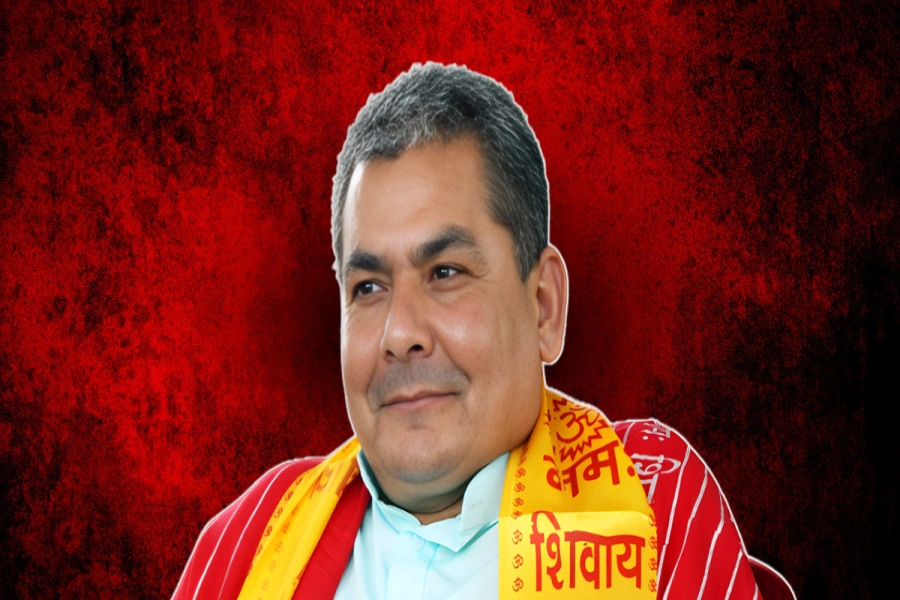
Arjun Dong Tamang was stopped while driving a bus.
Apparently, the victim had previously used driving licenses issued in other people's names.
Indeed, there was some confusion about the real identity of Mr. Arjun Dong Tamang.
So far, the details remain patchy and scarce.
Surely, a thorough investigation will follow, perhaps even an official inquiry that will break down all the phases and details of this tragedy.
We will have to wait before the full event can be reconstructed in granular detail.
Yet it is paramount that we also start a conversation about the profound structures of society, with its high degree of inequality—an historical legacy that traces back centuries of domination and exploitation and is still perpetuated today.
Even more worryingly, these historical patterns of injustice are still transmitted from generation to generation.
It is a reality that youths from certain communities have no clear path forward that can assure them even a modicum of security and a dignified life.
If you are born into historically disadvantaged communities, the odds, almost inevitably, are against you.
It starts at an early age, with children from these groups having few options beyond attending a public school system that, unfortunately, remains generally of abysmal quality compared with the education offered by private institutions.
Certainly, there are exceptions.
Children and youths from Dalit, Muslim and Indigenous communities, together with other young people from economically disadvantaged families regardless of their background, can shine and succeed thanks to public schools that offer good services and are run by competent and passionate administrators.
Yet, unfortunately, the norm is different.
In the job market, many low-paid professions are taken up by youths who never dreamed of going to university because their life circumstances never allowed them to dream big.
And let's not forget that attending college or aspiring to become a social worker, lawyer or engineer should not, in the twenty-first century, be seen as an unattainable goal.
We should take for granted that each child and youth might have different interests and inclinations but, nevertheless, each of them should be in a position to make informed choices about their careers.
Each should have a chance to assess all the options available to them and then choose.
The real problem is that, for far too many, the options are far too limited and narrow.
In many instances, the best scenario is to become a barista and then go overseas to work in the hospitality sector.
If you are less lucky and life circumstances are tougher, there is a high chance you will end up in the construction sector or driving trucks and buses.
Correctly, in the debate that ensued after this latest tragedy, some members of the House of Representatives underscored the despair factor.
Some MPs questioned why so many youths are so desperate that, in extremely emotional situations, they decide to pour gasoline on themselves.
The sad reality is that there is no de-escalation blueprint for dealing with despair rooted in hopelessness.
Many citizens, especially young people, are having difficult times every single day, and their level of stress might be beyond normal comprehension.
Unfortunately, these cases might occur again.
They are just one of the symptoms of an unjust society that struggles to deal with historical grievances.
Unless and until the nation finds the strength and the will, both at the political and societal levels, to face this complex scenario, more of these incidents could happen.
What really matters is not normalizing these tragedies or accepting them as inevitabilities that, no matter what, are unstoppable.
Let's be clear: It is not that, in the short term, it is not essential to find ways to minimize the possibility of these incidents recurring.
Of course, ways must be found.
At the same time, if a bus driver uses a fake or incorrect identity in order to work, or if a violation of road rules occurs, law enforcement authorities cannot stop doing their job.
It is important to state that inequalities and injustices must be addressed in the strongest possible manner, through both effective policy interventions and collective reckoning.
But the rule of law and its just and fair application cannot be neglected or overshadowed by other considerations, even if those who allegedly breach a rule are having a tough time in life and the fault for their circumstances belongs to the system and wider society.
Tackling centuries-old patterns of discrimination and injustice must be a priority for the country.
Then, in the short term, practical solutions, also based on common sense, must be found.
Whatever emerges from the ongoing investigations can be used, if there is will and determination on the part of the authorities, to reduce the chances of future road-rule violations leading to self-immolation.
But the harder work will be to ensure that all the youths of this nation have a fair shot at determining their own lives, rather than being dragged by an unequal system into a struggle for survival through despair.







.jpg)