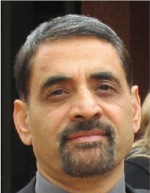
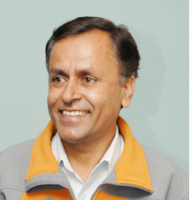
He clearly remembers the destruction caused by the earthquake in 1990 BS (1934).

“I was at Hanuman Dhoka then, and I felt very good when it was shaking because I didn’t know what it actually was,” he said, laughing. He recalls enjoying the shakes, rattles and rolls until the houses around him started falling. Reaching home, he found his grandmother under a corrugated sheet of their rented home. Following the earthquake, “That was the time I realized what scarcity was all about.”
Brought up in a religious family, he used to stay at the Narayan Temple near the Narayanhiti Royal Palace, now Narayanhiti Museum, and collect the offerings made by the worshippers there.
“I didn’t submit any money to my father when he asked me about such offering, and would rather hand every paisa over to my grandfather,” he says excitingly. “If someone would offer a 50-paisa coin in those days, we took it as a full moon itself,” He adds.
“I got into poetry and writing because I was sensitive to the distress of the society,” Vaishnav said. He believes that one’s greatness is solely dependent on the sacrifices and not on greed. Having a lot of knowledge of literature, he believes that enlightenment does not depend on the bookish knowledge he got but his opportunity to be in touch with all the great people around him, like Maha Kavi Laxmi Prasad Devkota, Natya Samrat Bal Krishna Sama and others.
Bal Krishna Sama, Govinda Bahadur Malla “Gothale”, Dharma Raj Thapa, Siddhi Charan Shrestha and other legends were his colleagues during his involvement in the movement for democracy. They wrote likewise in the Sharada Patrika and took part in the formation of Radio Nepal established by the government of Nepal.
“We worked at Radio Nepal voluntarily for many months before we started getting official salary,” he reminisces.
During his heydays, he claims that there used to be a justified version of handling information in the printed media.
“The media is all about doing justice to the event, but this sense has vanished these days,” he says. In those days, he remembers the saying that they used to follow, which went like, “If we can justify that the article is for the benefit of the country, we are to be spared the highhandedness of the authority.” He then recalls the incident when one of his friends who had to face a hearing in front of the then King Tribhuwan because of a fabricated story about the royal family.
Vaishnav, gifted as he is, is still contributing to Nepali literature by writing plays and forewords to books.
Related story
Cut Down on Public Holidays