Usually in Kathmandu I go about my daily business commuting across the city to my office with only a few curious stares. It is accepted that I am working here and I feel like I have meaning and purpose, something to contribute. My local neighbours, shopkeepers and colleagues always make me feel welcome, and I appreciate their inclusion of me into their communities. Would they be so kindly welcomed into my home country of England?[break]
In Pokhara, however, I feel different. Tourists totter around with invisible monetary symbols shining above their heads like halos, here more than most places. I feel like a bideshi (foreigner). It’s an uncomfortable feeling which stems from the inequality between my position and the locals. I am on a holiday with money to spend on having a good time, they need my money to making a living, in off-season the need is even more noticeable. I cast my mind back to Christmas 2011, where these same streets bustled with tourists, mainly affluent Nepalis and Indians, all looking happy and excited at the prospect of celebrating the foreign culture of Christmas and New Year, just as I look forward to playing Holi. I thought about the stark contrast to these now unfilled streets.
Set on the lakeside is a most picturesque bamboo bar with a circular structure and comfortable, cosy cushions. This should be a busy, bustling hangout for travellers; I try to make sense of its emptiness. When my friend’s traffic light colored mojito arrives, a story is revealed. This bar is run by a foreign couple who have not provided cocktail making training to their staff. As my friend tries to return her dissatisfying cocktail, the cook comes to talk to us. She explains that if we return the cocktail worth NPR 400 ($4.22), then the two members of staff who work there will have to pay for it themselves from their meagre salary of NPR 4,000 ($42.00) per month, which is the amount that I will pay for five nights’ accommodation in my Pokhara hotel. The stark contrast of our lives is so apparent I can almost touch it, and my friend is faced with the moral dilemma: Whether to pay herself, or to let the two staff members pay for her unwanted traffic light cocktail.
The female cook goes on to explain about her life in a friendly chitchat. She is careful not to reveal her untouchable dalit caste, which I recognise from her surname. Although the caste system was abolished in Nepal over 50 years ago, it’s still very much alive. So I am not at all surprised that she doesn’t volunteer this information. Who would? I liken it to my grandfather who changed his Jewish surname after World War II. The word is full of discrimination based on names and what they supposedly represent.

newshour.s3.amazonaws.com
The cook’s husband left her 13 years ago when their son was just a month old. One year later, she adopted an orphan who had been abandoned by his parents. She has a kind heart. The cook, like many other women abandoned by their husbands or widowed, has not re-married and has worked hard to provide both of her sons with a better life than she has had. I admire her strong and brave attitude towards life that circumstances and society have pushed her towards. Now she not only works as a cook in the kitchen at the bamboo bar, she also sleeps there by herself at night as a security guard. The open layout of the bar makes me think about whether I would be brave enough to do the same. This place is basically her life.
The cook presents us with written instructions for making cocktails that she had received. They are written in Nepali English with the word ‘mix’ substituted for the word ‘muddle’. It’s like a comic cocktail-making script. My friend agrees to pay for the traffic light cocktail, which I am not surprised at, and advises them to check out mojito making instructions on google, which will not be an easy task. I finish my beer, which is always a safe bet, though this place has left a bitter taste in my mouth. We say good-bye to the cook and the untrained barman, knowing that while we are sleeping safely in our comfortable hotel beds tonight, the cook will be sleeping here on her own.
The author is a Volunteer at
Volunteer Service Organization
louise.belinfante@gmail.com
Related story
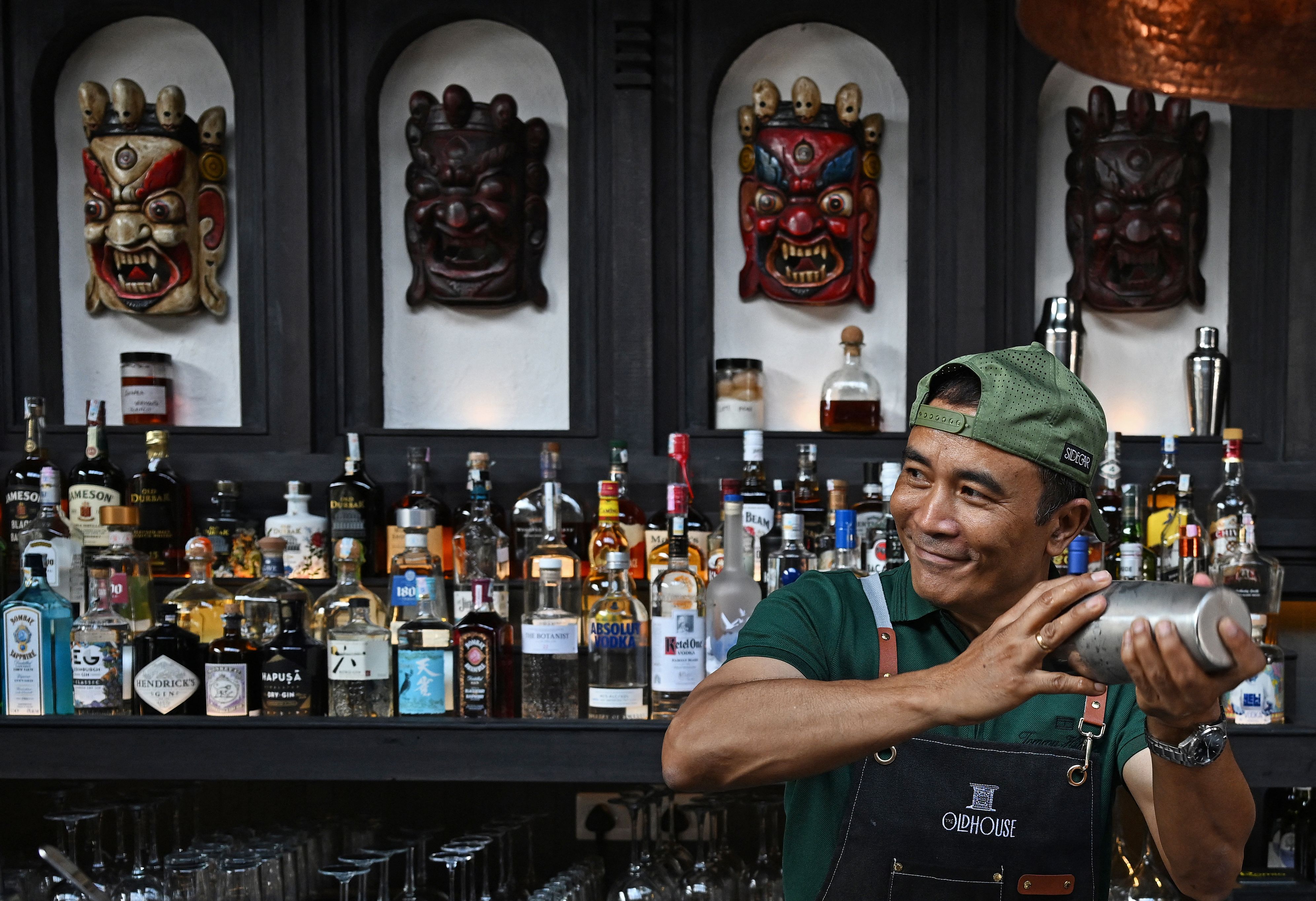
Raising the bar: Nepal's emerging cocktail culture


-1781882999.webp)