

In an exclusive interview with Republica, the genius explains his love for celluloid and what keeps him going even after three decades of movie making.
Theater, photojournalism, documentary, filmmaking; your favorite art form?
I believe in living in the moment and every experience makes you better. Yes, I have tried a lot of medium but it has just made my life that much richer. Like, when I was doing photo journalism, I got to travel and it sort of opened my eyes. I saw India that I never thought existed. Our subcontinent is not homogeneous, wherever you go you get a taste of new culture, new experience. Learning is a never-ending journey.
Fiction or nonfiction?
Cinema first of all is a language and you can use it to portray fiction as well as nonfiction. In fiction you enact the situation using actors; same can be said for nonfiction as well.
When I made documentary on Ustad Bismillah Khan, he was enacting in front of my camera. In documentary you are handling actuality and real people but in fiction you’re recreating same realism but in a controlled situation. Both are equally enriching.
Working with actors and non actors.
Sometimes non-actors are unbelievable, they don’t have any preconceived notion and morph into the role effortlessly. I have worked with stars, but I’m only interested in the actors not their glorified names.
Film casting is very important and should be unbiased. If an actor or non-actor looks the part, I think 70% of work is done.
In my experience, you need to befriend your actors, don’t put them on a pedestal or abuse them. Luckily for me, all my actors so far have been pliable, I’m lucky in that aspect.
What enchants you about filmmaking?
For me, experience of time is the most beautiful aspect of movie making. We live in time but somehow we are detached, we don’t feel it. Cinema has that incredible quality to manipulate, compress and portray time. You can tell a story of 1000 years in two hours or narrate an experience of one hour in three hours. Composing the timeline is challenging as well as exciting.
Do you position yourself in relation to your audience?
The audience’s reaction means everything to me. I’m not making a home video but a professional cinema, where lot of time and money have been invested. I need an audience, I share my story with them and I learn from them. I’m never nervous during festivals, but I’m very jittery before the day of release. All of them have paid money to be there, they are not invited audience. Its box office, I do get tense. Film to be honest, is a culmination of art and commerce. Sometimes it can become art, but it has huge commercial elements.

Do you choose topics consciously?
Yes, I consciously choose my subject and I think it’s very important to have definitive theme, one that you believe in. We live in a very troubled time, there’s total intolerance everywhere, from religion, politics to culture. We human as a race are dividing people, dividing culture. That’s why I made the conscious decision to make the movie “Moner Manush” based on the philosophy of a great saint Fakir Lalan Shah. He was a very secular, liberal person.
Films beyond Bollywood, your thoughts on regional films?
Bollywood is larger than life but it’s not the only celluloid representation of India. It belongs to the culture of local people. Like I said we are very heterogeneous -- multilingual, multi racial. Our subcontinent’s beauty is its myriad culture it posses, and I think cinemas should assimilate rather than alienate culture. So promoting regional films and telling the world about our culture is very important.
The most important factor in filmmaking.
Script is the backbone of a film. That’s where your real homework lies, you decide everything on script. I do improvise but not more than 30%; it might involve slight alteration, say if an actor finds it hard to emote or enunciate some particular dialogue, apart from that I have a detailed outline for movie in mind.
Technology and competition.
The advent of technology has made the art of filmmaking accessible to everyone, and if you have talent it’s not impossible to achieve your dream. There’s no lack of opportunity, it is everywhere, but how you create your own niche in this huge crowd of audio/video exposition is crucial. So learn the craft and use the technology to your advantage. I personally try and keep myself updated; I remember it was huge news when I edited “Yatra” on my laptop.
In fact one of my future plans is to make an independent movie with my handy digital camera. It’ll be experimental and very personal.
Looking back on your career, have you ever just sat back and thought to yourself, “Wow, I was lucky”?
Gosh, no! It’s been a lot of hard work and keeping an open mind. I’m my own harshest critic and appreciate any suggestion, critique that comes my way. I guess one needs to develop a scientific mindset, only than you can understand the cause and its effect. Something our politicians need to work on, for without criticism, you cannot progress. It restricts your area of knowledge; you become a frog in a well.
Suggestion for aspiring filmmakers.
Be prepared to work hard, there’s no easy way out. Learn your craft, take your time. Even if you are full of ideas, it’s the execution that makes all the difference, makes or breaks a story. When my daughter said she wanted to be a director, I told her to work with me, learn the nitty- gritties. Don’t just become a managing director who manages a good cameraman, scriptwriter or cinematographer. Learn the basics and then build on it.
Ghose’s films, “Paar” and “Yatra” will be screened today at Kumari Cinema Hall, Kamal Pokhari at 12:30 and 4:30 pm respectively. While his other film, “Moner Manush” will be screened at the same venue on February 1 at 4:30 pm.
Related story
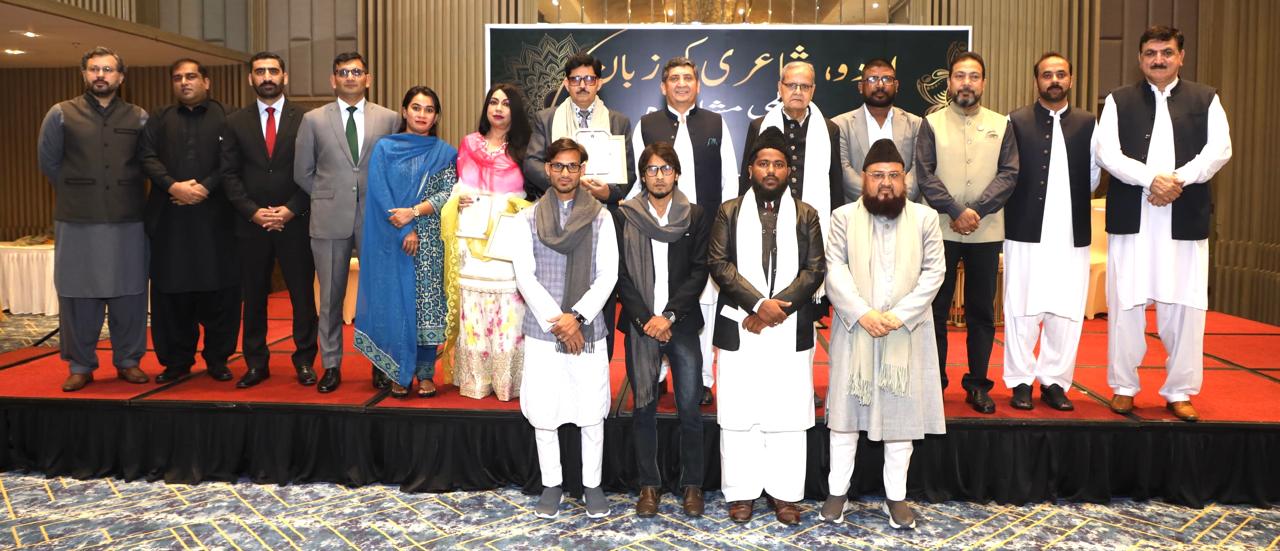
Pak embassy organizes poetry symposium — Aalmi Mushaira: Urdu,...









-1782782519.webp)


