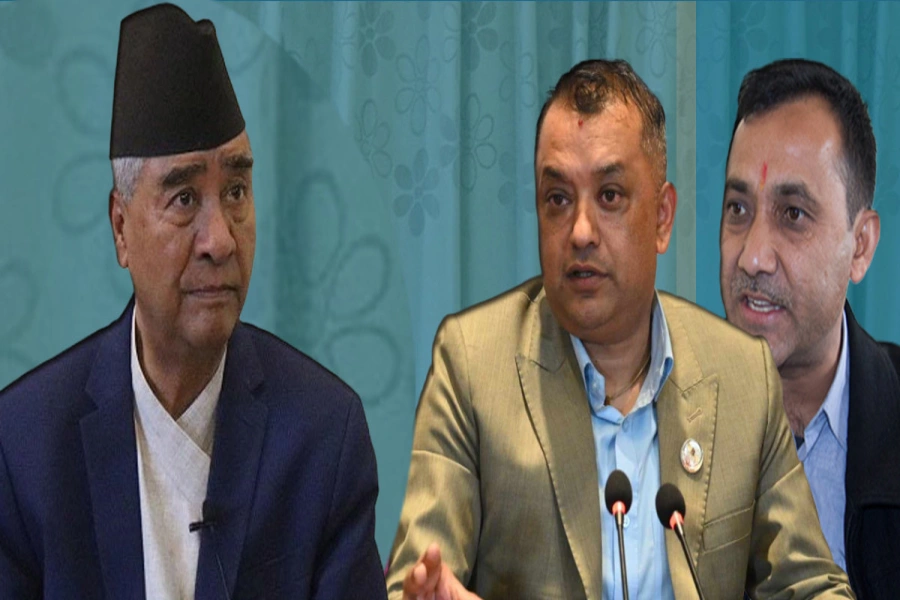
You must have noticed stories related to politics and crime in Nepali media, especially in newspapers and online portals, quoting anonymous news sources. They are either quoted as “a highly placed source”, “experts” or “a source seeking anonymity”. Normally, the quotes from “unnamed sources” are important statements, sometimes forming the heart of the story.
In more than half a decade of active journalism, I have come across such sources time and again. I have tried my best to minimize such news sources. But there were times when I couldn’t complete my story without quoting “anonymous sources”. [break]

Glogster.com
In case of newspapers, it is not that hard to come up with stories based on unknown sources, but doing so for a TV feature or report is tough. There is no alternative to a sting operation to expose something, or waiting to reveal the facts. But sting operations are considered unethical or risky.
Recently, I did two in-depth reports for BBC Sajha Sawal—one on how government registered medical clinics issue fake medical reports for migrant workers, and another on National Identity Card. In both the cases, I met several government authorities and private entrepreneurs who didn’t want to speak “on record”. It forced me to delay my report, taking me almost two months to find the right bytes. And finally, I got some.
While preparing for these reports, I met almost a dozen government officials and private entrepreneurs. Only a few dared to speak on record. Even former directors didn’t speak the truth on record, because there were chances of him/her getting other lucrative government jobs in the near future.
As a journalist, I find it amazing when top officials, even secretary-level bureaucrats and ministers, share information “off the record.” In some case, I have even lost my temper. Why do secretaries, top cops and ministers have to hide their names to speak the truth? But they always do. No one wants to land in controversy by speaking the truth, so they frame their “standard” answers. These answers are no more than illusions for readers, viewers and listeners.
Recently, I met a top cop and a senior bureaucrat, both at unofficial meetings. They explained to me that “the national identity card” project is being delayed by political leaders as they don’t want their earnings to be transparent, specifically Madhesi leaders, whose “fake” vote banks will be undermined by it. But they refused even to say anything in front of the camera.
A big question always strikes my mind: Do such “off the record” statements have any truth, or are they just false allegations? If so, why are journalists writing news based on false allegations and quoting those unknown sources?
In the case of the abduction of Bhakta Man Shrestha, Director of Bharatpur Cancer Hospital, all the unidentified news sources were proven false. They had indicated that the Maoists were behind the abduction, but Shrestha pointed to other people as responsible for his abduction.
While filing the news on Shrestha’s abduction, I too was told time and again by top police officials that the Maoists were behind it. Each time, they asked me not to “quote” them. As it turned out, the Maoists were not behind the abduction.
When I see news pieces quoting such “sources”, I personally feel they are trying to avoid hard work. Rather than looking for various sources, it becomes easy for them to complete the story with unidentified sources. It also undermines the “credibility” of the news.
This decreases the credibility of both the paper and the journalist, and undercuts the value of the story itself. Many times these quotes are used only to support the author’s own views. Sometimes, they are also used to pass off views (that presumably the author agrees with) that come from disreputable sources.
Shrestha’s was a completely fake news. Such was also the case with Anuja Baniya in 2011. The fake story of the benevolence of the woman, whereby she returned millions of rupees she had found, grabbed the headlines of major national dailies. Even the President made a call to the lady “thanking” her for her honesty.
These things happen because reporters use unknown sources or are just plain lazy to carry out the research.
A good journalist should dig for information, go in-depth. They should quote “unknown sources” only as a last resort. Anonymity is important in journalism. Dogged pursuit by reporters and well-placed sources are what add to journalism’s credibility. Daniel Ellsberg’s leak of the Pentagon papers anonymously (at least initially), Deep Throat’s anonymous tips about the Watergate scandal, ‘Wikileaks’ by Bradley Manning—all these show the importance of confidential sources. But in Nepal, the sources tend to be anonymous even when such anonymity is unwarranted.
The editors need to train their journalists about “sources” and “experts”. Wherever possible, sources should be cited by name. In extreme cases when they cannot be cited, the editor and journalists are responsible for due diligence, and need to confirm with two or more sources before presenting a story with an “anonymous source”. By carelessly using “well-placed sources”, they are making a mockery of journalistic ethics and a journalist’s duty to expose the truth. If this trend continues, people will stop taking any ‘well-placed source’ or journalist seriously.
I personally know of journalists who use their own quotes in the name of “an unknown sources”. Political reporters, who are treated as the only “real journalists” in Nepal, are the ones who use this trick often. Now I routinely field queries whether the characters quoted in newspapers are made up or real.
I still remember waiting 24 hours to quote a top Army Official in a Tibet unrest story in 2008 for BBC World News. We interviewed him, and he asked for 24 hours as he needed permission from Army headquarters. We waited, and of course, it increased the weight of the news.
But waiting is not always possible when you need to break a story, and not feasible during these times of tough media competition.
Unhealthy competition among media has brought several false news stories into light. When there is a road accident, various TV channels start reporting different numbers of passengers killed in the accident. If one starts by claiming 20 in the morning, it ends with five in the evening.
As a student of journalism, I have been taught to respect the privacy of news sources. But the degree of privacy depends on the case. There are cases when we need to hide not just the name but all information related to the source. In case of rape victims, those with compromised security, or other kinds of victims, the sources shouldn’t be disclosed. But normally, every journalist should prioritize quoting a recognized news source.
One reason the current trend of anonymity is popular is that journalists enjoy quoting such sources. We should collectively discourage and ignore such news sources. This will not just bring liveliness to the story, but also increase the credibility of the news, and of course, of the writers.
The author is in-depth reporter with BBC’s
Sajha Sawal
rauniyarish@gmail.com
Related story
Desperate search for missing girls as nearly 80 dead in Texas f...