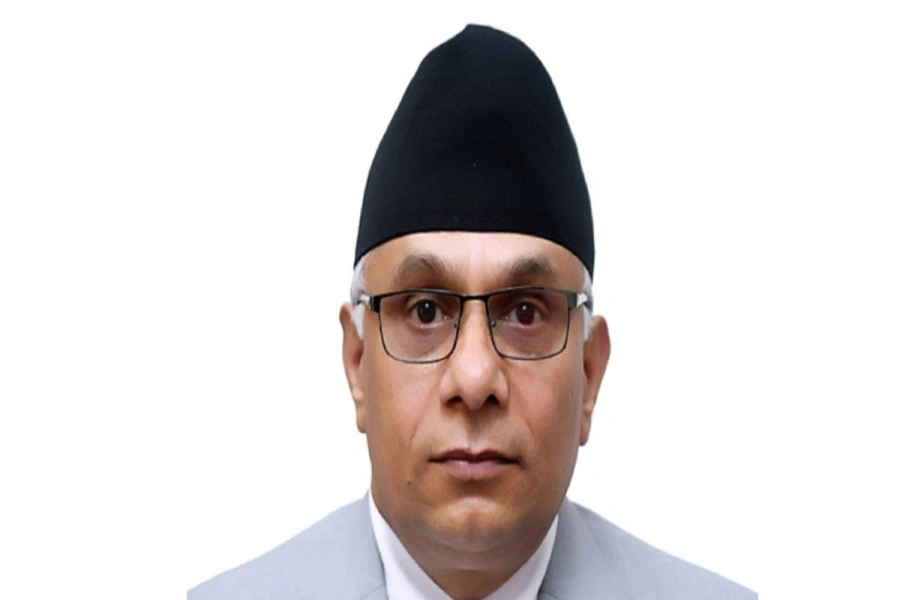
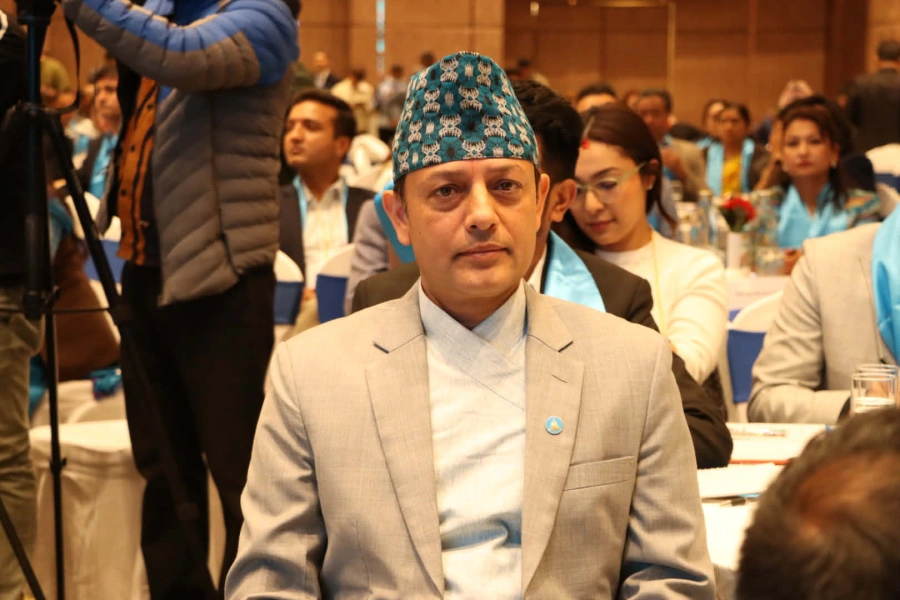
In Batuliko Chura, a short film by 23-year-old Anup Poudel, the director takes us back to his childhood memories and while not all of it might be relatable to everyone, there are elements and characters in his film that we instantly connect with. Like, the vendor who travels from one neighborhood to another with a basket full of trinkets in one hand and a damaru playing in the other, announcing his arrival and calling up customers to exchange his goods for old, torn and worn shoes. Batuliko Chura is a story of an eight-year-old girl, Batuli, who wants to look like a grown up woman, her want for bangles from the vendor, her loving big brother and how the two siblings chase after Batuli’s bangles. [break}
Another filmmaker Kushang Rai, 23, through his short fiction film, Pheri Yeuta Katha Ko Anta Huncha, presents the struggles of a gangster who serves three years in a prison for being involved in a murder, and after being released wants to lead a normal life in a society that won’t let him do so easily.
Adapted from Bhawani Bhikshu’s short story ‘Typist’, Saavitri by Sujit Bidari’s focus is the psychology of a woman and in this film specifically that of a married government job holder woman who’s mundane and worrisome life leads her to search for happiness in the wrong places.
Pawan Adhikari, 22, on the other hand, portrays a boy’s pain and struggle which arises from the love he has for the very animals and birds that he’s supposed to sell to make money in P for Parrot.
The above mentioned stories, presented by the students of filmmaking from Oscar International College in Gaushala, were showcased recently in ‘Ekadeshma 2013’ (September 26-28) and on October 2 during an interaction and talk program organized by Film Southasia 2013 (October 3-6), a short film festival which promotes Southasian non-fiction within the subcontinent and around the globe.
With such festivals taking place in Nepal, creating platforms and acting as springboards for filmmakers, and with the recent sparks of hopes that some Nepali mainstream films have shown, do our student filmmakers see a bright future ahead of themselves?
The answer is mainly yes.
“Gradually, platforms for aspiring filmmakers are being created. I believe that in the next five to 10 years, the new generation of filmmakers that I belong to, will be able to build a good film scenario in Nepal,” says Pawan who has completed his Bachelor’s in Film Studies like his colleagues, Kushang, Anup and Sujit. His colleagues share the same view.
Passion for filmmaking is the most important factor that students of filmmaking must have, especially since there are many hurdles that one might have to face as a young and aspiring filmmaker in Nepal. Hence, Anup advises that all those who opt to study filmmaking, do so only if they are determined to take up filmmaking later on.
Oscar College is the only college in Nepal which is offering this course, and while Anup likes the holistic approach that the course offers, he says, “We have to study various subjects such as culture, psychology and literature while doing the course, and that’s what I like about it. But, it would have been better if we could go more in depth regarding those subjects.”
Likewise Kushang also feels that studying filmmaking for him has been fruitful. “Filmmaking is an expensive course, but in Nepal, we’re able to study filmmaking for a fee that is affordable in comparison to international fee structures,” he says. However, he feels that many don’t know about the course or the subject.
When it comes to not knowing, Pawan feels that most directors and producers in the current Nepali film industry are unaware about the world scenario of filmmaking. “Had they known about it, they would perhaps make better movies,” he observes.
Anup, who believes that films are the ultimate stage of art, opines that mostly people don’t understand what a film is. Hence, this frustrates a filmmaker. “Films have always been associated with entertainment and drama rather than with culture and art. Many Nepali filmmakers have to be credited for making their culture and nation known to the world through their films but they don’t get the respect they deserve,” says Anup.
There are challenges and struggles but these filmmakers have shown that something beautiful can come out despite or because of them. There are so many stories that these young filmmakers want to tell and with the creativity and the skills that they have, that have been demonstrated through their short films, there’s hope that they will be able to do so.
Related story
Worth of stories