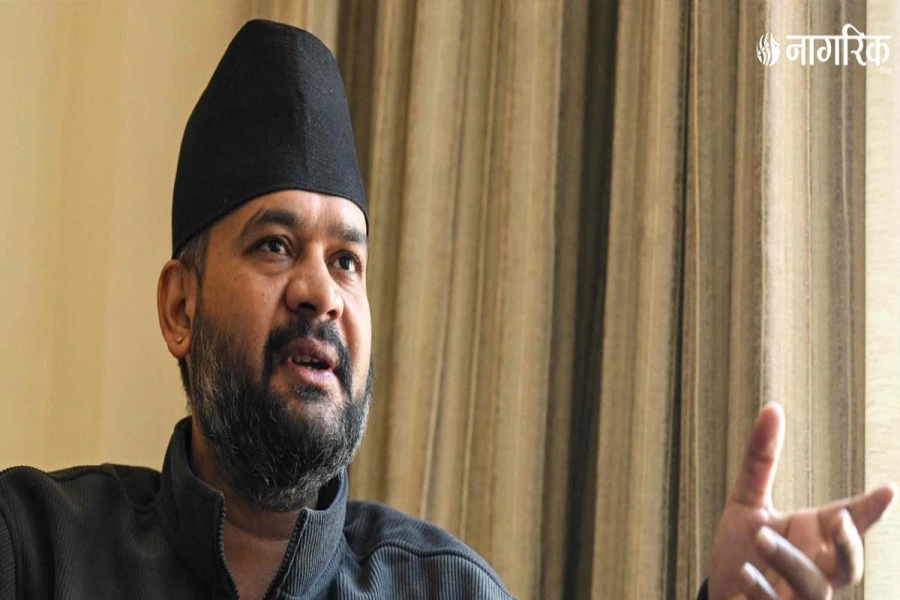
They have even warned that they could review their stay in the government. "We are discussing whether to continue in the government or not." senior UML leader K P Oli told reporters in Nepalgunj later last week. "We are going to take up the issue seriously with the Maoists."
Criticism from the coalition leaders turned harsh especially after the Maoist YCL cadres allegedly murdered in Dhading district two UML-affiliated youths. As immediate reaction to the incident, UML General Secretary Jhala Nath Khanal warned of possible split in the ruling coalition unless the former rebels mend their ways.
Ruling coalition appeals to vote for coalition parties for safe...

Former UML chief Madhav Nepal alleges that the Maoists are heading towards authoritarianism and are backing the Nepali Congress to a corner. Nepal complains that the Maoist behavior towards the country´s grand old party is ending the culture of consensus and collaboration that had started early 2005 when the parties ganged up against the king´s direct rule.
On top of this, the term used for NC, UML and Madhes-based parties by Maoist Chairman Pushpa Kamal Dahal in his political paper presented at national gathering in Bhaktapur recently has further infuriated the major allies and the main opposition. Dahal in his paper termed Nepali Congress as major enemy force, UML as biggest opportunist and Madhesi parties as agents of foreign reactionaries.
"The Maoists´ feeling that they won the entire world and others lost everything has played major role in making their relation with the coalition partners colder," says UML leader Pradip Gyawali who was a member in the government talks team during dialogue with the Maoists. What might come as embarrassment to Prime Minister and Maoist Chairman Dahal is the expression of helplessness by the chief custodian of law and order in the country -- Deputy Prime Minister and Home Minister Bam Dev Gautam.
Recently, Gautam publicly admitted that he failed to control the "anarchist" activities of the ruling party workers, clearly referring to Maoist YCL. Another embarrassment to the prime minister is Foreign Minister Upendra Yadav´s public challenge last week the prime minister´s commitment to pay compensation from state coffers for the Maoist-seized properties.
"It is not government decision, it is his [prime minister´s] personal commitment," said Yadav, addressing a party gathering in Jhapa on Thursday. Yadav´s criticizing the prime minister´s decision follows the former´s complaint that the leaders of the big parties are running the government at their personal discretion by completely ignoring the Common Minimum Program (CMP) of the coalition government. He also warned that his party could pull out from the government if the past agreement between the Madhesi parties and the government were not implemented.
MPRF leaders have expressed their serious disappointment over Maoist and UML clout during all the political appointments and running of day-to-day administration. "One hundred days of the coalition has passed as they indulged in sharing of state resources and political appointments," charges Upendra Jha, a senior MPRF leader. "People´s expectations were completely ignored in the period."
Maoist YCL´s continuing violence and intimidation, their trade union creating disturbances in business enterprises, intense pressure on the Maoist leadership from within to go for people´s republic has made other parties more suspicious about the former rebels´ future strategy. Coalition leaders say they are still observing whether the former rebels are going to change themselves. "Since they [Maoists] joined the peace process more than two years ago, I have not seen the Maoist party giving any instructions to its rank and file for transforming them into a democratic force," said UML leader Gyawali.
He says the relation among the coalition partners is gradually turning cold, mainly because of the Maoist party´s failure to change itself into a democratic force. Gyawali hints at the possibility of the Forum quitting the government under any pretext, which he says will further pressure the CPN-UML into reviewing its continuity in the government.




-1200x560-1783685616.webp)