“We tell news as it happens; we are there on the ground and report as we see it. And we do this for a reason,” he admits and derides the idea of “desk journalism” which, according to the scribe, tends to “assume a lot of things and remains far from facts.”
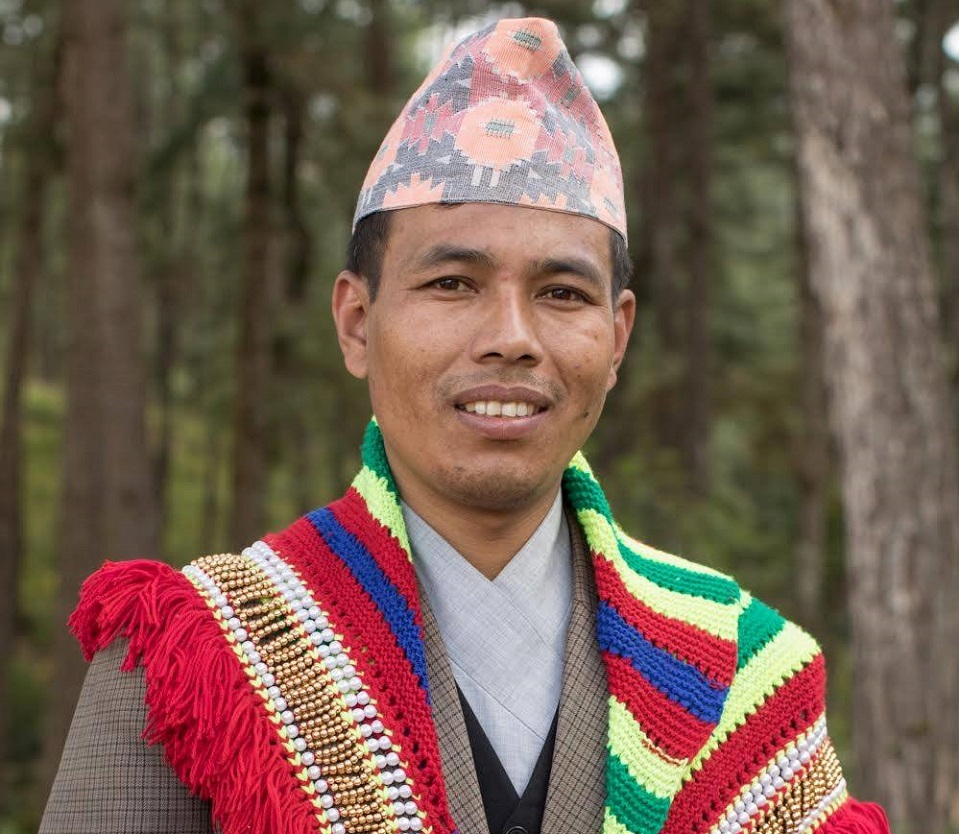
An original of Gorkha, Shrestha was involved with “party activities” since his schooldays. By party, he meant the Maoists. [break]
 LEFT TO RIGHT: Sita Dahal, Comrade Prachanda, Dr Baburam Bhattarai and Hisila Yami pose for a photo before heading to the historic Chunwang Baithak in Rolpa.
 An exclusive presentation by Dinesh Shrestha
Related story
Stop Russia-Ukraine War for the Greater Interest

After fleeing from his village due to police operation during the initial years of the “People’s War”, he came to Kathmandu and started working as a journalist. After a year of working with the then leftist paper Janadisha, Shrestha was arrested in 2002, when Nepal had just seen an emergency.
For the first time, get a glimpse of 16 of the exhibiting photographs in an exclusive photo feature.
He was released, after a few months, when the Maoists held their first talk with the government. But when the talks failed, he went underground and started taking photographs and writing for the Janadesh weekly– an underground Maoist mouthpiece that still publishes, and Radio Ganatantra – an underground radio station run by the Maoist party during the conflict.
For this 28-year-old, the worst day of his life was when he got arrested just two weeks before the birth of his first child. “I was bringing my wife to the capital because we were expecting a baby. And I was arrested by the then Royal Nepal Army,” Shrestha reminiscences his second arrest in 2005. After the arrest, he was mentally and physically tortured for the next three months. “I was not there when my daughter was born,” he explained, “The physical torture made me realize the logic behind the significance of the People’s War.” He was released after his near ones filed a habeas corpus in the court.
A diehard leftist, Dinesh is a self-proclaimed “war correspondent” and has participated at the forefront of at least five battles during the Maoists-waged “People’s War”, including the last attack by the former rebels in Chautara, Sindhupalchowk, a day before the end of April Uprising in 2006. Throughout his tenure as a photographer and correspondent during the conflict which Shrestha claims “was a necessity”, he participated in these “battlefronts” with a platoon of the People’s Liberation Army (PLA) in the “special bureau command” that covered the Kathmandu Valley and surrounding districts.
Three years into the Comprehensive Peace Process and Maoists becoming the single largest political force, Shrestha now exhibits his collection of photographs along with rare pictures taken by various known and unknown Maoists during the conflict. The idea for the exhibition, titled “Jana Yuddhadekhi Shanti Samjhauta” (From People’s War to Peace Agreement) which will open on December 11 in Kathmandu, came from his “Comrade Chairman”, when Shrestha was the official photographer for the then Prime Minister Pushpa Kamal Dahal “Prachanda” last year.
There are two notions behind this exhibition, Shrestha claims. The first one is to show everyone what kind of war they fought and what they had to go through. The second reason is to douse his fear that some of “the friends might have forgotten their roots.” “At times, I feel that our friends in the party might have forgotten where they came from. Look how thin they were and how fat they have become now,” he points out.
Journalist Khil Bahadur Bhandari, photojournalists Dhruba Ale and Sagar Shrestha have contributed to the collection of some 150 photographs at the exhibit that will run from December 11 to 17 at the Nepal Art Council Gallery in Baber Mahal, Kathmandu.
“But almost half of the photos came from the PLA and its headquarters,” Shrestha says, whose exhibit has been supported by Surya Nepal.
For the first time, get a glimpse of 16 of the exhibiting photographs in an exclusive photo feature.