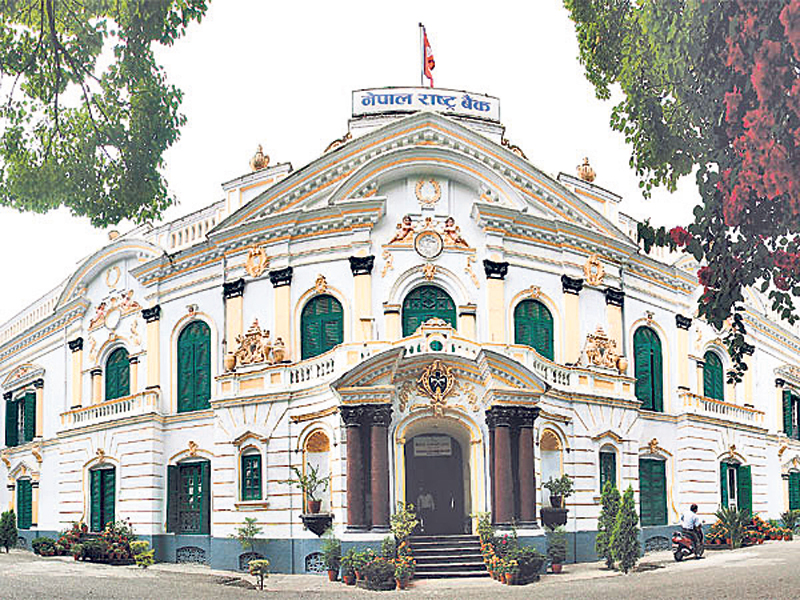
"The country could not sustain the impact of India-imposed embargo even for five days," a report titled 'Impact on Nepalis economy by Indian Unofficial Blockade' prepared by Nepal Rastra Bank states.
The report further says that the economic efficiency eroded also due to strike in the southern plains since the first month of the current fiscal year, and further deteriorated because of unofficial economic blockade imposed by India.
"It has pulled the economic growth outlook to negative -- in worst case and to the lowest even in the pessimistic scenario," it said, adding that it has weakened on account of the blockade on the import of essential commodities such as medicines, food grains and petroleum products, making public life miserable.
"So is the case of developmental projects, which remain stalled on account of shortage of fuel and necessary raw materials," it added.
There has been a significant change in the structure of Nepali economy and lifestyle of the people since the political change of 1990. Since that time, use of private vehicles and LP gas for cooking has increased tremendously which has increased our dependency on foreign countries for essential commodities such as food grains and medicines, it said. "Likewise, there has been gradual increase in use of improved seeds, chemical fertilizers and modern agro-equipment in agricultural sector."
Similarly, on the industrial front, there has been an increasing trend of importing raw materials from India. As a landlocked country with difficult terrain on the north, the country has to rely on Indian routes for most of its imports and exports, the report stated, concluding that under these circumstances, ensuing fuel shortages due to strike and blockade have impacted overall agriculture and industry sectors adversely.
"In the first three months of the current fiscal year, most of the industries in the major industrial corridors have been closed and the capacity utilization of the running industries is also very low," the report said.
The industries with about 53 percent capacity utilization were being operated during the last fiscal year, which would fall further due to difficult situation created by the blockade and strikes.
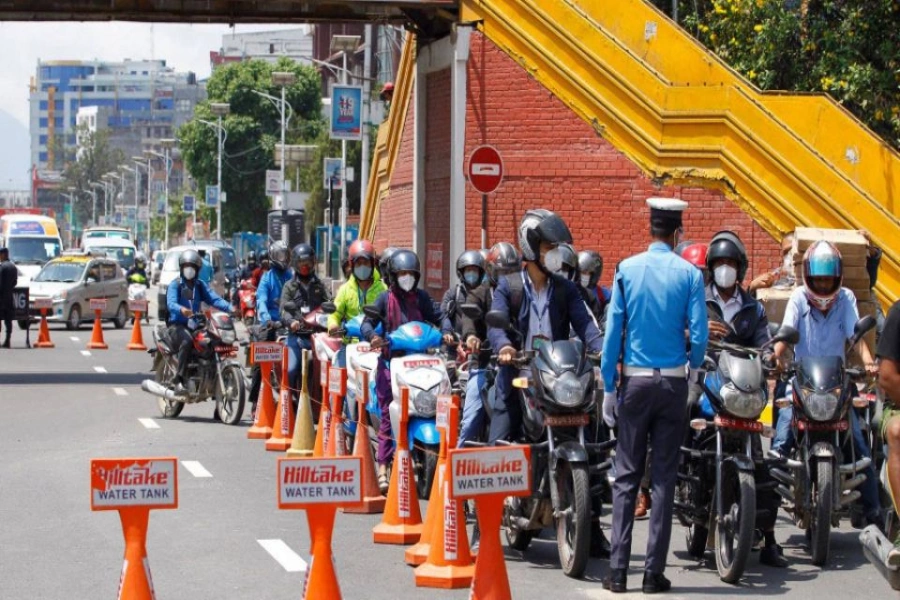
Of the services sector, tourism, hotels, transportation and educational activities have remained disrupted, according to the report. "Due to low tourist arrival, the occupancy rate of the hotels has fallen below 30 percent even in the high tourist season, whereas the public transports and carrier services are running in a very few number," it said, adding, "On the whole, the supply and distribution system of the country has been badly affected by the strike and the unofficial Indian blockade."
Agriculture productivity has dropped on account of the insufficient supply of chemical fertilizer, insecticides and related agricultural equipment, the report added.
Construction work on Upper Tamakoshi project has not resumed yet because of the disruption in the road linking to the construction site. Similarly, construction works on important hydroelectric projects such as Rasuwagadhi and Sanjen have also been affected due to fuel shortage.
In the absence of timely legal arrangements, the National Reconstruction Authority (NRA), which was established by the previous government by issuing an ordinance, has not been able to start its works, the Nepal Rastra Bank said, in the report.
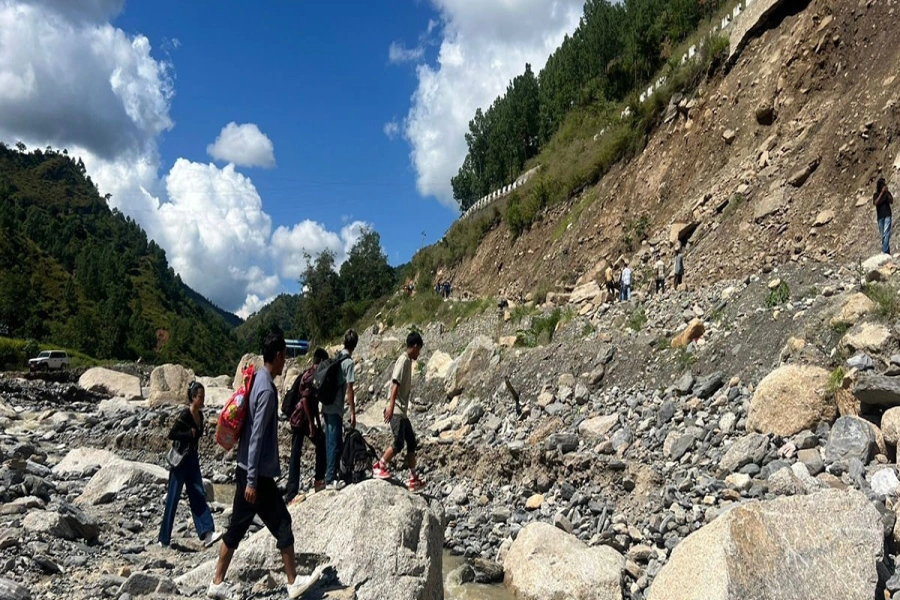
"Of the two major customs points in the north, Rasuwagadhi customs point has come into operation recently. However, the customs point may get blocked at any time due to the perennial landslide on 7-kilometer Ramche segment to Rasuwagadhi customs point and Betrawati-Mailung-Syaphrubeshi track is not completed yet. The road to Tatopani customs point has still not come into operation due to the obstruction of landslide," the report highlighted.
Related story
Revised interest rate corridor system introduced