KATHMANDU, Sept 4: Senior officials of Nepal Rastra Bank (NRB) have said that the central bank will be flexible in addressing 'practical problems' that bank and financial institutions (BFIs) face while implementing their plan to meet the new minimum paid-up capital requirement.
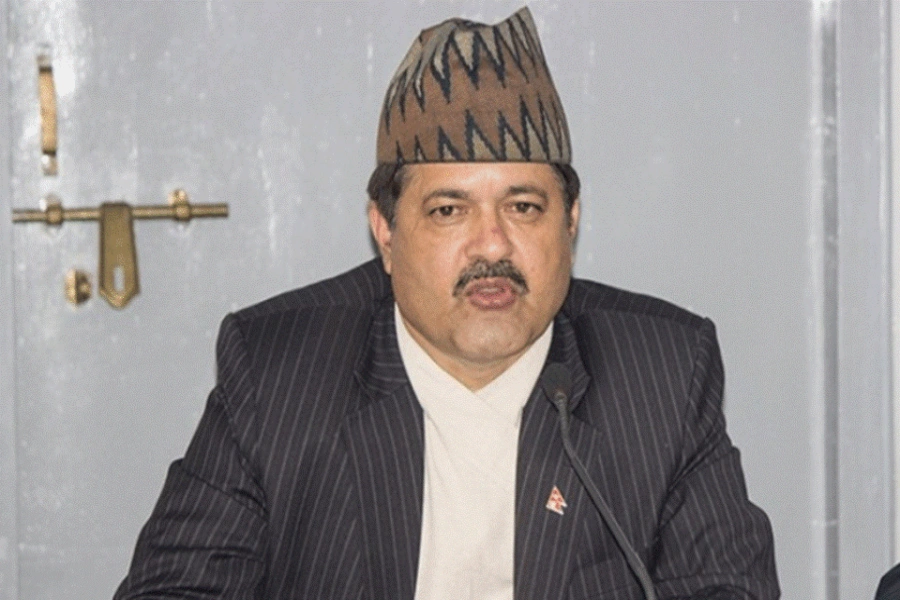
The statement has come at a time when bankers are expressing dissent over the central bank's decision to raise minimum paid-up capital for BFIs, particularly the two-year deadline given to raise the minimum paid-up capital.Speaking at a meeting of the Finance Committee of legislature-parliament organized on Thursday to hold discussion on Monetary Policy for Fiscal Year 2015/16, NRB Acting Governor Gopal Prasad Kaphle said that the central bank will consider the practical problems of BFIs during the course of implementation of paid-up capital increment plan. He, however, reiterated that the central bank won't rollback the capital hike plan.
""he decision didn't come overnight. It was introduced after weighing various factors and studying experience in other SAARC countries,""Kaphle told the committee. ""here is intense pressure from various quarters to withdraw the policy. However, we are adamant on increasing the paid-up capital. But we will show flexibility by addressing practical problems that BFIs face while implementing their capital hike plan.""
He also said NRB will provide necessary support and cooperation whenever problem arises. "If there is a need to show flexibility or if the given timeframe becomes inadequate while implementing their plan, NRB will be liberal toward addressing such problems," he added.
In the meeting, which was marked by heated discussions among lawmakers for and against the NRB decision, Kaphle also warned that the rollback of the capital increment plan could jeopardize credibility of the central bank. "We have achieved high level of credibility and prestige at national and international level. Where will we stand if the decision is rolled back?" he wondered. "What will International Monetary Fund, The World Bank and other international community say if we rollback the decision?"
BANK PROMOTER/LAWMAKERS FLAY CAPITAL HIKE REQUIREMENT
Most of the lawmakers close to CPN-UML have strongly criticized the central bank's decision to raise minimum paid-up capital of BFIs, while those close to Nepali Congress have defended the central bank's move.
Speaking at the meeting, lawmakers, who are also in the board of various BFIs, flayed the new capital requirement and sought withdrawal of the decision. Lawmakers Ichha Raj Tamang, Uday Nepali Shrestha and Duman Thapa, among other UML lawmakers, denounced the decision. Tamang and Shrestha are chairman of Civil Bank Ltd and Janata Bank Ltd, respectively, while Thapa is a board director of Mega Bank Ltd. "The decision is inappropriate and impractical. It came in haste and it is not consistent with the fiscal policy," Tamang said, adding, "The decision taken without considering its implication in the financial system will create another economic bubble." He also called for immediate withdrawal of the decision.
Another CPN-UML lawmaker Duman Thapa also said NRB should enforce capital hike plans in a phase-wise manner. "It should treat new banks differently, compared to old and established banks who can easily meet the new capital requirement," Thapa, who is also the board member of Mega Bank - one of the youngest banks, said. He also said the new capital requirement will make it impossible for banks to offer returns to shareholders for at least 10 years.
Meanwhile, former finance minister Bharat Mohan Adhikari said that the capital hike decision of central bank was a 'misplaced priority'. "Most of the BFIs are doing good business and our experience shows that big banks do not go to the village. Many small banks will face loss if the policy is implemented," Adhikari, who is also a senior CPN-UML leader, said. "The economy is already battered by the earthquake and this policy will create disturbances in the economy."
Parliament cannot dictate central bank: FinMin
While CPN-UML lawmaker Tamang was calling for withdrawal of the decision, Minister for Finance Ram Sharan Mahat insisted that parliament cannot direct central bank to rollback the decision.
"The central bank is an autonomous entity and it is independent in setting its monetary policy. Even the government cannot dictate the central bank. The government has its own tool of fiscal policy while the central bank has monetary policy," he said.
"Our law has empowered the central bank as a sovereign and independent body. It can set its monetary policy on its own without any interference," he said.
He, however, said the central bank should show flexibility in addressing the problems that emerge during the 'financial consolidation' process.
Related story
Revised interest rate corridor system introduced