

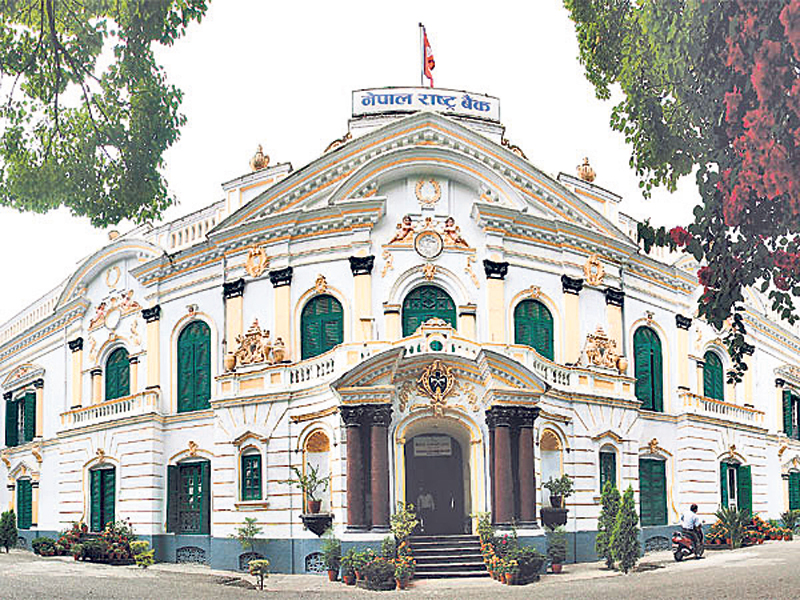
Now Nepalis can enjoy foreign exchange up to US$ 2,500 at one instance and up to US$ 5,000 in total in a year against the passport, said NRB Governor Dr Yuba Raj Khatiwada, unveiling the new monetary policy for 2011/12. [break]
Previously, the central bank had limited the exchange facility at US$ 2,000 for a single travel and USD 4,000 per annum.
The central bank has also allowed Non-Resident Nepalis to open US dollar accounts. “Necessary arrangements to implement this facility will be put in place soon,” reads the new monetary policy.
NRB has also allowed Nepalis returning from foreign country to carry up to US$ 1,000 on behalf of Nepalis residing abroad for giving it to their family members back home.
“Also people who work in different sectors of tourism industry and receive tips in foreign currency can now exchange their foreign currency earnings up to US$ 1,000 from any authorized exchange counters disclosing their personal identity and sources of income,” said Dr Khatiwada.
CRR down, bank rate unchanged
The new monetary policy slashed cash reserve ratio (CRR) that banks and financial institutions need to maintain at the central bank by 50 basis points to 5 percent.
This has released liquidity worth Rs 4 billion in the market. “We anticipate it to ease liquidity in the market, bringing relief to the BFIs,” said Dr Khatiwada.
However, it left the bank rate (policy rate) unchanged at 7 percent. Likewise, the penal rate, which NRB has been charging while issuing finances to the BFIs, has been left unchanged at 3 percent of over 91-day Treasury Bill rate or bank rate, whichever is higher.
Targets of Monetary Policy 2011/12
- Inflation: 7 pc
- Balance of payment: Rs 5 billion surplus
- Forex Reserve: Enough to finance at least 6 months imports
- Broad money supply: 12.5 pc
- Domestic credit growth: 13.7 pc
- Credit growth to private sector: 14 pc
- Banks deposits growth: by 13 percent (Rs 87b) to Rs 756 b
NRB also jacked up the mandatory deprived sector lending for BFIs by 50 basis points. Now commercial banks, development banks and finance companies would need to lend 3.5, 3 and 2.5 percents respectively of their total loan portfolio to the deprived sector.
“That is not all. They will need to raise such loans by 50 basis points every year for the next three years,” said Dr Khatiwada.
The new monetary policy has also committed to review the existing provisions of refinance so that BFIs could effectively increase volume of loans for hydropower projects.
The central bank has also agreed to let BFIs issue loans in foreign currency in priority sectors like hydropower and infrastructure.
“This facility has been provided mainly as in the absence of such lending provision BFIs have so far been forced to invest their foreign currency holdings in overseas instruments at low yields,” said Governor Khatiwada.
The new monetary policy has also allowed traders doing business with Bhutan to receive payments in Indian Currency (IC). So far, payments were required to be settled in US dollar.
Governance and supervision
The new monetary policy has committed to intensify actions against willful defaulters that took loans of Rs 10 million or more from BFIs, but refused to repay them.
NRB has also promised to take legal actions against borrowers that use loans, taken for one stated purpose, to run different unproductive businesses. It has also promised to strictly enforce prudent corporate governance in the BFIs and land axe against players that flout its norms.
“We will restructure and strengthen BFIs supervision departments and soon adopt risk-based supervision guidelines to strengthen our supervisory capacity,” said Dr Khatiwada.
NRB also announced enforcement of liquidity monitoring framework in the BFIs soon so that they could effectively implement forward looking analysis for liquidity management.
The new monetary policy also announced to implement stress tests in all BFIs, enabling them to identify their strength and capacity to withstand different adversities. “The BFIs should use this for improving self-regulation,” said Dr Khatiwada.
Access to finances
NRB also unveiled different schemes to encourage BFIs to open branches in remote areas in a bid to improve people´s access to formal financial services.
For instance, Dr Khatiwada said the central bank will provide loans of Rs 1.5 million at zero interest rate to the micro-finance institutions--the category D financial institutions--if they opened branches in 9 remote districts where access to finances is pretty low.
He also announced relaxation on paid-up capital increment requirements for BFIs opening branches in remote districts.
Related story
Revised interest rate corridor system introduced

-1200x560-1779899638.webp)










-1779842101.webp)






