Though the establishment of the Academy in the country comes as a notable achievement, it now faces the challenge to prove itself capable enough to address the issues and problems of the Nepali art scene.[break]
“The Academy has come to existence after 45 years of struggle and that brings a great sense of happiness,” Manandhar says. “But we realize that to set a foundation is a really hard job.”
Manandhar and his team are currently busy in the official setup. Their initial step is to have a proper workplace, and constitute different departments; then formulate strategies and work to reach out to the artists nationwide to promote the local art scenes.
A 21-member board committee has been appointed, but not without its share of controversies. The resignation of painter Ragini Upadhyaya from the nine-member council of the Academy within 48 hours of her appointment has surely stirred up some controversy.

At a press conference held last Friday at the Reporter’s Club, she stated that her resignation was because “it’s demeaning to accept such a trivial participation for a woman and to my own self-respect. Moreover, it’s absolutely unfair that no woman artist has been given any position at the Academy’s decision-making level at all.”
But it is questionable as to how her resignation will help. On the same occasion, she also accused that the appointments of the board members were completely politicized, with lots of nepotism and favoritism going on.
Kiran Manandhar, however, refutes this by saying, “Many accuse us for being political appointees. But I haven’t been part of any political organization. Even in the two Jana Andolans, I participated actively not under any political flags but as a concerned civilian and an artist.”
The Chancellor also appeals that, firstly, artists come together for dialogues through which they can work for collective progress, and without looking out for their personal benefits.
Artist Ashmina Ranjit, who has been actively involved in advocating for the inclusion of artists’ rights in the Constitution with many other artists, says she only hopes the Academy works well and does not have to be dismissed, like before.
“The Academy has to consider not just its academic concerns but also step into administrative roles. Administrative functions can be a challenge for even veteran artists, and that part is where I believe they have to focus on for smooth operations.”
Sujan Chitrakar, Academic Program Coordinator of Kathmandu University School of Fine Arts, says he is quite positive about the Academy though personally not too satisfied with the selection committee’s decisions. He also opines that something is better than nothing, and that the Academy should be given an opportunity to prove itself.
“My expectations with the appointed members are that they design plans and implement them not just as individualists but in a more holistic way,” he adds.
The Academy is also planning to hold several interaction programs to better understand the concerns of art and artists alike. Manandhar states that the Academy now has to work as a research center and not limit itself to one annual national exhibition like Nepal Academy previously used to do.
The initial objectives are to open an extensive art centre, publish bulletins, and also branch out of the capital, Kathmandu. Furthermore, by building up diplomatic relations with the fine arts academies of different nations, the Academy hopes to promote Nepali art nationally and internationally.
Within the four years of their term, the Academy members have taken an oath to set the foundation for the coming generation to provide them with sustainable market, space and social and economic security.
“But, of course, we need support and cooperation. So if anyone has something to suggest and recommend, let’s talk and together we can move forward,” Chancellor Kiran Manandhar of the newly-created Nepal Fine Art Academy concludes.
Related story
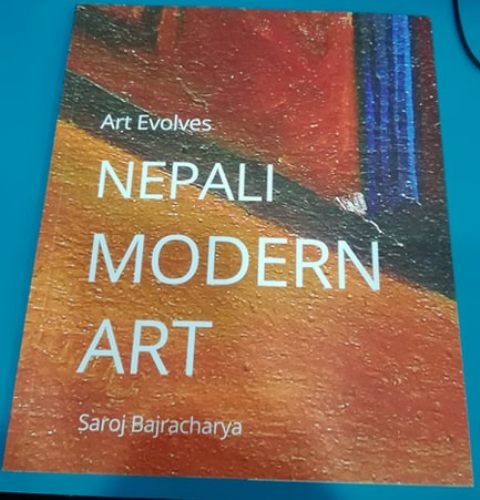
‘Art Evolves: Nepali Modern Art’: Review