One fine morning I came across a newspaper lead that read, "Ministers of the newly established Ministry of Internet and Digital Economy are to be sworn-in this afternoon". I was thrilled, but a question immediately crossed my mind. Do we need a new ministry when the existing ones have not been able to deliver to public satisfaction?
I confess the newspaper lead was a figment of my wild imagination. The country is not moving, even by an inch, towards the Digital Age. Our neighbors, China and India, have already emerged as global economic powers and are successfully shifting towards Digital Age. We, on the other hand, are caught in time—in the medieval age. I cannot think of any other reason for this backwardness, other than the government's inability to craft forward-looking digital policies, and above all, implement them to modernize the country.
Digital economy is the future and the future is here. Realizing this, excluding Nepal and a handful of countries, the rest of the world has established ministerial level government agencies dedicated to digital economy with broad responsibilities ranging from digital economy strategy, cyber security, telecommunication and digital infrastructure, culture, media and creative industries. For instance, there is the Ministry of Culture and Digital Economy in the UK; the Ministry of Digital Economy and Society in Thailand; the Ministry of Industry, Commerce, Investment and Digital Economy in Morocco; and the Ministry of Communications and Digital Economy in Senegal. The list grows.
I particularly like the way South Koreans have replaced the term 'digital economy' with 'future planning'. It seems they understand socioeconomic development will never be realized unless a country is committed to promote highly qualified personalities capable of thinking long term. If I had my way, I would immediately rename the National Planning Commission (NPC) as the National Future Planning Commission to remind those who walk the corridors of Singha Durbar to be farsighted. For now, the NPC seems to be doing a fairly good job, though.
Generally, the government is poor in strategic planning. So Nepal is on the verge of becoming a failed state. E-government services over smart phones still seem like script from a sci-fi flick. Overpopulation is threatening our existence, corruption is uncontrollable, natural resources are badly managed, and the exodus of youth is unsustainable. This would not have happened had political elites understood the essence of 'future' and 'planning.' Blame game is more popular than the English Premiere League here. Even so, this is not the right time for it. Time has come for the country to look to the future rther than dwell in the past. For example, think digital when writing the constitution.
Ultra high speed (at least 1 Gbps) Broadband Internet will be an important enabler of the digital economy, but there is more. According to the Australian government, digital economy refers to "the global network of economic and social activities that are enabled by information and communications technologies, such as the internet, mobile and sensor networks." Digital is going to be the driver of innovation, competitiveness, and growth.
In 2014, digital economy's contribution to the EU, the US and South Korea's GDP were four percent, five percent and 7.3 percent respectively. With this shift, businesses failing to participate in the digital economy will be excluded from global market. If the government still chooses apathy, an entire generation of would be Internet entrepreneurs could be lost.
Nepal missed the Industrial Revolution in the 19th century but it can no longer afford to remain lethargic now. The government has to create a favorable environment for the much needed transition. A good place to start would be to study the digital economy ministry's roles in other countries, especially in South Korea.
The vision of South Korea's Ministry of Science, ICT, and Future Planning is to build a country where everyone is happy. Caring about people's happiness is something unheard of in this impoverished nation, but it's soon to be a reality in Bhutan with its new Gross National Happiness index. In order to make this vision a reality, South Koreans have devised a five-pronged strategy: promote creative economy eco-system, re-enforce national research and development on innovation, put content at the core of the economy, foster an advanced research environment, and finally, create a happier society. As far as our ancient wisdom goes, happiness is life's most important aspect.
It's not clear if Nepal is headed towards the digital age, but if it is, it sure is doing so at snail's pace. The government should take the shift seriously and align its socio-economic development strategies accordingly. The Ministry of Internet and Digital Economy should be established at the earliest. But it should be cautious while nominating a minister. The government needs to consider highly qualified leaders with Silicon Valley mindset who are capable of catalyzing the country's much needed transition to the digital age.
The draft "National Information and Communication Technology (NICT) Policy 2015" recently floated by the Nepal Telecommunication Authority is rooted in the past, as the ministries established in the last millennium are expected to facilitate the nation's transition to the digital age. I feel the Ministry of Science, Technology, and Environment and the Ministry of Information and Communication should focus on their core responsibilities. The 21st century government would bring the Department of IT, the National Information Technology Center, and the Office of the Controller of Certification under the Ministry of Internet and Digital Economy. Such a ministry would have to be established soon. The mantra is simple—Think digital, not post-medieval.
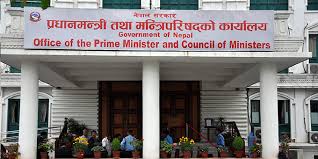
The author worked as a Project Management Consultant for ICT Development Project at the Office of the Prime Minister and Council of Ministers
Related story
Internet hacks that are actually useful