

The trip, however, had a mission: Peace education. Also having worked with an organization working for conflict-displaced children in Colombia, she was deeply interested to gain the knowledge to address violence through nonviolent approaches.
She found Dr Paul Bueno de Mesquita, Professor of Psychology and Director of Center for Nonviolence and Peace Studies (CNPS) at URI, who has been organizing annual international nonviolence peace training as a service learning alternative spring break to URI students in Nepal for the last five years. She didn't think much before deciding to join a group of 15 other students of the URI to embark on a journey to Nepal.
Every year in March, he comes to Nepal leading a group of young American students with an objective to train and educate them on nonviolence and conflict transformation strategy, putting them together with two dozen Nepali youths.
The annual series of the training that the CNPS organizes in partnership with Tribhuvan University's Department of Conflict, Peace and Development Studies (DCPDS) along with three other leading youth organizations is based on the 'Kingian' nonviolence principles and methodologies drawn from the theories of Dr Martin Luther King Jr. that was applied in various movements, including the African-American Civil Rights Movement in the US. The fifth annual series of the three-day long training on Kingian Nonviolence concluded in Nagarkot last Wednesday (March 18).
Sarah was one among the diverse backgrounds of 50 participants who included students, peace activists and practitioners, youth activists, civil society representatives, military and police officials, teachers and journalists, among others, from Nepal, USA and Sri Lanka.
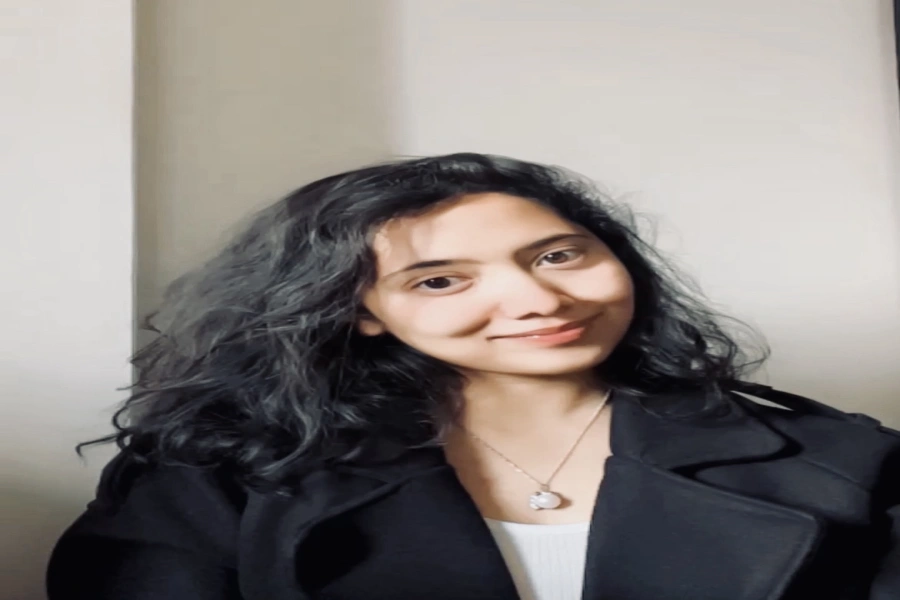
"The training has changed my perception of looking at the conflict that we encountered in our personal life, community and country," shared Sarah, adding, "Being together with diverse participants, I've learnt that I should stand in other's shoes to understand his/her perspective. The empathy will eventually lead me to reconcile even with my opponent. After all, it's your world, it's my world and it's our responsibility to cultivate peace here."
Sarah said her perception of Nepal has changed, too.
"Unlike what I had thought initially, Nepal is not only the country of amazing mountains but it had also endured a decade-long war before restoring peace on its own efforts. The world has many things to learn from Nepal," she said.
Sanjaya Jha, a 32-year-old retired military colonel and currently a student at CPDS, agreed with Sarah.
"Reconciliation with your opponent is how you achieve a lasting peace. This requires a better understanding of the perspectives of others, too. This is what we've learnt in this training besides the principles and strategies that Dr. Martin Luther King Jr. applied in his movement to end the segregation and discrimination imposed ont the Black community of the US," Jha shared.
The conclusion that violence should be dealt through negotiation is what led the former military officer Sanjaya to pursue the training on Kingian Nonviolence.
"The growing realization in the world is that attacking the underlying causes of conflict through peaceful methods, rather than resorting to violence, is the only effective way to establish lasting peace in the world," said Jha, adding, "Kingian Nonviolence calls for peaceful action for achieving justice while reconciliation is its central theme. This perspective closely resembles Nepal's current Peace Process that ended the decade-long violent civil war."
For Puran Darnal, a 24-year-old Dalit activist, the training has been a source of inspiration to spearhead a campaign to end the so-called 'untouchability' and discrimination against the Dalit people.
"Martin Luther King has successfully led the campaign to end discrimination against the Black community in the US. The training has equipped me with the skills and strategies to lead a campaign to end discrimination against the Dalits in similar ways," he said.
Prof Dr Hem Raj Subedee, Coordinator at DCPDS of TU, also believes the education on nonviolence will help the participants to manage the conflict that stems in one's day-to-day personal and professional life.
"The training will help to mitigate violence in the community and address the causes and injustices that lead to conflict," he said.
Related story
Let’s live in peace and embrace diversity




-1200x560-1784036910.webp)


