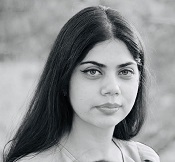
After several attempts to find a job, Sangeeta, originally from Gorkha, was appointed as a Nepali teacher at Sagarmatha Boarding School in Basundhara of Kathmandu in 2001. [break]However, only 19 days into her teaching career, the then principal of the school asked Pant to leave.
“I still find it painful to talk about it,” shares the 29-year-old. She looks away for a moment but manages to keep a faint smile on her face. She goes on, “The principal told me that parents wouldn’t admit their children if they saw the condition of my left arm.”
A shoulder injury, which took place when she was seven years old, damaged a nerve, preventing blood flow into her left arm and leaving it underdeveloped.
“I couldn’t get proper treatment in time,” she reveals and adds, “I can’t do anything with it (left arm) now.”
Like Sangeeta, all the disabled women who gather at the workshop of Entire Power in Social Action (EPSA) each day have a story of their own. Regardless of where they are from and what kind of physical challenges they have, this is a place where these women understand each other and the discriminations they face in the Nepali society.
*****
“You first roll the strips of felt into balls and then soak them in soap water,” demonstrates 15-year-old Radhika Budhathoki. She laughs when one of the balls uncurls, “Phuskyo!” It takes a while to understand what Radhika is saying because she was born without a uvula (small piece of conical soft tissue hanging at the back of the tongue). It has been three months since she has been living at the EPSA work shed, along with two others, where she has learnt to knit, make candles, liquid soap, and felt products.
In the adjacent room, over a dozen women sit around making felt puppets and key rings.
Sandhya Khagdi, 21, of Nuwakot developed facial paralysis due to lack of treatment of typhoid, five years ago. Bhawana Subedi, mother of a 12-year-old son, lost one of her legs to cancer 15 years back. Twenty-year-old Kumari Magar’s right leg doesn’t bend.
It is past midday on a Wednesday afternoon, and the heat coming from the tin roof is slightly bearable. The work shed of EPSA, consisting of four rooms on a rented piece of land, has been put together from tin sheets, bamboo, and concrete blocks. The women sit on the mud floor, which reminds one of village houses. Yet this is in Kathmandu.
Located in Mitra Nagar near the Gongabu Bus Park, EPSA is headed by Sangeeta as its president.
“I began working at a leprosy center,” she continues her story, “I was financially stable, but I wasn’t happy. Because of my own struggle, I somehow felt that I had to work for the disabled.”
EPSA was originally established as Disabled Center Nepal seven years back by Sudarshan Gautam, a man who lost both of his arms. Sangeeta joined in as a member.
“Six members of the committee ran off with what little money that had been fund raised and everything fell apart,” she narrates, sitting at the doorstep of the shed. “Sudarshan couldn’t do anything.”
Sangeeta spent most of her time literally going from door to door asking for money to support the nine disabled and elderly people she was left with. People refused to rent out rooms to her when they saw that they were disabled. Deep in debt, she began making and selling candles to hotels in Thamel.
“It was very difficult for me but I still wanted to keep doing it,” puts in Sangeeta, who finally got an opportunity to go to Japan through the Japan International Cooperation Agency (JICA) to attend a training for the disabled in 2008.

Sangeeta saved all her allowances from the trip, and with additional financial help from the Universal Peace Foundation in Naxal, she built the first two rooms. With further help from the government, she built two others. But that was not enough.
“There are many organizations that provide different types of vocational trainings to disabled people but there is hardly anyone who will give us jobs,” she states from experience and furthers, “We have to create our own jobs.” But making candles and liquid soap weren’t enough to support the livelihood of the disabled women Sangeeta had gathered at EPSA.
And it was during this time, in early 2009, that Sangeeta met 25-year-old Stephanie Woollard, a young Australian woman, with equal passion as hers to help other women.
*****
“I’ve always wanted to help people less fortunate than me and to empower women,” states Stephanie without a moment’s hesitation. A fourth year undergraduate student at La Trobe University in Melbourne, Stephanie arrived in Kathmandu for the sixth time, a week ago.
“There are now seven permanent women who work at EPSA making felt products, candles, knitted wear, and soap,” she says. “I take what they make and sell them back at home to fund raise for EPSA.”
This time Stephanie is here to find a local buyer for their products, so that the women have a constant source of income. At the moment, each woman gets Rs 55 per day, along with some afternoon snacks.
“Every time there is a lecture at the University, I talk about EPSA before it starts,” shares Stephanie, who recently was featured in The Age, a national daily of Australia, for her work with EPSA. “I have 15 volunteers who help me sell the products at the University every week, and on average, we make around 400 dollars per day,” highlights the International Development major.
With the money she has raised so far, EPSA will be renovating its work shed to make a kitchen, replace some of the bamboo walls with stronger materials, and a proper bathroom with handicap accessibility.
“Stephanie sent some money so that I could pay my son’s school fees and also take my husband for medical checkups,” says a thankful Bhawana. Her husband, also disabled, recently developed stomach cancer, and without money, they have not been able to get treatment.
“Before Sangeeta found me, I used to keep a nanglo pasal at Gongabu,” she relates and adds, “I wish the government gave us some kind of allowance.”
Even so, according to Sangeeta, the women at EPSA have become much more outgoing and confident ever since they started working.
“I changed the original name because I didn’t want the label of ‘disabled’. These women maybe physically challenged but are equally intelligent as other people,” she said.
“Stephanie has become an important part of EPSA, and she’s doing a lot for us,” Sangeeta doesn’t forget to mention. She is hopeful that Stephanie will help EPSA realize their dream of getting a permanent structure and opening a rehabilitation center in the future.
On her part, Stephanie concludes, “My inspiration is Sangeeta. She has done so much by herself, and that motivates me to help her.”
Hand in hand, and mind to mind – that is how EPSA works.
Related story
Govt to work hand in hand with private sector: Finance Minister...