A high level meeting attended by the prime minister, ministers, representatives from the Election Commission (EC), the chief secretary and half a dozen secretaries from different ministries took a decision to this effect Sunday.
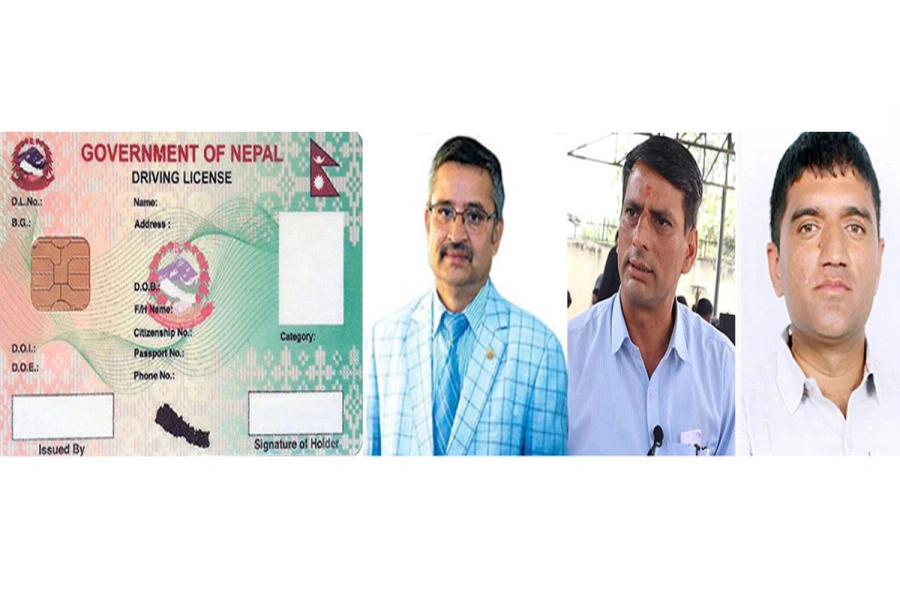
The NID can be used as an alternative to the existing citizenship card. Officials said the plan will come into effect in February 2010 if everything goes as planned.
Those 16 years old or more are eligible for NID.
The NID will be developed digitally, with a photo and bio-metric data of the card holder. The NID, which will gradually replace the traditional-format citizenship card, will be machine-readable, similar to an ATM card.
The government will start introducing the NID after completion of work on the new electoral roll. According to Yajna Gautam, Secretary at the EC, work on new electoral roll will officially start from February 2010. Work on developing NID will start after completion of the electoral roll.
“Data and other particulars collected for the electoral roll will be helpful for developing the NID", said Neel Kantha Uprety, Officiating Chief Election Commissioner, adding, “The documents for electoral roll and NID are similar. Therefore, the government has decided to introduce the card in coordination with the ministries concerned and the EC.”
The Office of Prime Minister and Council of Ministers (OPMCM) is the executive body for developing the NID, while the Ministry of Home Affairs will be the implementing agency.
People now need to consult the district administration office concerned to find out the identity of any Nepali citizen as citizenship records are scattered around the country.
But according to Shyam Sundar Sharma, Joint Secretary at the EC, all details about NIDs can be obtained from a single office at the central level.
According to officials, there is no possibility of dual issuance of NID as the records will be stored in a computer. “Those who attempt for fake the NID will be exposed through data already stored in the computer” Sharma added.
The government has also finalized plans to introduce new electoral rolls to minimizing bogus voting.
The EC has made necessary preparations to launch a pilot project for the new electoral roll at the end of December.
Five districts have been chosen as a pilot for the electoral roll. Kathmandu, Rupandehi, Dang, Dadeldhura and Solu have been selected for the purpose. “The pilot project will be conducted at some 80 points in the selected districts.” Secretary Gautam added.
The present electoral roll has only the voters´ names and addresses, and this has encouraged bogus voting in past elections.
The decision will formally come into effect when the EC launches its annual update of the electoral roll next February.
Nepal is the third country in South Asia to be introducing an electoral roll with voters´ pictures, fingerprints and digital signatures. India and Bangladesh have already introduced such electoral rolls.
Past elections have seen voters casting their ballots at more than one polling station. “There will be no possibility of voting at more than one polling station after implementation of the new electoral roll,” Secretary Gautam argued.
Photographic and electronic fingerprint machines will be used while collecting and updating the electoral roll electronically.
“An electronically-processed electoral roll will be more reliable, authentic and credible and the government can use the details for the NID also," said Uprety.
Related story
Medical certificates on sale for NID job aspirants