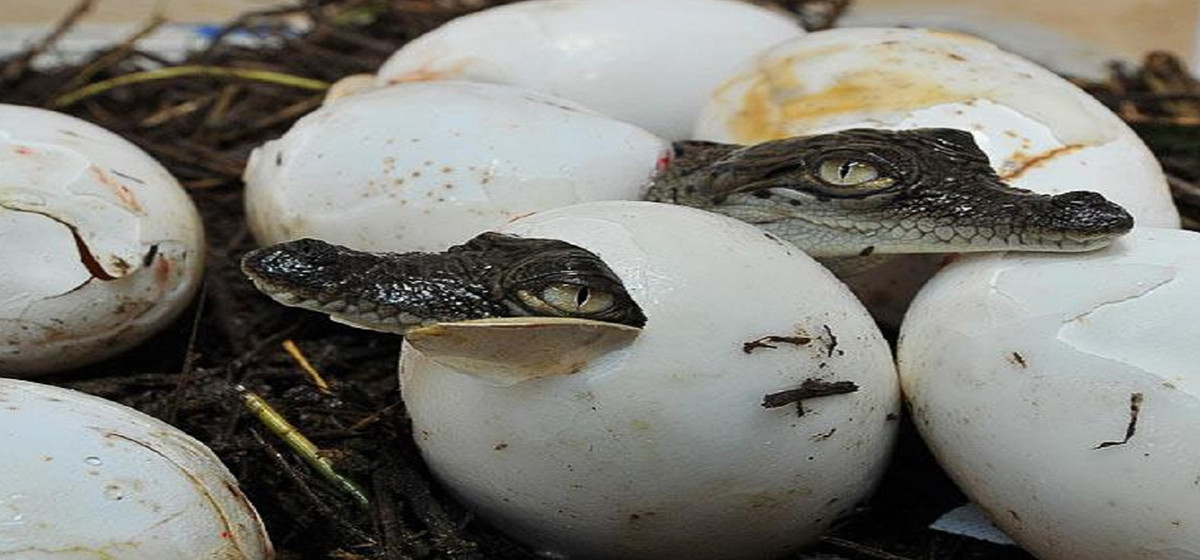
The gharials are protected under the National Parks and Wildlife Conservation Act. Conservationists say though options were sought to conserve the species, none were successful.
One of the key reasons behind the drop in gharial population is damage in their habitat owing to depleting water levels in bigger rivers where they live.
Similarly, a decrease in the number of fish -- the food for the gharials -- in the rivers owing to excessive fishing has also led to a decline in their number, according to CNP warden Narendra Babu Pradhan. He also said some gharials may have migrated to Indian rivers in search of food, or to escape pollution in the rivers here.
Downstream migration also takes place when gates of dams built on major rivers along the Nepal-India border are lifted, according to gharial expert Bed Bahadur Khadka.
Every year, several gharials are released in major rivers to increase their population. This has been done since the establishment of the CNP in 1973. So far, 708 gharials have been released in several rivers in the country.
There are currently over 500 gharials, including juveniles, in the breeding center at Kasara in Chitwan. For breeding, there are two male gharials and nine females.
Related story
202 endangered crocodiles hatched out at Gharial Breeding Cente...