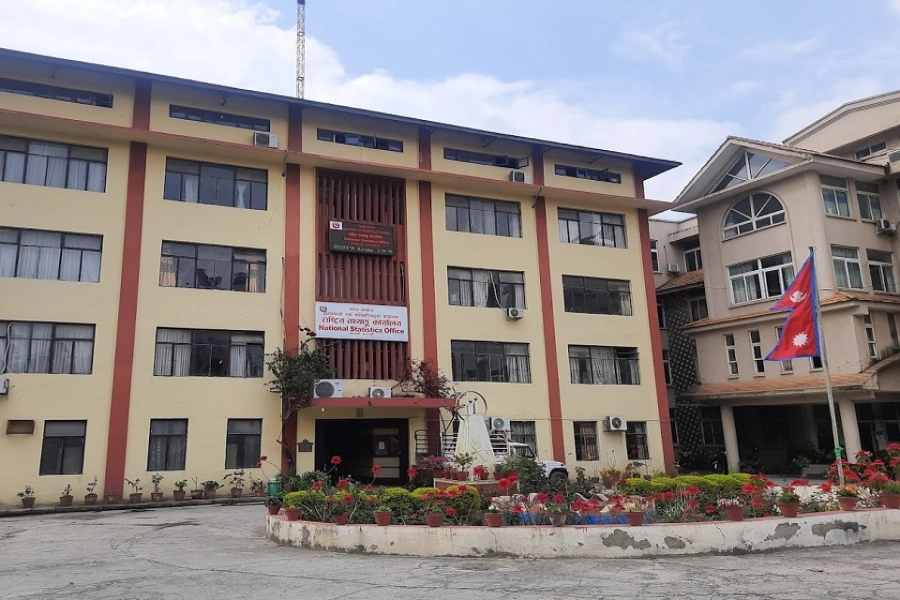
The National Agriculture Genetic Resources Centre or Gene Bank has been established under the Nepal Agriculture Research Council. [break]
Nepal is a country rich in bio-diversity. However, the traditional agriculture genetic resources were found to have been disappearing gradually due to modernization and commercialization of agriculture in the country.
Thus a need was felt for such a centre to collect, classify, preserve, document, manage and sustain the genetic resources of plants as well as of livestock and microorganisms.
The centre shall also play a central role in fulfilling national obligations under the Convention on Biological Diversity 1992 and the International Treaty on Plant Genetic Resources 2001, says Dr Madhusudhan Prasad Upadhyaya, the Chief of the Gene Bank.
Preservation of genetic resources through the gene bank is expected to directly benefit the farmers apart from ensuring that the future generation is able to utilize traditional knowledge, skills and resources. The bank shall also classify and evaluate the genetic resources before distributing it to the farmers, industrialists and other stakeholders.
The newly established Centre shall help recreate the genetic resources preserved at international resource centres and document agro genetic resources, senior scientist Madan Bhatta said.
In course of preserving the genetic resources, the gene bank shall protect the agriculture genetic resources, carrying out seed testing, short-term and long-term gene protection, in-vitro conservation, study and research traditional knowledge and resources.
Efforts to establish the gene bank had begun some 25 years ago when the Government of Japan committed to provide Rs. 700 million for its establishment. However, it did not receive a priority then.
The initiative to establish the bank began only three years ago considering food security and the need to protect bio-diversity, and was thus established at the cost of Rs. 70 million with government funds, said Chief of the Centre, Dr Upadhyaya.
The gene bank has the capacity to store and preserve 50 to 55 species of seeds and up to 100 years.
The centre spreads over an area of around 50 ropani and is equipped with deep freezer, germinator, in-vitro conservation room, diversity examination laboratory and DNA lab, according to senior scientist Umashanker Shaha.
The local or imported seeds are classified under different levels of morphological and molecular (DNA) and stored for short, mid and long-term after preparing a data base on it.
In the second phase, the genes of livestock, fish and microorganisms would be preserved.
The gene bank has already begun preserving 10 to 11 thousand species of seeds, which can be carried to the preferred location, Senior Technical Officer, Dr Hari Bahadur KC said.
The Vavilov Research Institute of Plant Industry founded in 1920 is regarded as the first gene bank of the world.
Related story
Regulation role: On the 2024 Medicine Nobel