But no body seriously believes the current problem can be solved by putting the bureaucrats in the driving seat.
Political parties are aware of the root cause of the problem but don’t want to resolve it permanently. It seems that they don´t like to fix the system because if it works, they won´t be able to rule the roost. Parties don´t want to strengthen local bodies and improve local governance because ending corruption will deprive them and their cadres of livelihood. That´s why, these local bodies have been left to rot and crumble.
Democracy underlies the principle of social contract between people and their representatives. But, long absence of elected representatives in local bodies has ruined this contract. People are losing trust in these institutions as they do not receive public goods and services on time. Whatever development infrastructures are built, their quality is marred by corruption and leakages. As corruption feeds on dysfunctions of the system, problems of graft and misuse have gradually crept into the system since local bodies were dissolved in 2002. Corruption raised its ugly head insidiously after all-party mechanisms were formed to head these institutions.
Unacceptably high levels of corruption compelled the CIAA to deliver a shocker to the political parties and their undemocratic all-party mechanisms. The District Administration Offices in some districts are deluged with complaints of irregularity by user´s committees and members of these mechanisms. In a way, the CIAA decision reflects popular sentiment and puts pressure on the political parties to revisit their earlier stands in order to install in better and more accountable leadership at the local level. But to our dismay, they don´t seem to have any workable plan up their sleeves.
If we can reinstate the dissolved parliament after four years, why can´t we do the same for local bodies if parties believe fresh mandate is not possible now?
Following the CIAA directive, the MoLD has issued a 34-point directive, binding on local bodies while sanctioning projects, forming user´s committees, allocating budgets and monitoring effectiveness of development works. These new directives may seem a bit stringent. However, corrupt culture and weak internal control mechanisms may still allow enough room for parties to influence program implementation and budget distribution. They know that strict compliance will not leave them much space for misappropriation.
Monitoring is completely absent at the local level. The grants operation guidelines have provisions for formation of monitoring committees for each development activity or project. But in Nepal’s context, formation of such committees is just a ritual; they are seldom functional. Even district and village level monitoring committees don´t function well and fail to perform their role effectively. Lack of robust monitoring mechanism has encouraged user´s committees and local political actors to get involved in fraudulent and corrupt practices.
Thus as a long-term strategy, it is imperative to build the capacity of local bodies and strengthen monitoring mechanisms.
A study conducted by WaterAid in 2008 shows that almost 50 percent of total expenditures of local bodies are beyond their control. This indicates that there are big loopholes in the system which needs to be plugged. Even as these loopholes remain, the block grants provided to local bodies have steadily grown: from Rs 4.3 billion in 2005 to Rs 12 billion in 2009—an increase of almost 300 percent. Now the total allocation has shot up to Rs 45 billion annually, which represents a 400 percent increase since 2009.
As and when necessary, policy framers need to revisit the local development approach as well. The traditional approach focuses more on expenditure rather than outcomes. Local bodies´ efficiency is inalienably linked to their capacity to use up entire budgetary allocations by end of each fiscal year. Until we change our perspective toward development which is mostly measured by “absorption capacity” of the local bodies rather than the “outcomes”, billions in development grants will continue to disappear without any substantial outputs.
Thus, planners and policymakers should understand that inflating grants alone will not bring development if the system fails to streamline overall development process and efficiently monitor the use of budget allocations. Also the rush to use up budgets at any cost for the fear of having them ‘frozen’ has remained a big challenge in our public financial management.
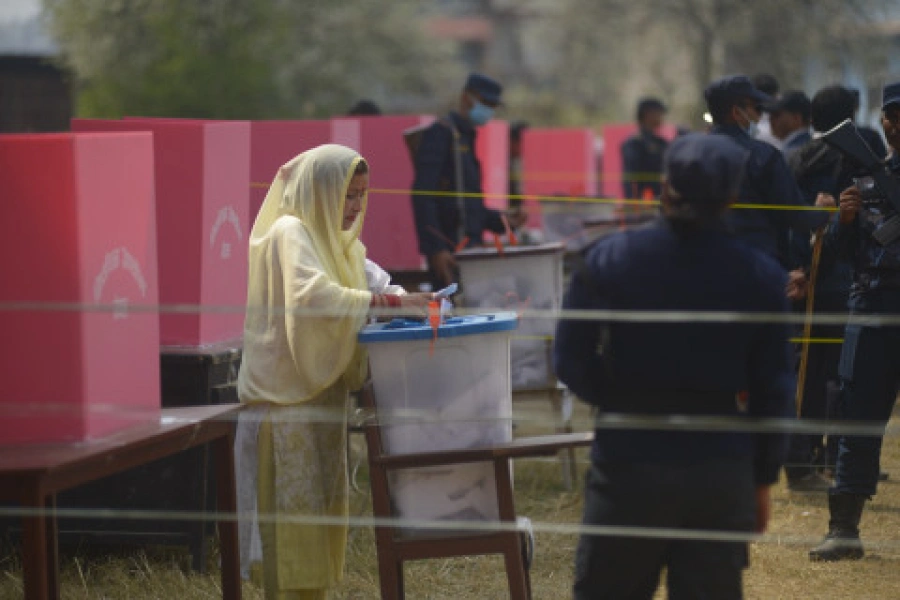
Following the dissolution of all-party mechanisms, the MoLD has now floated three options to run these local bodies. First, it wants to hold local elections, which is the best of all alternatives. Second, it wants to put the bureaucrats in the driving seat for an indefinite period until local elections take place. And third, it envisages restructuring all-party mechanisms, stripping them of executive functions. Of these, the second and third are not feasible as they can´t address the problems faced by the local bodies. Even if political parties are deprived of executive power in newly restructured all-party mechanisms, it will be difficult to limit their influence locally.
Despite elections being the best of all available options, political parties don´t find it a workable idea now as they themselves are riven by inter-party feuds. For sure, the lengthy constitution-writing process, political instability and uncertain state restructuring process will continue to jeopardize our democratic functions at the grassroots for few years more. But the question is: can we subscribe to prolonged democratic deficit at the local level in the name of political transition? When we are in a relatively peaceful time compared to the past, why can´t we call for local elections? If we can reinstate the dissolved parliament after four years, why can´t we do the same for local bodies if parties believe fresh mandate is not possible now?
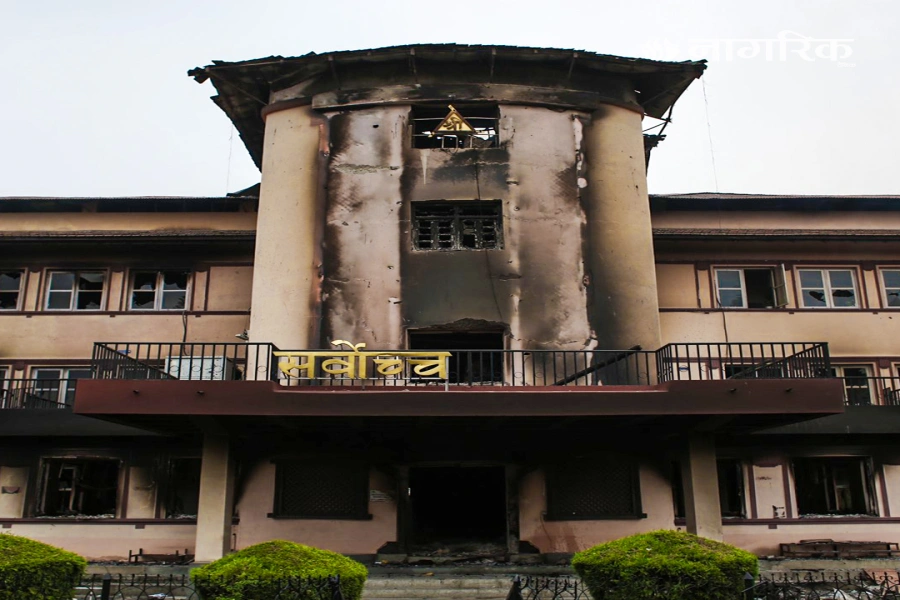
Yet another factor hampering local service delivery is poor infrastructure. Over 1,000 VDCs still don´t have their own office buildings since they were destroyed in the conflict; data show not even half of the number have been reconstructed. A single VDC receives around Rs 3 million in block grants from the central government. But in absence of elected representatives they lack institutional capacity and manpower to properly implement and monitor the use of scarce development resources.
Understaffing of VDCs is also a prominent problem as a secretary has to look after at least two to three adjoining VDCs in many districts. This has made service delivery more problematic while distributing social security allowances, issuing citizenship recommendations, convening village councils, disbursing development budget and monitoring use of allocations. The MoLD data shows hundreds of VDCs are still without secretaries.
Thus, as an exigency, prevailing anomalies and leakages in the local bodies need deft tackling at the political level in order to restore people´s crumbling trust. As strengthening local governance, improving service delivery and rebuilding local infrastructures should warrant highest priority in post-conflict situation, political parties have a tough choice before them. It is up to them whether to opt for a fresh electoral mandate, to reinstate the dissolved local bodies or to consensually form all-party executive council on basis of their strength in the Constituent Assembly. Or else, let the local bodies crumble under the weight of partisan interests and egos of our own political masters.
The writer is Deputy Director of Good Governance Program at Pro Public. Views expressed in this article are personal
pbhattarai2001@gmail.com
Related story
Democracy was saved but hope is all we have