In 1974, a military regime replaced Ethiopia’s imperial regime with a unitary-state system. The Ethiopian People’s Revolutionary Democratic Front (EPRDF) deposed the military regime in 1991. The EPRDF established a transitional government of Ethiopia (TGE) that adopted an ethnic-federalism model with a unique state-building strategy to guarantee the right of self-determination for all states.
The new model of government has allowed formerly oppressed groups to reassert their cultural identity, resulting in the creation of many small political parties. This atmosphere has not been conducive to the creation of multiethnic national parties or the establishment of viable coalitions among different ethnic parties.
Power has remained centralized and ethnic strife continues. Numerous political parties do not ensure increased representation, and often contribute to a weak party system. A multitude of political parties that represent individual group interests, and have little in common with each other, have created a “divide-and-rule” atmosphere. Some argue that the ethnic-based federal arrangement in Ethiopia is a mechanism designed by the transitional government to maintain power and that genuine decentralization was never the goal.
The Sinhalese first proposed the idea of federalism to the British in 1925. Tamils argued that the country was too small to support the additional expense and that such a system would result in “eternal wrangling” over financial resources within the federal parliament. They believed ethnic federalism would bring disunion amongst peoples. “Race individualism would intensify and ultimately lead to internecine troubles and racial secession.” Due in part to Tamil descent, the British never took the idea seriously.
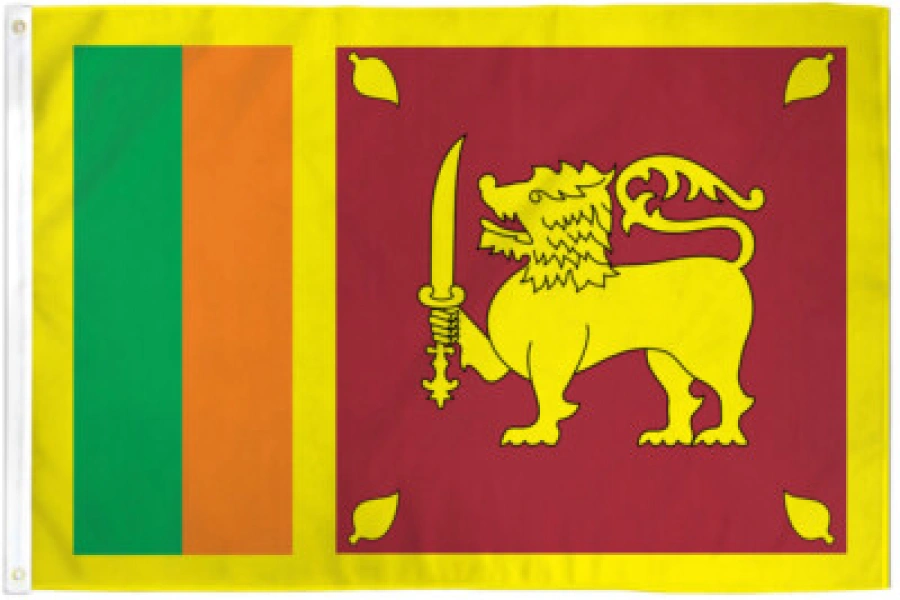
Interestingly, 25 years later, the Tamil Federal Party leader proposed modeling Ceylon after the Swiss Federation. The prime minister of a newly independent Ceylon (1948) rejected the proposal in favor of establishing a unitary state. Over the next quarter century, Sri Lanka established a competitive party system and an impressive record as a parliamentary democracy. However, ethnic tensions persisted. The ethnic conflict turned into a bloody civil war in the early 1980s. In 1987, Sri Lanka established a system of provincial councils based on the idea of transferring power from the central government to regional governments in an attempt to resolve ethnic conflict.
In communist Eastern Europe, the Soviet Union, Czechoslovakia, and Yugoslavia were governed by federalist systems of government put in place to address ethnic diversity and quell nationalist tendencies among the groups. Following the end of the Cold War, all three countries broke-up and became 18 independent countries.
To date, the transfer of power is incomplete. The current president of Sri Lanka, Mahinda Rajapaksa, has recently “ruled out federalism as a solution” in favor of a workable model of devolution within a unitary system. Using diplomacy, President Rajapaksa has restored ethnic harmony across the island. Emphasizing equitable development throughout all regions of the country, the government is focused on rebuilding war-torn areas of the country, improving education and access to health care, as well as protecting the environment.
Established in 1954, Nigeria is the oldest federal system on the African continent. The Nigerian Nations and Communities unanimously agreed on a model of federalism arguing that a unitary constitution would create hostility and bitterness among the various ethnic communities. The 1960 constitution created a power-sharing agreement between individual states and the central government.
Each region had its own constitution, in addition to the federal government constitution. The regional constitutions described each region as "a self-governing Region of the Federal Republic of Nigeria." Neither the central nor the regional governments would be subordinate to each other, but rather, the two would cooperate and exist independently. The national and regional governments would share resources and the costs to support the functioning of government.
Instead of decentralizing constitutional powers and responsibilities from the central government to the regional governments, the Nigerian federation over time, has become hyper-centralized. Additionally, the horizontal revenue sharing system adopted by the states has created what Ibrahim Babangida describes as a “cake-sharing psychosis” among states. The struggle for federal resources and representation in the central government overrides state efforts to develop their economies, protect their environment and provide social services for citizens.
Today, scholars question whether Nigeria is a federation at all. Surrounding the debate is a 2011 Fund for Peace report ranking Nigeria as the 14th “Most Failed State” (of the 177 countries analyzed). Contributing to the problem are intergovernmental relations dominated by the unproductive, divisive, and ultimately destructive competition for power and resources within an overwhelming central state apparatus. According to Nigerian politician, Tunji Braithwaite, Nigeria’s system of federalism represents “the worst form of federalism anywhere in the world.”
Following independence in 1947, Indian states were organized based on the administrative structure created by the British. In response to citizen demand, the States Reorganization Commission in 1956, created an asymmetric federal system comprised of 21 states and 7 union territories (now 28 states and 7 union territories) to coincide with the languages of the country. Vijay Kelkar, former chairman of the Indian Government Finance Commission, describes the system as “cooperative federalism” with “formal and informal rules for maintaining the political system” that provide “flexibility” in governance.
Such flexibility has helped the country to maintain unity. Additionally, the 73rd and 74th amendments to the Indian constitution created a third tier of government – the Panchayati Raj – in rural areas and elected urban bodies. These amendments addressed the need for effective decentralization.
While some progress toward decentralization has occurred, many argue that some areas of India would benefit from more autonomy. The idea that India’s federalism will “hold together” the country and assuage tensions and fears among ethnicities has not proven to be 100 percent effective. Socio-cultural ‘identity-based’ conflict currently exists in 64 percent (18) of India’s states.
Belgium’s constitutional reform of 1993 converted the unitary government into what may be called “dissociative” federalism. Divided into four language regions – Flemish (6 million), Walloon (3.3 million), German (70,000) and the Capital of Brussels (1 million) – this unique form of federalism (territorial and community-based) is designed to guarantee the linguistic rights of all Belgians, regardless of language.
A federal parliament, three regional parliaments (Flanders, Wallonia and Brussels) and three community parliaments (Dutch, French and Germany) create a three-level government system. The federated regions have jurisdiction over issues related to the territory and the economy, while the community governments manage cultural, linguistic and person-related issues such as health care, media and use of language.
Despite these arrangements adopted to give greater autonomy to the linguistic communities and the regions, a number of controversial linguistic issues remain. Additionally, the division between the largely Flemish-speaking north and French-speaking south has increased. This is due largely to decreased contact between the groups and a lack of desire to learn the “other” language. As a result, two distinct civil societies and two political cultures have emerged.
Serving the individual societies are regional political parties. Currently, no bilingual-oriented party has had success on the national level resulting in the absence of federal political parties. According to a former cabinet member in the Belgian parliament, “the weakest point of Belgium federalism is the fact that candidates to the federal parliament are elected in their sole region and only by the voters of their linguistic community, not by all Belgians. Consequently, each member defends the political agenda of their community which does not necessarily coincide with what is best for all Belgians.”
In communist Eastern Europe, the Soviet Union, Czechoslovakia, and Yugoslavia were governed by federalist systems of government put in place to address ethnic diversity and quell nationalist tendencies among the groups. Following the end of the Cold War, all three countries broke-up and became 18 independent countries.
Yugoslavia is often cited as an example of ethnic-federalism gone wrong. The foremost US scholar of federalism, Daniel Elazar, argues that the case of Yugoslavia highlights the fact that “many polities with federal structures were not all that federal in practice” and that federalism “is as much a matter of process as structure.”
A federal structure does not automatically ensure the processes of decision making that are necessary between the central and regional governments of a country. Such processes require a sense of partnership between the central and regional units that acknowledge the need for bargaining and compromise in decision-making and the importance of accommodation at times. In order for federalism processes to take hold and facilitate decision-making and governance in a federalist system, all involved parties must support and believe in the idea of power sharing. Attitudes matter, and without buy-in at all levels of government as well as citizens, the federalist structure exists on paper only.
The first part of this article was published on October 16. The final part will be published on October 30
Keshav Bhattarai is Professor of Geography & Darlene Budd is Associate Professor of Political Science & Director of International Studies at University of Central Missouri, Missouri, US
bhattarai@ucmo.edu
dbudd@ucmo.edu
Related story
On ethnic federalism