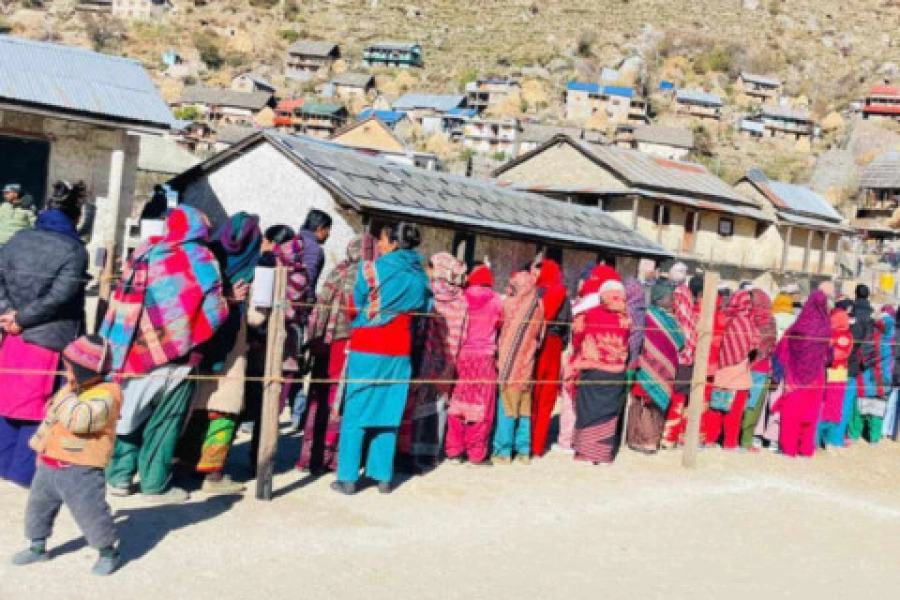
Nepal is once again preparing for elections. Although doubts often surface whenever polls are announced, citizens have consistently participated, and elections have always been completed successfully. This reflects the gradual strengthening of the country’s electoral system, particularly the institutional development of the Election Commission, which has demonstrated its ability to conduct polls within the stipulated timeframe. This election, however, carries added significance. President Ram Chandra Paudel announced the date amid unrest following the so-called Gen Z protest and the arson, looting and vandalism carried out under its cover. Voting is scheduled for Thursday. For democracy to endure, institutions—not individuals—must be strong. In Nepal, there has long been an attempt to suggest that electing a single powerful executive would automatically deliver development. Even within the current system, parties have increasingly projected prime ministerial candidates and sought votes in their name. While personality-driven politics is not new, this experiment deserves careful reflection. Democracy must evolve in a way that ensures institutions, rather than individuals, remain accountable.
Trace and test

The security sector is central to this institutional framework. The Nepali Army, Nepal Police, Armed Police Force and National Investigation Department are key pillars of the state. Although questions occasionally arise about their impartiality, the perception that they are controlled solely by the ruling party has weakened over time. These institutions appear to have strengthened their credibility through periodic self-correction. In moments of crisis, citizens continue to place trust in them. Their commitment to human rights, democracy and transparency will once again be tested. The judiciary has likewise played a vital role in Nepal’s democratic journey, despite periodic criticism—particularly regarding the politicisation of appointments. Once appointed, judges are expected to rise above partisan interests and serve the public. Public confidence, barring a few cases, remains largely intact, and judicial institutions appear to be maturing.
The Office of the Attorney General has also faced scrutiny, especially when decisions appear to favour the government of the day. Recent moves to release individuals arrested after the Gen Z unrest have affected its image. Yet such practices are not unprecedented. Institutional reform and adherence to constitutional roles remain essential. Parliament, too, is fundamental to democratic stability. The permanence of the National Assembly reflects an intention to ensure continuity. The House of Representatives demonstrated strength in the 1990s, though in recent years it has appeared overshadowed by dominant leaders. The new Parliament must revive public engagement and assert its institutional independence. Ultimately, the strength of Nepal’s democracy will depend on the collective performance of its institutions. Rather than placing hope in a single leader, the focus must be on building resilient systems capable of safeguarding democracy—even if an unsuitable individual attains power. With vigilant civil society and accountable state bodies, democracy can function effectively and endure.