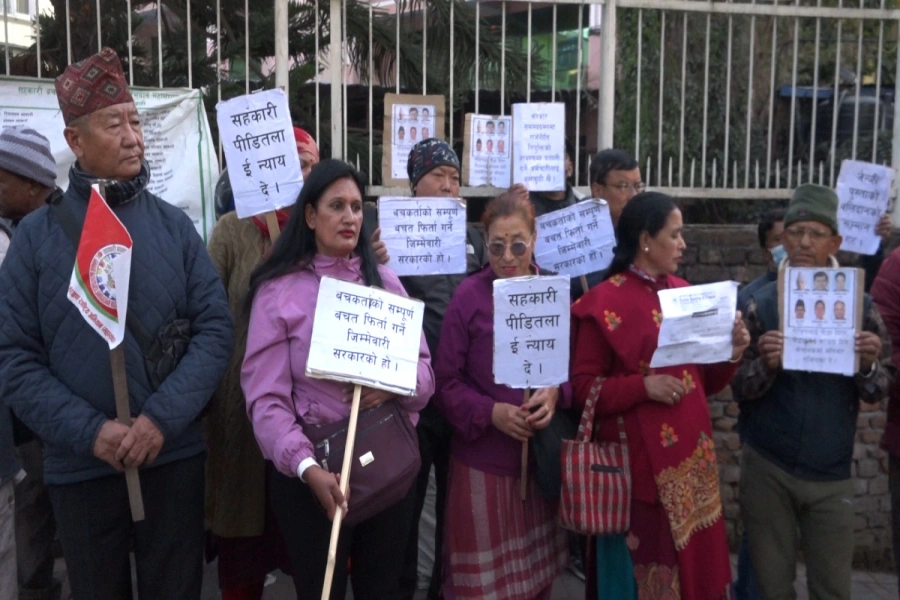
KATHMANDU, Nov 1: Despite repeated assurances that the government is working tirelessly to return money to victims of troubled cooperatives, most of the depositors across Nepal are still waiting to recover their savings, with some receiving as little as Rs 5,000 in relief.
The government has established a relief fund, prioritised vulnerable depositors and promised to return deposits of up to Rs 500,000 to eligible savers. However, victims say the payments made so far have done little to ease their financial distress, leaving many questioning the effectiveness of the government's efforts.
The scale of the problem is reflected in the figures compiled by the Problematic Cooperative Management Committee, which says around 76,000 depositors are owed nearly Rs 46 billion. Only about 11,000 depositors have received full or partial repayments, while the whereabouts of some cooperative operators remain unknown and the recovery of misappropriated funds remains uncertain.
For many victims, even court verdicts have failed to secure the return of their money.
Court verdicts fail to secure repayment
The case of Delight Multipurpose Cooperative in Jawalakhel, Lalitpur, illustrates the predicament faced by depositors. Nearly a year after the District Court ruled in favour of depositor Radha Pathak, she has yet to recover her savings or the amount promised through a cheque issued by the cooperative's management.
The court delivered its verdict on December 12, 2025, in a case filed by the government attorney's office. However, the ruling has not translated into repayment.
The cooperative's chairperson, Sher Bahadur Tamang, and managing director, Ashish Tamang, allegedly fled after securing bail by handing Pathak a cheque for Rs 2.5 million at a police station. The cheque was later dishonoured, prompting a cheque-bounce case in which the court issued arrest warrants against the two. Police say they are searching for them.
Depositors lose billions of rupees due to lack of effective reg...

The cooperative has remained closed for three years, with its office still locked. Victims say the institution misappropriated millions of rupees in deposits.
The experience of Delight Cooperative's victims reflects a wider problem. Most of the depositors from the 23 cooperatives officially designated as troubled say they have yet to receive meaningful relief. Those whose cooperatives have not been granted the designation remain outside the government's relief programme.
Rs 650 million fund, but repayment remains limited
The government has established a revolving relief fund to repay depositors of troubled cooperatives. It allocated Rs 250 million to the fund, while cooperative operators contributed another Rs 400 million, bringing the total to Rs 650 million. Money recovered from loans and asset sales is also expected to be added to the fund.
Under the scheme, eligible depositors are to receive repayments of up to Rs 500,000. However, some victims say they have received only Rs 5,000, while many others are still waiting for a clear repayment schedule.
The Problematic Cooperative Management Committee says around 11,000 depositors from cooperatives including Shivshikhar, Kantipur, Krishi Bikash and Gorkha have received relief worth approximately Rs 710 million through cash payments and adjustments against their deposits.
The government initially prioritised depositors with savings of up to Rs 10,000. It later extended priority to single women, senior citizens, Dalits, indigenous nationalities, people with severe disabilities and those suffering from serious illnesses.
The figures indicate that some repayments have been made, but the scale of the outstanding liabilities remains far greater than the relief provided. The scheme also depends heavily on recovering loans and tracing the assets of cooperative operators, some of whom remain at large. Victims suspect that others have concealed or transferred their assets.
Information Officer Bhavana Pokharel said the committee had intensified action against borrowers who took loans from cooperatives but failed to repay them.
Cooperatives Minister Pratibha Rawal has said the government will not abandon its efforts to resolve the crisis. Authorities are also discussing the formation of dedicated police units and special court benches to expedite investigations and hearings.
Complaints mount as regulatory process drags on
Meanwhile, depositors continue to lodge complaints with regulatory authorities in the hope of recovering their money.
The Bagmati Province Cooperative Registrar's Office, which regulates most cooperatives in the Kathmandu Valley, has received numerous applications seeking repayment. Registrar Yadav Nath Acharya said the office had recommended declaring five cooperatives troubled and forwarded their cases to the ministry.
The office is processing other applications, some of which have been returned because of missing documents.
For depositors whose cooperatives have not been officially designated as troubled, the process of obtaining relief presents an additional hurdle. Until their institutions receive the designation, they remain outside the government's repayment programme.
A sector-wide crisis
Before the crisis, Nepal had 34,512 registered cooperatives, including more than 24,000 savings and credit cooperatives, with over six million members. The sector was estimated to contribute 5 to 7 percent to the country's gross domestic product.
The crisis became more visible from 2020, when authorities began arresting cooperative operators over the alleged misuse of deposits. A slowdown in the real estate market and weak management between 2021 and 2023 further exposed financial vulnerabilities across the sector.
The number of cooperatives has since fallen to an estimated 31,000 to 32,000.
Despite government initiatives to recover deposits, the large number of affected savers and the scale of outstanding liabilities continue to hamper efforts to resolve the crisis.
Victims are demanding a clear repayment schedule, stronger action against absconding cooperative operators, the recovery of assets and transparent verification of their claims. They say government announcements, relief funds and administrative procedures will mean little unless they translate into the actual return of their savings.