The recent world slavery index released by the Walk Free Foundation, an Australian rights organization, was perhaps shocking for many in Nepal. Years after the last of bonded laborers were freed by law, it ranks Nepal among countries with the highest rates of slavery.
In reality, this report is only shocking when we realize that the word slavery is so misunderstood. We understand it to mean only the formal ownership of another person. However, slavery can mean forced labor of any type, where labor is extracted from a person without their consent on the threat of penalty. [break]
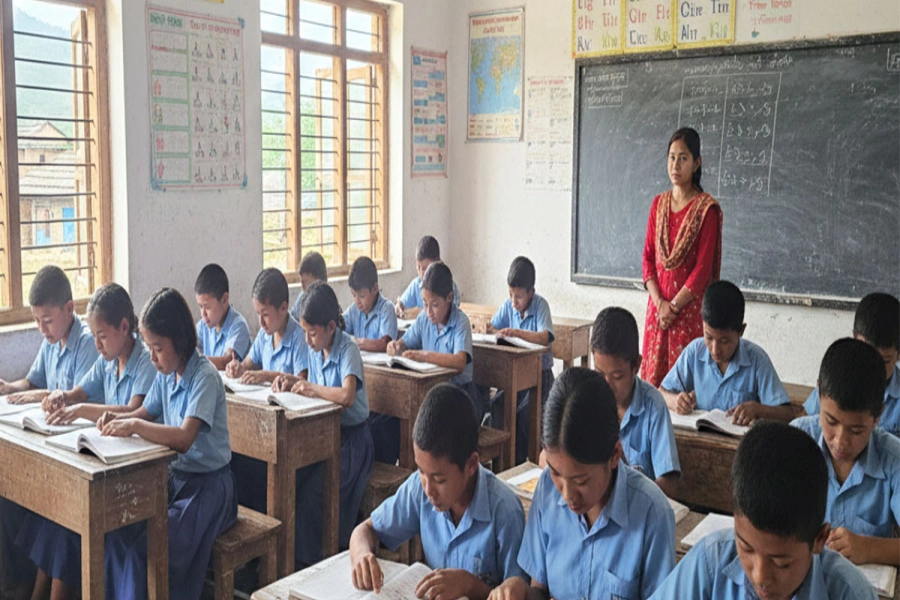
Such slavery, in the form of bonded labor, forced marriage, conscription in armies, and domestic, agricultural, or industrial labor, is still widely prevalent across the country, even though it may not be labeled so. Children, who lack the resources and the knowledge to escape their immediate social surroundings, are the most vulnerable to such exploitation.
Another misunderstood term in relation to slavery is trafficking. Trafficking is often understood to be the ferrying of persons across borders.
Domestic trafficking, or the ferrying of person from one place to another within a country for the purpose of exploitation, does not get so much attention, maybe because it is harder to track. But regarding its implications on slavery, domestic trafficking is as problematic as international trafficking.
Crossing borders illegally does not always mean that you are a trafficking victim, since many illegal immigrants do so out of their free will. Illegal immigrants who cross borders by choice are themselves liable to penalty by law.
Besides, trafficking is often understood in the limited sense of trafficking of women and girls for sex trade. In reality, the trafficking of men and boys for sex trade, as well as of both sexes for labor, is just as prevalent, if not more. These forms of trafficking escape notice because they are harder to track and because most research on trafficking has been focused on trafficking for sex trade.
The reason Nepal ranks so high on the World Slavery Index is that slavery is entrenched in our social fabric, as in many third world countries (almost half of the world’s slaves are thought to live in India). When bonded laborers were free in Nepal in 2000, for example, they were deprived of their livelihood. Many fell back to their old ways because they lacked viable options for livelihood.
Many impoverished people still send their children to better-off acquaintances in cities, which opens ways for their exploitation at home. Slavery thrives because there is still a power imbalance in our societies which puts some sections of society over others that are more vulnerable—physically like women and children, and socially like traditionally marginalized communities—and therefore, can be manipulated to provide labor in return for mere sustenance.
Hence, though we may have outlawed slavery, this practice can only be eradicated when every individual has viable livelihood options. It cannot end until these sections of society are empowered enough to not choose an option that undermines their human rights just for sustenance.
Related story
Govt to raise Rs 113 billion in domestic debt by mid-October am...