People used to say “What Biratnagar does, the nation follows” because of the city’s social, economic, political, and educational progress, but today this proverb seems like a fairy tale.
Biratnagar, which was declared a municipality in the year 1951, and received the status of a sub-metropolitan city in 1994, is the major industrial city of the nation. It was still developing when it became a municipality, but today, even though it has become a sub-metropolitan city, it appears stagnant. Once, industries were growing in the area, and local people as well as people from India were able to find employment in Biratnagar. But today the city has strayed from the path to development, and there is no one to guide it to the right track.[break]
Many cities declared municipalities a decade ago have made great social, political, and economic progress, and have achieved a lot more in comparison to Biratnagar. One can only wonder what happened to the development of this promising city.
Biratnagar is the city where the first industry of the nation was established, and later it was home to more than 500 industries, which had an important role in the economy of the country. They had not only generated revenue for the country, but also helped increase the living standard of the people by creating employment opportunities. But today, industries are decreasing day by day due to various problems like load shedding, labor disputes, and political uncertainty.
What ails Biratnagar

Due to poor national commitment, today Biratnagar is a dead city where people are without hope or opportunities. This city gave birth to many political leaders, but none were loyal to Biratnagar. For instance, Girija Prasad Koirala, who served as the prime minister of the country many times, did not take any strong steps for the development of the city, although he was from Biratnagar. Though it is the oldest industrial city, the government has turned a deaf ear to industrialists’ recommendation of creating a special economic zone (SEZ) in the city. Political parties do not seem to be taking the issues of Biratnagar seriously.
Infrastructure development inside the city has come to a halt. For instance, the Biratnagar ring-road project was inaugurated a decade ago, but until now, not a single kilometer of road has been constructed. We cannot find any monuments that enhance the city’s beauty. Roads inside the city are in a pitiful condition, making it difficult to travel in rainy season. They are narrow, and their carrying capacity is overloaded with the increase of vehicles inside the city. Transportation network inside the municipality is poor, as a result of which many people do not have access to proper public transportation. Majority of the people living in the city use bicycles as a mode of transportation, but we cannot find a single bicycle lane in the city.
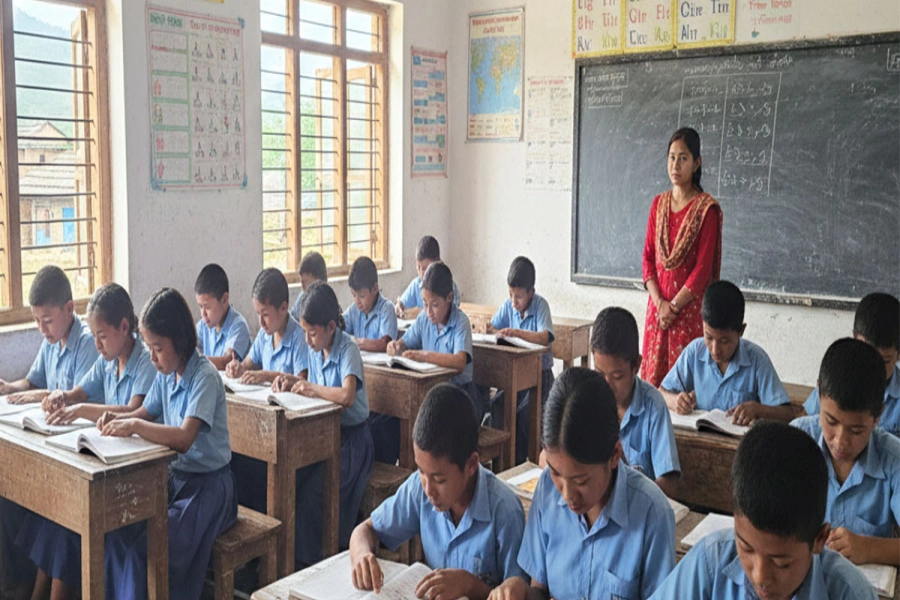
The city has managed to make some progress in the field of education and health, the number of schools, colleges, and health institutions is on the rise. But there is no one to check on their quality, or the cost they are charging, so it is doubtful if just their numbers can ring prosperity. To some extent, it has helped in the development of the city, but more than that, it has increased disparity between people.
The city’s main market is centralized in a corner of the city, and is also small in size, due to which it is unable to serve all people effectively. Migration inside the city is increasing, leading to an increment in the number of houses, and decrement of agricultural area and open spaces. Unplanned and haphazard settlement characterizes the city. Because of the increasing population and poor municipal commitment towards generating employment, unemployment is increasing at an alarming rate, which has increased poverty and reduced people’s capacity to pay for available urban infrastructure. Lack of public toilets, poor garbage management, lack of urban parks, play grounds, and recreational venues inside the city paint a clear pictures of the urban environment of the municipality. Due to such woefully inadequate urban infrastructure, the municipality is unable to meet the demands of its increasing population.
These problems are not recent, but something the city has been facing for decades. But the concerned authorities still seem unwilling to take action. Do they want Biratnagar to be deserted? Actually, who is accountable for these things? Is it the people, or the government which is collecting a hefty revenue from Biratnagar? In fact, Biratnagarians themselves should think seriously about these issues instead of pretending to be ignorant. True, they won’t be there in the future to live in a steadily deteriorating city, but they should know that when the future generation evaluates the city’s lack of development, it is towards them that the fingers will be pointed.
The dwellers of this municipality should not be content to be the residents of a sub metropolitan and industrial city. They need to make commitments to make the city ideal. The government also needs to prioritize the development of the city, and should routinely check on the problems of big projects in city which contribute significantly to the country’s economy. It should also be transparent, and let the public know how it is spending the hefty revenue collected from the city. The denizens of the city should make the government or local body accountable, and should keep track of the development activities inside the city. Otherwise, Biratnagar is sure to become as ugly as our capital city. It’s never too late to improve this city, because the time for action is now.
dhunganamukesh@gmail.com
Related story
Students face new decisions after SEE results