A baidya normally functions in a semi-scientific manner. He uses herbal medicines to treat patients. While some baidyas may still grind various ingredients to prepare medicines for their patients, others simply prescribe homeopathic medicines one can buy in special pharmacies.
A jhankri, on the other hand, calls on various spirits to treat patients. He doesn’t have a scientific basis for his “cure”. When a patient heals, it is often psychology or simply good luck may have played a part. The jhankri usually demands a sacrifice, a goat or a chicken. Often, he does more harm than good. The patient may die waiting for the illusive cure when a simple visit to the hospital could have healed him at much lesser cost. Many jhankris have located “witches”, who are normally helpless women, like widows, in their societies. These “witches” suffer all sorts of indignities, like beatings, being paraded naked in the village and force-feeding of human faeces.
Mohan Baidya’s very name has some peculiarities. In our country, the Baidya caste usually belongs to the Newar race. However, Kiran doesn’t have a Newari descent. Writer Kanak Mani Dixit (in his book Peace Politics of Nepal, Page 48) says that the comrade actually “belongs to the Bahun clan of Pokhrel”.
Although most of those from the Newari Baidya caste practise homeopathic medicine of some sort or run allopathic pharmacies, Mohan Baidya doesn’t have such a background. All politicians believe that they can heal our nation; Baidya, even more so. Presently, he differs sharply from fellow comrades, Pushpa Kamal Dahal and Baburam Bhattarai, whom he regards as having deviated from true Maoist ideology.
THE EMERGENCE OF THE HARDLINER
Baidya doesn’t like the word “hardliner” when people use it to describe him. However, most Nepalis regard him as a hardliner anyway. At one time, all the present Maoist leaders were hardliners; we have to go back to 1983 to discover the earliest use of the term. That year, the Communist Party of Nepal (Masal) split in two. The “soft-liners” believing in “mass uprising” stayed with the leader Nirmal Lama. Hardliners believing in Mao-style revolution walked away with Mohan Baidya to form NCP (Mashal).
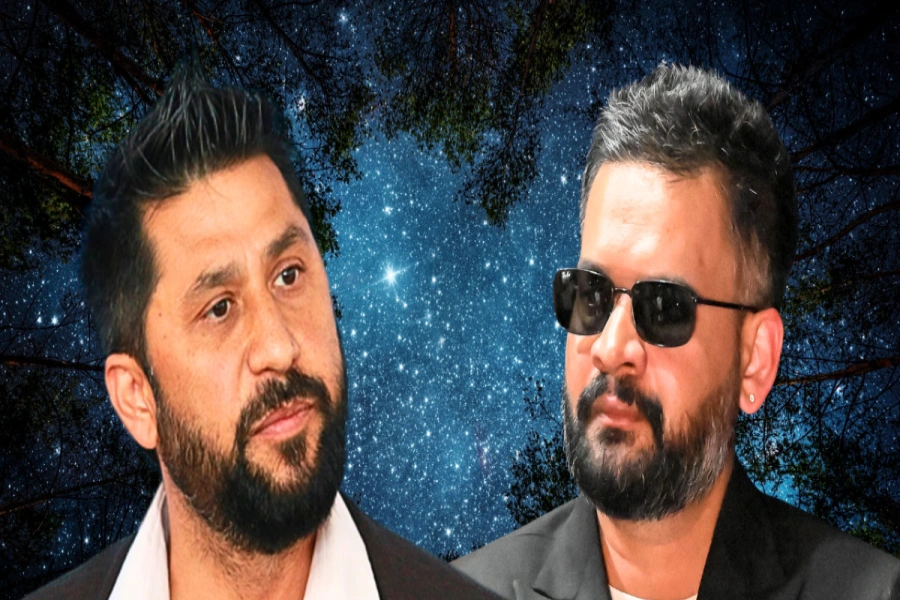
Maoist vice-chair Baidya is like a witch doctor who prescribes very strong but little effective drugs.
The Baidya group with Dahal and Bhattarai started calling themselves the CPN (Maoist). At least initially, Mohan Baidya appears to have been the hardest of the hardliners and the leader of the split away group. By early 1996, when the Maoists submitted the 40-point demand to PM Sher Bahadur Deuba, Bhattarai, the author of the document, had assumed leadership.
At the Palungtar Plenum (November 2010), Bhattarai, abandoning neither violence nor Maoism, pleaded for the completion of the peace process and the writing of the constitution. He was alone in this quest. Then, Dahal and Baidya started singing the same song—“people’s revolt”. During the Maoist Politburo meeting on April 20, 2011, Dahal suddenly changed his tune. He said his party should concentrate on completing the peace process and drafting the most essential parts of the constitution by May 28. After wasting five years of our nation’s valuable time, Dahal finally saw sense. Since then, Baidya has found himself alone because according to him Dahal and Bhattarai have abandoned his pet goal, the people’s revolt. For Baidya and company, the two have become reformists and revisionists.
FANTASTIC REMEDIES FOR NEPAL’S ILLS
While Dahal and Bhattarai drafted the 12-point agreement with seven other parties in New Delhi, Baidya was doing time in an Indian jail. By the time he re-joined his comrades, he had missed the pragmatism Dahal and Bhattarai had instilled in the party. Through his various interviews and speeches, Baidya has outlined the following remedies for the country.
(1) He firmly believes in “people’s constitution”, similar to those of North Korea and China. Baidya agrees fully with a similar draft Bhattarai prepared on behalf of UCPN (Maoist). He feels a democratic, republican constitution can only be a stepping stone towards the ultimate Maoist goal. Baidya also opposes the four point deal between the Maoists and the United Democratic Madhesi Front on August 28, 2011 because it proposes a democratic, republican and liberal constitution.
(2) Baidya advocates a non-parliamentary system of governance. He says that the Maoists fought ten years against the parliamentary system, which he finds ineffective. He thinks Dahal and Bhattarai have betrayed the party by cosying up to it now. Baidya gave up his seat in the parliament to prove his point. Although he has grudgingly accepted the presence of other parties, he thinks only “patriotic” parties should function. And who decides which parties are patriotic? The UCPN (Maoist) of course!
(3) Baidya roots for a directly elected executive president. He feels an executive PM, as we have now, is out of date. He doesn’t care about the possibility of such a president becoming dictatorial. The UCPN (Maoist) wants to establish its dictatorship anyway!
(4) Baidya has consistently opposed the Bilateral Investment Promotion and Protection Agreement (BIPPA) signed between India and Nepal on October 21, 2011. In this, he follows point 6 from Bhattarai’s 40 demands handed over to the then PM Sher Bahadur Deuba. It says, “Dominance of foreign investment and their monopolist capital in financial institutions, industries, and other businesses must be stopped.” Bhattarai has changed but not Baidya.
(5) Baidya has opposed the integration of Maoist soldiers into the Nepal Army. He argues that the former will suffer humiliation in doing so. However, most Maoist fighters have now chosen integration, and proven that Baidya remains out of touch with their desires.
(6) Baidya won’t allow the returning of the properties that the Maoists have confiscated. Again, he follows point 27 of Bhattarai’s 40 demands, which states: “Land should be of the tillers. Lands of rich landlords must be confiscated and distributed among the landless.” In wanting to return robbed land to their previous owners, Dahal and Bhattarai have backtracked; but Baidya remains adamant. No one denies that our country needs an effective land reform programme; but what gives the Maoists the right to take the law into their own hands and distribute land to swell their vote bank?
(7) Not surprisingly, now Baidya plots, Bhattarai alleges, with some in the UML to bring down the present government. Baidya’s actions, if successful, will only bring further instability to our impoverished country.
Let’s assume that by advocating for the completion of the peace process and the writing of the constitution, Dahal and Bhattarai have really converted to a peaceful path. We can only mourn that Baidya, who could become a fellow-healer for our country, has turned into the irrelevant jhankri, who can’t heal but can only prolong our nation’s sickness.
Related story
Signs you have a ‘bad’ boss