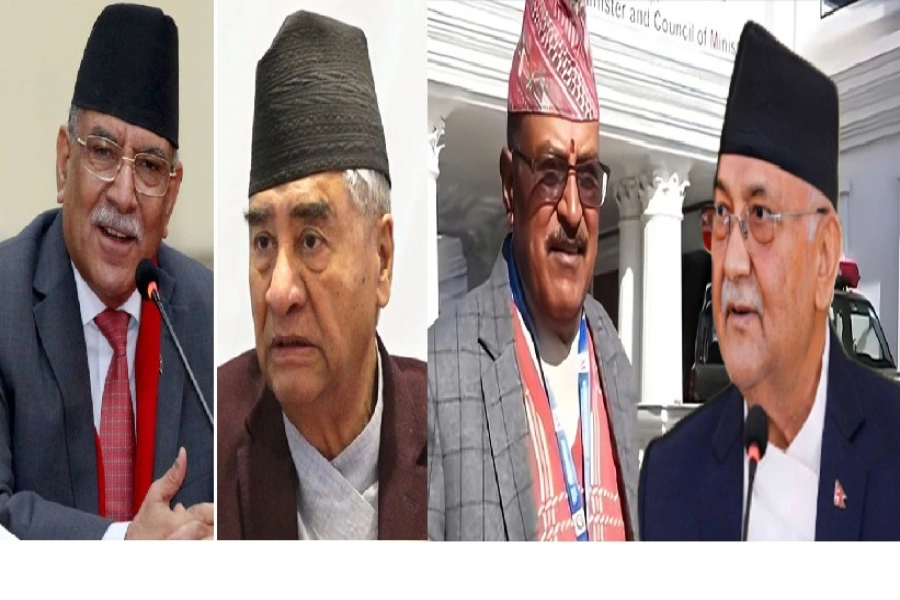
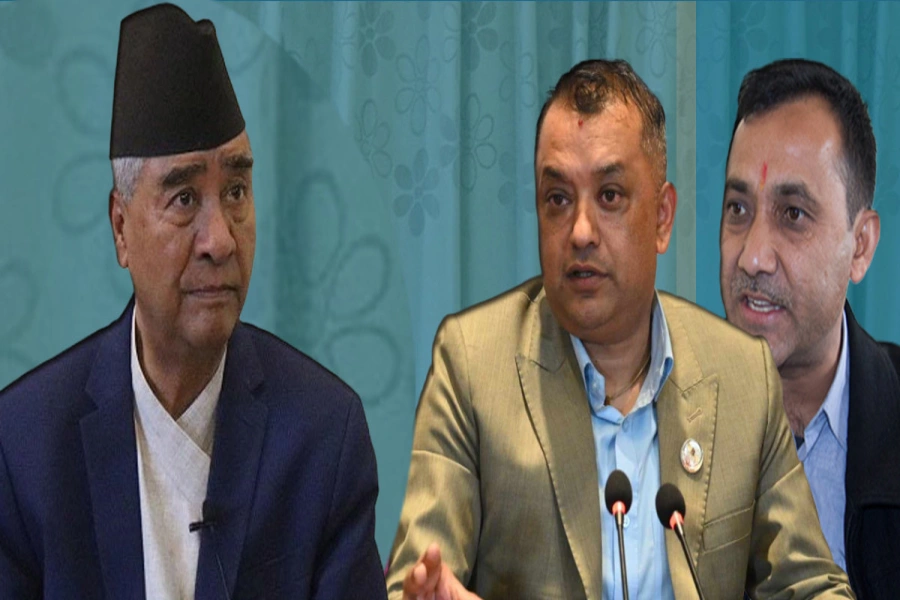
With CPN-UML agreeing to constitutional changes in line with Madheshi demands, the Big Three are now on the same page. Nepali Congress and UCPN (Maoist) have already agreed to table in parliament the twin proposal for delineation of electoral constituencies on population basis and for proportional representation of all ethnic communities in state organs. Now UML, again like Congress and Maoists, appears ready to change the boundaries of the seven federal provinces. These are encouraging signs. The main bone of contention will now be over the formation of a political committee, as the Big Three have proposed, to settle the borders of future federal provinces. The Madhesh-based parties that have been agitating in Tarai-Madhesh for the past three months have been saying all along that all boundary-related issues must be settled immediately. If their federal agenda is now deferred, they say, there could be a 'conspiracy' to dilute it, and, ultimately, to do away with it entirely. But the Madheshi Morcha's options are limited.During their recent trip to the Indian capital, whoever they talked to, the Madheshi leaders were clearly told to sort out outstanding issues through talks. New Delhi has also given the clearest hint to date that it is ready to review its decision of restricting supplies into Nepal—if the twin amendments first proposed by Nepali Congress are passed by the Nepali parliament. So there is now enormous pressure on Madheshi Morcha to be flexible on redrawing federal boundaries through a political committee. Such a committee, it's been proposed, will have three months to suggest new federal boundaries. What is not clear is if the decision of the committee will be binding or if the parliament will have the final say. Perhaps this is something for the two sides to work out when they sit down for next round of negotiations. But if the Big Three are serious about the two constitutional amendments, the onus is now on Morcha to show some flexibility, not the least because Nepali people have already suffered so much in the past three months of uninterrupted, oft-violent protests. They deserve a respite.
We are also happy that India is reconsidering its hardline position and seems to have finally recognized that federal border demarcation is a purely 'internal matter' for Nepal. We hope that India will stick to its words. This will mean, first, immediately opening the border points that have been shut down even when there are no protests on the ground. It will also mean that India will henceforth not take sides in the federal debate, not only in words but also in action. We understand that Indians are sensitive about continued violence in Tarai, which, if it gets out of hand, could spill over into UP and Bihar. We are also aware that the recent Indian interference was, at least in part, invited by Nepali leaders who were until recently at Indian establishment's beck and call. But the fear of a spill-over, at the moment, is overblown. And irrespective of the past conduct of Nepali political actors, surely, it does not behoove a mature democracy like India to needlessly meddle in the affairs of another sovereign country, even if (or especially if) that country is also your closest friend.
Related story
Nepalis trying to enter US illegally from different countries s...