In recent times, the word “masala” has wandered beyond the subcontinent’s kitchens and has jargoned itself in the film industry. Carving a niche of its own and creating a host of consumers which spans across the borders, the Indian popular cinema is a trip that South Asians are into. A formulaic coke, the age-old narrative continues to impress millions of viewers, and films have become a platform to instill and exploit ideas in the new world order where the mass psychology plays an important role. Enter masala films where the first rule of the filmmaker is, “Dude, there’re no rules!”
It is a different world. Poverty is widespread and corruption begins early in South Asian homes. Life is political from day one, and hallucinations begin when people find themselves in a theatre. On a massive screen then, for the next three hours, a strong dose of masala is projected. To a critic who does not understand the subcontinent’s psyche, what then flickers would not make sense at all – heavily choreographed song and dance items, extreme melodrama, unbelievable stunts and fights, cabaret sequences, and exaggerated humor winds the barometer while elements like visual narration, sound, acting skills, and cinematic direction find themselves condensed in the thermometer. Yet these very characteristics churn a huge turnover, and define the very essence of the Indian cinema – mostly Hindi-language films – that we now call “masala” films.
Poverty and masala films are parallel: While films have always mirrored the evolving society, the masala portrays the poverty. For millions who earn less than a dollar a day, theatre is a comical relief from life, and like it or not, these films are not made for us but rather for the lot who are put up at dera-s (rented C-grade tenement rooms) and have to work their calories out to eat the next meal. For them, the masala characteristics are something that they can easily relate to, and the film content no doubt elates them as the narrator in fact does nothing but portray their story in fairytale-like manners.
However, Indian cinema is undergoing changes. With the release of “Dil Chahta Hai” and the likes, narration is slowly changing gears, and these linear developments will take some time before they join the bandwagon of the naturalistic approach of Hollywood.
Indian cinemas are generally musicals, and as such, songs, dances and music have an important role to play. On average, an Indian movie can have as many as six to eight song and dance items which drain the biggest share of both the budget and production inputs. The songs play a unique role, and in some cases, even the plot continues to evolve around the theme song, fulfilling a number of functions. Lyrics, too, generate strong ersatz literary emotions, and are successful at setting up the desired moods, while the visuals that accompany the songs are a composite metaphor for eroticism and sexuality bordering on vulgarity. Such are the characteristics of the Indian popular cinema – with “masala” being its distinctiveness.
For the rest of the twelve spices (Bahra Masala-s) of Indian filim-s, wait for the multiplex screens to light up simultaneously.
Related story
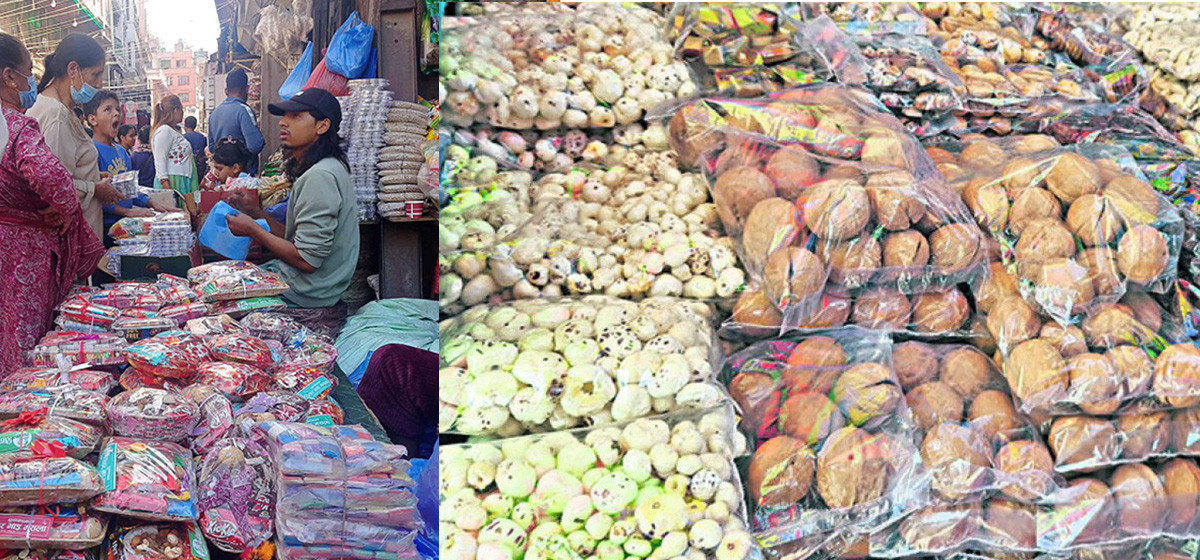
Bhai Masala prices soar this Tihar