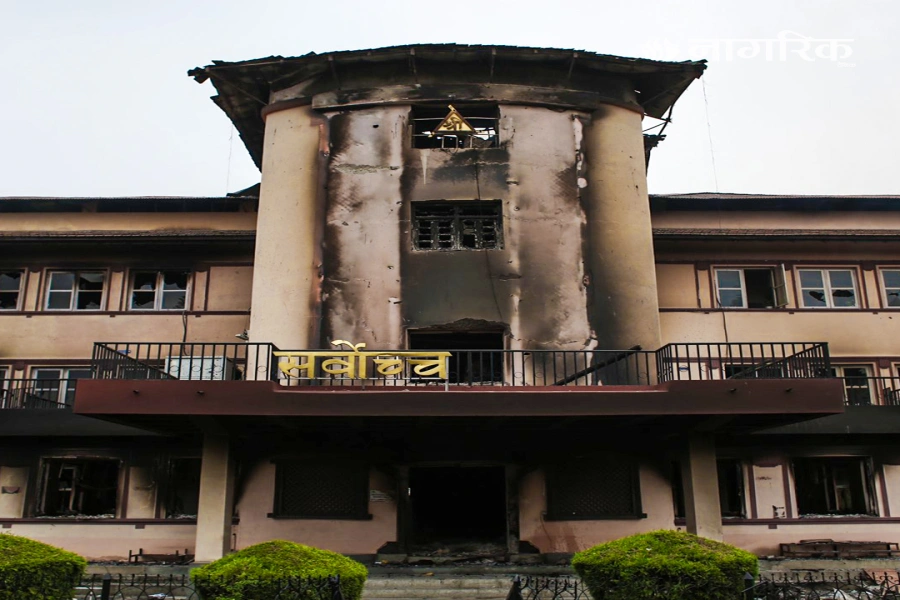
The 7.8 magnitude earthquake that shook Nepal on April 25 left Samikshya Dhungel, a Teach For Nepal Fellow in agony. She completed a year of teaching at a public school in Sangha Chowk, Sindhupalchowk and had just geared up for her second year when the disaster befell and took away her 37 of her students, her kids.
Some of her students’ innocent questions have further intensified Samikshya’s grief. “Are we going to study this year Miss? What about our school?”—they keep on asking these questions to her. Almost a month after the disaster struck, she says she can’t still find peace. With a heavy heart, she shares, “Children are eager to learn and they want to move on from this fear of tremor but 70% of Sindhupalchowk district’s school buildings have collapsed and noone has come up with any alternative for these school buildings yet, not even a temporary one. And this worries me no end.”
MASTER OF VOICES

Samikshya’s worry is definitely not hers alone. Thousands of schools in the earthquake-affected regions of our country have been reduced to rubbles. And thousands of students who once went to these schools have the same questions in their minds. And there are thousands of parents and teachers who share Samikshya’s worry.
According to United Nations Office for the Coordination of Humanitarian Affairs Asia and the Pacific (UNOCHA), more than 16,000 public and private schools—about half of the country’s total—have been damaged. Though the extent of damage is still being assessed, the initial reports indicate that the tremor has totally destroyed or severely damaged a huge proportion of school facilities in the country.
In this context, children might not take going to school as a normal activity. Having witnessed so much around them, they might be anxious to go to school. They might not feel safe. Thus, it’s very important to create the environment for them to go back to school without any fear, and make them feel school as a safe space to help them recover gradually from the trauma.
We are thankful that the earthquake occurred on the weekend. The National Society for Earthquake Technology-Nepal (NSET) in 1998-99 had evaluated the risk to schools in Kathmandu Valley. It predicted that if an earthquake happened during school hours, 29,000 students, teachers and staffs would be killed with around 43,000 seriously injured. Though we were lucky that the physical injury of children is far less than predicted, the emotional toll is yet to be measured.
Psychiatrists say that the children are the most affected by the aftershocks and would need extra attention and medical care as the disaster can lead to post-traumatic stress disorder (PTSD). Children exposed to multiple disasters experience particularly high rates of depression and post-traumatic stress symptoms. One study of Sri Lankan children exposed to both an ongoing civil war and the 2004 tsunami found that 40% of children experienced PTSD.
Regarding this alarm, the communities to which children return and the community services that families with children rely on play important roles in fostering children’s recovery. Resuming usual routines of school and play activities was associated with more positive adjustment among the children exposed to traumatic war experiences in Sierra Leone as well as for children who experienced Hurricane Katrina.
Children make up half of Nepal’s population. At least 940,000 children are affected by the earthquake and the number is increasing. It’s vital that Nepal’s children go back to school. Besides fulfilling the psychological needs, records too show that out-of-school children are at greater risk of violence, rape and recruitment into fighting, prostitution, and other life-threatening, often criminal, activities. Many will simply never return to the classroom. Many could fall into child labor, child marriage and sexual exploitation.
It’s true that when families are compelled to survive open under the sky with no food and shelter, definitely, education wouldn’t be their priority but along with the urgent needs, resuming the schools early should also be in the priorities. It’s time to think about rebuilding our schools. Rebuilding takes time but till then at least let us find some alternative solutions where children could find a safe place for them to learn and enjoy their childhood. Let’s be together to not let the tremors shake our children’s joy. Let’s rebuild our schools. Rebuilding schools means rebuilding our children’s dream.
Bhawana is the Global Youth Ambassador of Education of United Nations’ Global Education Initiative and Teach For Nepal Fellow.