The last-minute shopping and the pressure of rush to bus depots have made movement along main thoroughfares sluggish. From early next week, perhaps there will be a little less dust and noise on the streets. However, unlike a decade or so ago, the Valley does not get the time to recuperate as it used to do during Dashain breaks.[break]
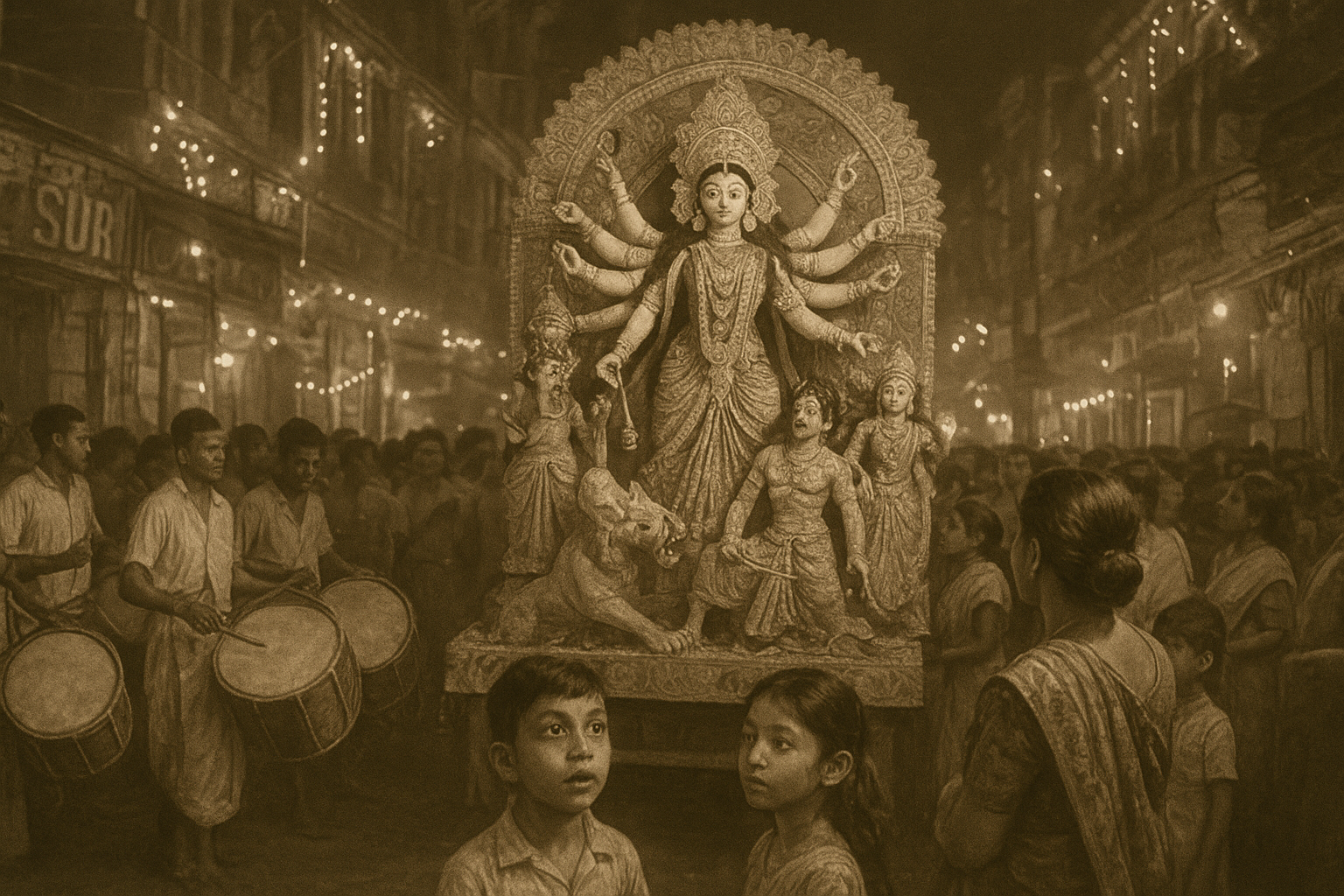
The ways of celebrating Dashain have changed. There are more pandals with colorful statues and blaring loudspeakers. Temples attract more devotees. Dashain ceremonies are no longer considered the only time for family reunion. Improved transportation and swifter movement have made it possible to travel whenever it is necessary. In any case, paternal uncles and maternal cousins matter much less to generations that have grown up in nuclear families. When friends and neighbors are more intimate than extended families, home is wherever one happens to be.
The second and more important reason for the continuing pressure of living in Kathmandu is the sheer scale of its population. If the entire Valley is taken as a single unit, which it is for all practical purposes, its population is at least ten times that of any other city in the country. The upper crust of the entire nation has made the capital city its home. Unless they are vacationing abroad or going trekking in the Himalaya, their SUVs would continue to cruise around Tundikhel.
High-end shops will perhaps remain open. Most banks have already announced business hours of their Dashain counters. Restaurants will probably be welcoming more patrons as domestics of middleclass households take a break to visit their folks back home with discarded clothes of their masters. Pressures of living will become slightly less, but memories of Dashain will probably be limited to Facebook status updates and witty twits about drunken revelry rather than those of relationships renewed or contacts established with acquaintances over languorous holidays.
Cosmopolitan cultures
Before the 1950s, it was not easy for outsiders to come to Kathmandu, let alone settle in the Valley. According to an arrangement almost unheard of anywhere else, Madheshis needed to get a rahdaani—a document that combined features of a passport as well as a visa and specified an expiry date—to come to their own rajdhani city.
Historically, Gorkhalis have never faced any restriction upon their movement inside the Nepali territory. Nevertheless, even they needed to be adventurous in order to be able to put up permanently inside the valley of rulers. The Ranas kept every newcomer under close watch. Unless one managed to break into the inner circle of an influential member of a ruling or the reigning family, the risk of being thrown out on some or the other pretext was always there.
The overthrow of Ranarchy in 1951 opened the gates at Thankot for ordinary Nepalis. Every political upheaval thereafter has brought in groups of settlers lured by the relative security and comparative comfort of the Kathmandu Valley. After the elections of 1959, some political families decided that they could do with a base in the capital city. They would soon be prosecuted or harassed after the Royal-Military Coup in 1960, which brought in an alternative setup for politicos looking for opportunities in the new order.
Between 1960 and 1980, migration into the valley was sporadic. The stifling sociopolitical environment of the Valley discouraged ordinary Nepalis from coming to their own capital. Among Madheshis, only those who were unfortunate enough to face a court case or connected enough to look for a job in the government ventured to come to Kathmandu.
The Referendum in 1980 opened the floodgates. A large section of Nepali population felt for the first time that the state was also theirs and that they had a role in deciding the system of governance. Even though the outcome was almost certainly rigged, the mere exercise of universal franchise made ordinary voters realize the power they had over whoever was to rule from Singh Durbar.
The restoration of multiparty democracy in 1990 emboldened chappal-wearing commoners in even more substantive ways. Now voters could not only decide who would get to rule but also make them do things to retain their loyalty. The circulation of political elite in the 1990s meant that the Valley had begun to burst at the seams with newly arrived traders, professionals and fixers of all kinds.
The neo-rich had ambitions to exploit opportunities created by the newfound faith of the free-market fundamentalism but cared little for the price to be paid in terms of environmental degradation, decrease in livability, and the degeneration in the norms and behavior of urban living. Perhaps the growth of cultural institutions failed to keep up with the expansion of the town and explosion of ambitions.
By the time the Maoists and Madheshis arrived in droves to claim the capital city as their own after the 2006-007 uprisings, Kathmandu has become an urban agglomeration sans cosmopolitan civilization. Every ethnic New Year and all traditional functions are various versions of festivities seen over television: Occasions to eat, drink, dress, dance and simply be merry.
Nothing wrong with revelry per se—in fact, occasional merriment is good for the mind and body—but the soul needs more than memories of revelry to survive the travails of modern life. Reminisces require careful cultivation of companionship, and remembrances are built from deep relationships rather than fleeting flirtations.
Parochial persons
It is said that time is continuous with neither a past nor future but merely a flow of events and experiences passing through the present to comeback again in other forms. Every birth is the commencement of inevitable death, which in turn signifies the beginning of yet another cycle of perpetual motion. Even as these lines are being written, the sensation that propelled the thought is already past.
The pressures of daily life are so strong that the past appears as past, the future looks distant, and only the present is for real. Obsession with only one period—be it the past, the present, or the future—is perhaps partly responsible for the development of a parochial personality. Conservatives are obsessed with supposed glories of an imagined past; pragmatists manipulate the present for their own benefits; and progressive hawks dream of a future designed according to a definite blueprint.
Kathmandu became a metropolis without cultivating accommodative ethos. Theists, atheists and secularists are all essentially parochial beings trapped inside the cosmopolitan cocoon of their own making.
“History,” reasoned James Anthony Froude in the late-nineteenth century, was a “child’s box of letters with which we can spell any word we please.” It is even truer of memories that stay as jumbled alphabets. Renewal of relationships infuses life into the remembered world and enthuse a person to face the inevitable with new energy. But what exactly forms alphabets in the box of the letters of life? Perhaps it is made up of moments of observations of nature – and personalities.
Lal contributes to The Week with his biweekly column Reflection. He is one of the widely read poliitical analysts in Nepal.
Related story
Children begin alphabets learning on the occasion of Sri Pancha...