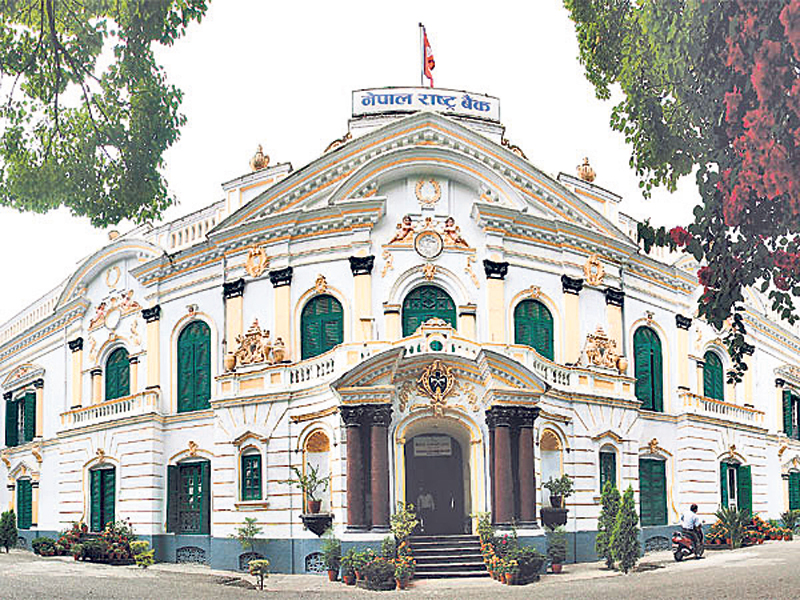
A total of 32 commercial banks rolled out Rs 24 billion in loans in around three months between July 16 and October 10, marking a growth of 79 percent, unaudited figures provided by Nepal Rastra Bank (NRB) show. [break]
Banks had recorded a credit flow of only Rs 13.42 billion in the first quarter of last fiscal year. The trend was similar a year before that when banks gave away Rs 13.50 billion in loans, down 54 percent from Rs 29.45 billion recorded in the first quarter of 2009/10.
The demand for credit remained very low for quite some time after real estate market became stagnant and investment climate took a beating due to labor-related problems and political instability. These problems were compounded by liquidity crisis faced by the country a year ago, which made credit expensive for borrowers.
But lately credit rates have fallen to as low as nine percent from a high of 12-18 percent owing to liquidity surplus. This has given a fillip to the sluggish credit market.
“Yes, lending has gone up this year, particularly to sectors such as trading, hydropower and manufacturing,” a high-ranking official of Nepal Investment Bank told Republica on condition of anonymity.
Credit demand in trading sector was partially fuelled by the Dashain festival as this is the time when traders import huge amount of goods to meet consumer needs.
Lending to the hydropower sector, on the other hand, witnessed growth as the central bank has made it mandatory for all banks and financial institutions to extend certain portion of total loans to the energy sector.
But rise in lending to the manufacturing sector, whose contribution to the GDP is falling, has come as a surprise especially because most of the investors are shying away from setting up factories due to labor-related problems and power shortage.
“It is true that manufacturing sector is currently facing problems. But there are certain industries that are still doing good business. These industries are currently creating inventories as power shortage has not reached its peak. This, on one hand, is raising credit demand, while helping industries to lessen production costs during the time when load-shedding hours go up,” a banker associated with Commerz and Trust Bank told Republica.
The comments made by the banker was backed up by Nepal Investment Bank, which said demand for loans from groups that churn out cement and steel, which are lately doing brisk business, is high these days.
While flow of business loans is on the rise these days, appetite for consumer loans to purchase houses, apartments and automobiles is also growing.
“Festive season is one pulling factor for this. But at the same time reduction in consumer lending rates and schemes introduced by banks have also heightened demand,” a banker from Standard Chartered Bank Nepal told Republica.
Lately, banks are competing with each other to reduce consumer lending rates.
In August, for instance, Himalayan Bank started extending home loan at fixed interest rate of 10.90 percent for at least three initial years, down from 12.75-16 percent of the past. At around same time Nepal Investment Bank also introduced a similar scheme at 10.50 percent interest - at least 30 percent down from the previous rates of 15-16 percent.
Then in September NIC Bank went a step further and launched two new tailor-made consumer loan products, called pre-approved loans, under which borrowers are offered a credit line prior to actually making the purchase of a house, an apartment or a car.
These schemes and reduction in lending rates are primary factors that are fuelling demand for loans, high-ranking officials of the central bank confirmed. But they also suspect unethical practices for the lending boost witnessed by the banking sector.
“Few banks are suspected of extending extra credit than demanded. This eases the burden of interest payment on borrowers who are currently not in a position to fork out huge sum and allows banks to register the credit as good loans, which requires very little loan loss provisioning,” the official said on condition of anonymity.
Several days ago, Nepal Rastra Bank Governor Dr Yuba Raj Khatiwada had called on bankers not to pursue unethical practices for short term gains, as it could ultimately deepen problems and pose a question mark on their credibility and reputation, which may later be hard to fix.
Related story
Lending slows as banks focus on recovery of loans at fiscal yea...