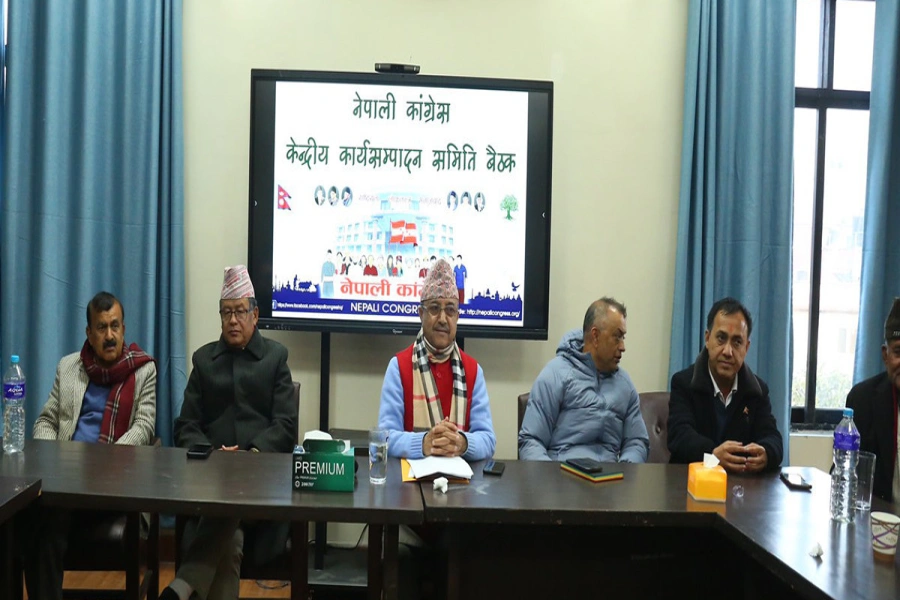
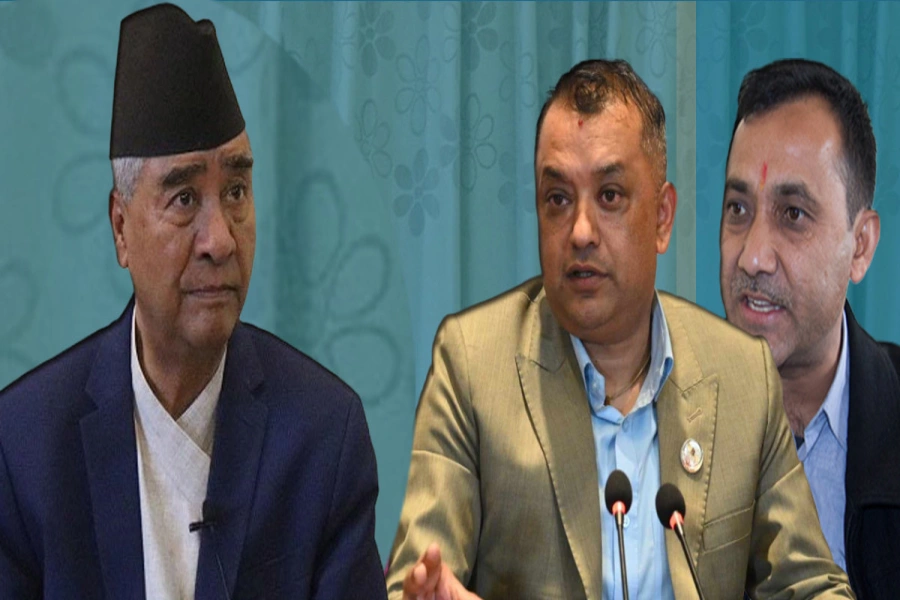
The country’s oldest democratic party finally seems to be coming of age, if we are to believe reports of latest developments. Reports of resolution of the long-festering dispute in Nepali Congress have come at a very opportune moment, at a time the country faces a major crisis. The intra-party rift between the establishment and a faction led by Sher Bahadur Deuba is reportedly being bridged with the latter set to take part in the all-important Central Working Committee meeting. Deuba faction has been boycotting the CWC meeting since last September after the party president dissolved working committees of seven sister organizations. Deuba even tendered his resignation from the party’s CWC eight days later, taking the intra-party rift to a new level. But with president Koirala now agreeing to the pre-conditions of Deuba faction on sister organizations, the NC appears all set to settle the long-standing dispute. Koirala has reportedly agreed to include additional members from Deuba side in the ad hoc committee of Nepal Students’ Union and also ensure slim majority in favor of (Deuba-aligned) chiefs of various sister organizations including Nepal Tarun Dal and Nepal Women’s Association.
The likely bridging of the gap between the rival factions in the NC could not have come at a better time, as the differences within the country’s other major forces—UCPN (Maoist), CPN-UML and MJF (Democratic)—reaches new heights. The Maoists are facing a likely a split with the Baidya faction’s growing disagreement over the working style of party chairman Pushpa Kamal Dahal; the Baidya faction has also demanded the resignation of PM Bhattarai. The dissent within the UML from the leaders from marginalized communities have also reached a new high with the party’s standing committee deciding to relieve its Kathmandu Valley chief Rajendra Shrestha of his responsibility. The MJF (D) has already split with the faction led by leader Sharad Singh Bhandary announcing a new party.
Differences leading to splits in Nepal’s political parties have become a regular affair since the advent of democracy in 1990. Healthy differences within political parties would actually help organizational growth in the long run; but if the differences are irreconcilable it seriously disturbs party affairs. What is important is that the likely splits do not negatively impact inter-party relations, as the country now needs judicious negotiations between parties to overcome the current political and constitutional crisis following the dissolution of the Constituent Assembly. The general populace is frustrated with the political parties for their failure to fulfill the promises they made before CA polls. People’s hopes of a constitution befitting the new democratic federal republican Nepal have been dashed.
It is now up to the parties to prove that they are still up to the task. But before they embark on getting the country’s political process back on track, it is important that they put their own houses in order first. NC’s latest effort to mend its ranks is indeed a welcome step, although the party president, in our view, could still do a lot more to democratize the Grand Old Party. The rest—UCPN (Maoist), CPN-UML and the Madhes-based parties— should follow suit in trying to strengthen party unity, which would certainly send a positive message to the public and help restore their lost faith.
Related story
Coronavirus: Symptoms and signs that are linked to COVID, but a...