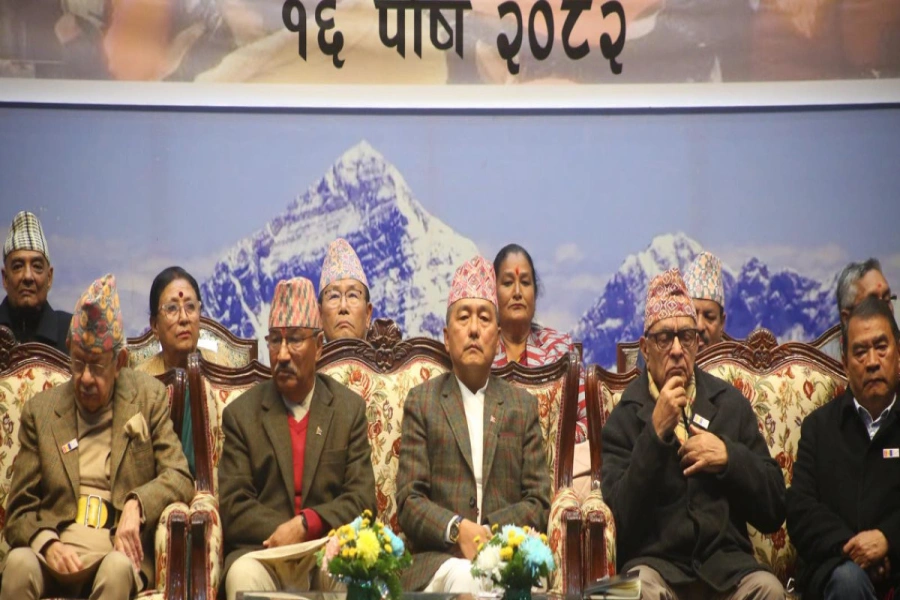
NC held its parliamentary party meeting Monday in Nagarkot in an apparent bid to avoid the hustle and bustle of the capital and have serious discussions on one of the most contentious issues related to the constitution making. Experts on federalism were also invited to take part in the meeting.[break]
According to NC’s parliamentary party spokesperson Nabindra Raj Joshi, party President Sushil Koirala, addressing the meeting, said the federal structure should be such that it does not disturb the existing social harmony while upholding identity and ensuring economic viability.
Koirala also opined that federalism should be based on the principles that devolve power to the villages.
Though other parties had presented their positions on federal model to the sub-committee, under the State Restructuring Committee, while it was working to prepare a report on federalism last year, Nepali Congress had not done so.
Some NC lawmakers within the sub-committee had presented a federal model back then, but it was not officially endorsed by the party, according to lawmaker Narahari Acharya, who heads the party’s state restructuring committee.
Though the 18 lawmakers who spoke during the Sunday’s meeting held similar views on identity and economic viability, they were divided on the issue of drawing federal structure along ethnic lines. “The lawmakers stood for and against the ethnic lines,” said Joshi.
Lawmaker Jiwan Prem Shrestha told Republica that he, along with some other lawmakers, contended that the size of population, natural resources and cultural identities should also be considered while carving out the federal structure.
Coordinator Acharya said that he presented a concept paper on the weaknesses and strengths of dividing Nepal into 14 states which was endorsed by majority in the State Restructuring Committee earlier. Similarly, the meeting also evaluated the pros and cons of six-state model supported by the party.
NC has maintained its reservations to the 14 states provision supported by the UCPN (M) and Janjati lawmakers. It has argued that the 14 states option has been proposed without giving much thought and that the proposal needs to be reviewed by experts.
It has also opposed preferential political rights to ethnic groups dominant in a particular place, saying such a provision goes against values of democracy. In addition, the NC has also objected to the idea of the right to self-determination, arguing that the self-determination has been misinterpreted.
The Monday’s meeting ended inconclusively as the party could not finalize its position on federalism. The party is set to discuss the issue in its next meeting called for December 18.
Related story
Book review: Analyzing political economy of federalism in Nepal