Perhaps the pronouncement was not as innocent and well-intentioned, as it was made out to be in the address of Secretary-General Ban Ki-moon. [break]
The UNGA declaration may have been handed out as a certificate of good conduct to the Indian government, which had meekly endorsed the invasion of Afghanistan and Iraq by the combined armed forces of the Coalition of Coerced Countries (CoCoCo).
The intimidating tone of “with-us-or-against-us” warning from the head of state and head of government of the most powerful country of the world left no space for hesitation or reservations.

It would have been inappropriate to use the insulting CoCoCo phrase publicly, so the Clinton-era term “Coalition of the Willing,” that had been coined earlier for humanitarian interventions, was resurrected to justify the naked pursuit of control over strategic routes and fossil fuel reserves in the name of “War on Terror.”
Counter-terror has turned out to be much more terrifying.
The UN declaration may also have been partly prompted by the US desire to dissuade New Delhi from acquiring cheaper Russian weaponry and win over one of the largest buyers of arms and armaments in the world to its side.
Be it as it may, but the fact remains that the observance of October 2 as an International Day of Nonviolence for four years has changed nothing in the pervasiveness of violence in the contemporary world or its widespread acceptance as a legitimate means of politics.
If anything, the inescapability of violence has become even starker as wars for the control of natural resources go global, and Western boots trample over large parts of Africa and West Asia.
Nepal has remained a mere pawn on the chessboard of the Great Games, and its rulers have reveled in doing the bidding of powerful players. Jung Bahadur loyally served British masters during the (Sepoy) Mutiny in 1857 and was amply rewarded. Chandra Shumsher made a fortune from the First World War.
After the Second World War, however, the unwavering loyalty of the Kathmandu Court failed to survive the post-war wave of decolonization, and the Ranas succumbed to the intrigues of their Shah in-laws and cousins.
King Mahendra did quite well for himself and his family by accepting to be a loyal Gorkha of the Western Block during the Cold War decades.
All these rulers had no hesitation in sacrificing the lives of their people at the altar of their chosen masters.
When violence has state sanction, it is difficult for the people to adopt peaceful methods of seeking change. Perhaps it is not an accident that Nepalis prefer Mao Zedong over Mahatma Gandhi despite religious appeal of the latter in a predominantly Hindu country.
Mao appears like an avenging angel in his signature tunic whereas the Mahatma in his dhoti and walking stick cuts a sorry figure in a society that has been tutored to worship strength and obey power.
The spirit of Dashain
The irony of celebrating the International Day of Nonviolence on the eve of Dashain festivities in Nepal is particularly telling.
Even in the most benign interpretation of religious myths, Dashain signifies victory of good over evil.
However, whether it is in the story of Mahishasur (the “demon with the melodiousness of a buffalo”!) or the slaying of Brahmin-king Ravana of Lanka by the Kshatriya Prince Ram from Ayodhya, the victory always goes to the more violent.
The slayer of Mahishasur is cruelty deified—to drink the blood of a demon is as far from an act of kindness as imaginable.
Prince Ram was clearly a vengeful aggressor who could have rescued his abducted wife after initial victory but insisted on finishing off Ravana and installing his lackey Bibhishan on the throne of Lanka, presumably to forestall all future challenges to his empire.
This is what later philosophers would call “Master Morality” where the strong are free to do as they please with the weak. The ethics for the birds of prey are fundamentally different from those of rabbits or fishes.
If the Universe did indeed begin 13.7 billion years ago in the Big Bang, as many cosmologists believe, perhaps violence is hardwired in the destiny of the planet.
Nature creates and destroys in fitfulness of fury and fondness. Without volcanic eruptions, there would not have been islands of serenity.
Great floods have formed fertile plains. When plates of the earth move, mountains are created. Heavy winds and torrential rains obliterate and rejuvenate life at the same time.
Among the ancestors of human beings, there have been peace-loving tribes of hunter-gatherer too, but by and large, our forefathers fought incessantly for monopoly rights over high-yield forests, greener pastures, productive animals, and sometimes merely to dominate over other male competitors.
The term “Raja” originally meant the one who shone. The kind and compassionate shy away from publicity, the brave love the glare. The reason behind Chandra Shumsher’s selection of Dashain as the national festival may have been its military undertones.
Unlike festivities of creativity during Indra Jatra or the commemoration of sociability during Tihar, Dashain celebrates warlike virtues such as hierarchy, order, devotion, sacrifice, obedience, patronage, and loyalty.
Looking for the source of rampant nepotism, favoritism, and cronyism in Nepali society? Watch every ritual between Ashtami and Poornima to get a picture of how Nepali society renews its forms and functions every year!
Cultivating peace
Mahatma Gandhi knew that like every religion of the world, Hinduism too was far less peaceful than its priests and preachers claimed.
The caste system is institutionalized violence for it is based on the assumption that some are born superior. Untouchability—the ostracism and segregation sanctioned by religion and culture—is one of the worst forms of brutality imaginable. For sustainable peace in society, secularism is necessary but not sufficient.
Perhaps a celebration of diversities with equal respect for all beliefs, including of those who choose to remain irreligious, is necessary to promote a sense of temporal equality. The Mahatma was a great believer in the ancient injunction of Sarba Dharma Sam Bhav—“equal reverence for all religions.”
Avarice and pursuit of pleasure prepare the mind to accept structural inequalities and perpetuate injustice. The Mahatma probably had no prescription; in fact, he would have considered any mandatory policy in itself a form of violence. However, he did have suggestions, and declared that his life was his message.
That message had been lost in translation in interpreting his practices. The Mahatma was not specifically against the idea of private property, but he practiced and preached trusteeship based on Aprigraha (non-attachment) where riches create responsibility to serve fellow beings.
The concept of repentance is absent in a society where power and privilege in this life are a result of deeds of the previous one, and both perpetrators and victims of violence are merely instruments of destiny.
Forgiveness is alien in the culture of commerce where everything has a price, and values have no transactional merit in the marketplace.
The Mahatma was pained by the rise of vengefulness and became a victim of the negative force that often hits with greater fury: It was an enraged Hindu that killed the greatest Hindu sage of this age. The preacher of nonviolence met a violent end.
Had he survived the bullet of Nathu Ram Godse, would the Mahatma revisit his own beliefs? Most assuredly so, despite disparaging remarks of his critics, the trained lawyer and indefatigable fighter was anything but dogmatic.
Had he heard French philosopher Jean Paul Sartre’s pithy observation that violence, like Achilles’ lance, could heal the wounds it had inflicted, he would have probably given more thought to what Jews herded into the gas chambers of Hitler could have done other than offer their final prayers to the Almighty.
Here, perhaps the myths of Mahabharata may have provided him with some food for thought, which give more importance to Anrishanshya (non-cruelty) and Anukrosh (empathy) than to Ahimsa (nonviolence) per se. But that would be a hypothetical story.
On Sunday, October 2, the Mahendra Narayan Nidhi Foundation is hosting a colloquium to mark the International Day of Nonviolence.
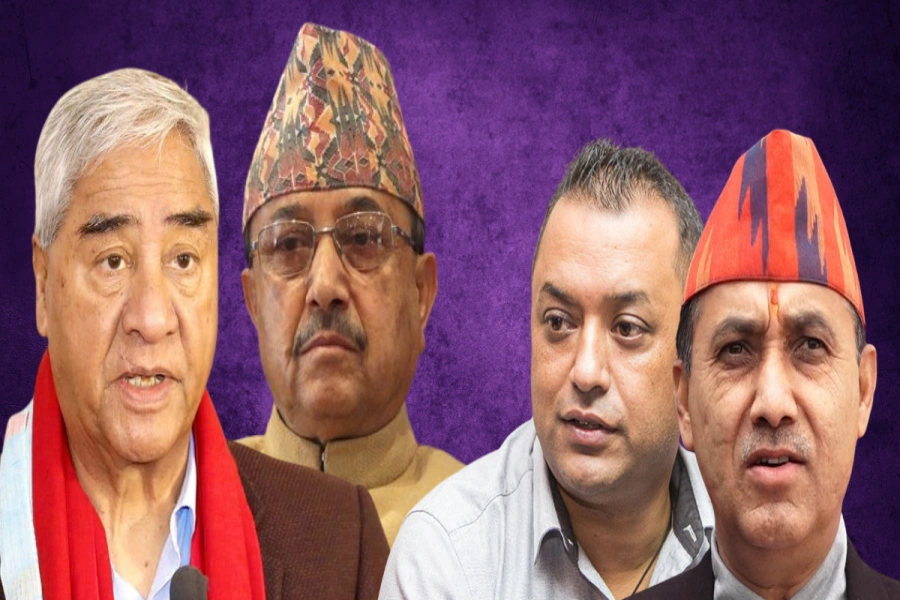
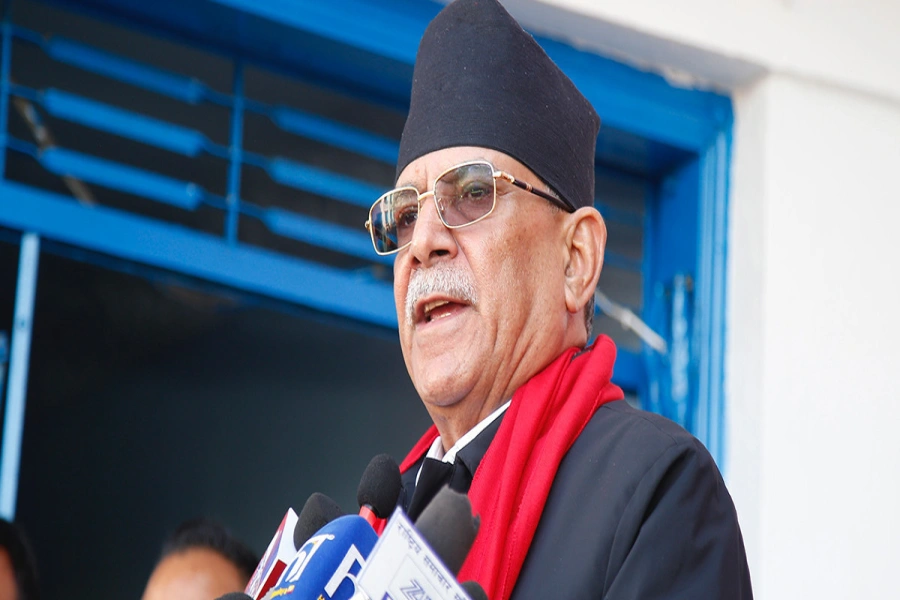
Among the dignitaries slated to grace the dais are former premiers Sher Bahadur Deuba and Pushpa Kamal Dahal.
The Mahatma would have probably condoned the sacrilege with a wry smile and mischievously asked about the ritual of his annual Shraddh: “Which Gandhi are they talking about so reverentially?” To use a much-misused line from a song, “The answer, my friend, is blowin’ in the wind.”
Related story
PM Deuba offers tribute to Mahatma Gandhi