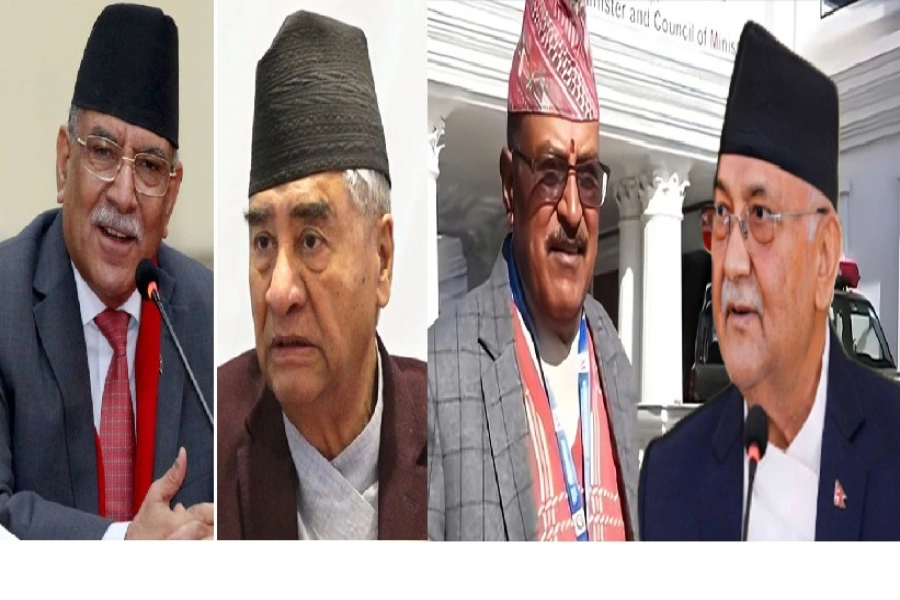
Developing and underdeveloped countries, despite initiating reforms, have failed to control corruption. It is because the reforms are devoid of the most effective stratagem that is a strong political will—a commitment that should reflect in adoption and implementation of anti-corruption policies. In Asia, only Singapore and Hong Kong exhibit such political will against corruption. In countries like Nepal, there are anti-corruption measures but the lack of strong political will to enforce them has undermined effectiveness of their anti-corruption agencies.
For instance, the Malaysian government under Prime Minister Mahathir Mohammed was armed with adequate anti-corruption measures but focused only on petty graft until he stepped down in 2003. Political will to curb grand corruption was completely lacking. Situation substantially improved since Abdullah Badawi succeeded Mahathir as prime minister in 2003. This shows that whether or not a country becomes successful in combating corruption depends on the adequacy of anti-corruption measures along with a strong political will.
Anti-corruption strategy in countries like Nepal has turned out to be “hopeless” where political leaders do not have the political will to fight corruption and graft that has now got institutionalized at all echelons of society. The best examples of this are Indonesia under Suharto, the Philippines under Marcos and Thailand under Thanksin. This is enough to substantiate why anticorruption laws in Indonesia, the Philippines and Thailand remained ineffective and selectively enforced under the leaderships of these corrupt leaders.
CORRELATES OF CORRUPTION
Corruption has five major correlates. The most widely cited factor is the low salaries of civil servants. Inadequate emulation has forced public employees to accept “speed money”—to expedite citizens’ requests for services. An officer´s salary in Nepal may not be adequate to meet rising inflation, minimal modes of living and other essential expenses for a month. In Indonesia, the monthly salaries of civil servants usually last for only 10 to 12 days. In the Philippines, civil servants supplement low wages by selling goods and services out of their offices and holding second jobs or resorting to petty corruption.
Second, the expansive role of governments in national development increases chances or opportunities for administrative discretion and corruption, especially among poorly paid civil servants. The so-called wet agencies, such as customs, immigration, internal revenue, public works, and police departments, provide more opportunities for graft than “dry” agencies such as administrative and research departments that do not transact huge funds and public monies.
A third cause of corruption in many countries like Nepal is the low risk of being detected and punished. Civil services suffer from weak disciplinary control in part because both the state employees and the citizenry regard graft as a low-risk but high-reward activity. In many other countries as well, a civil servant is unlikely to be caught if he indulges in corrupt activities. And even if he is detected, he is unlikely to be penalized. For example, a comparison of prosecution rates in Hong Kong and the Philippines finds that a civil servant indulging in corrupt practices in Hong Kong is 35 times more likely to be detected and punished than his counterpart in the Philippines and countries like Nepal.
A fourth factor fostering corruption is culture—in particular, the primacy of the family and traditions of giving gifts. A junior staff giving expensive gifts to the senior officials or ministers to get favors like transfers to "wet" agencies is a common practice among the civil servants in Nepal. This culture is not unique to Nepal alone because it prevails in many other countries as well. In South Korea, the tradition of gift giving takes the corrupt form of expensive offerings to political leaders or civil servants in return for favors. From India to Pakistan to Mongolia to Thailand to the Philippines, gift-giving culture is rampant, which has promoted bribery and corruption among the civil servants.
The fifth and most important factor for excessive corruption is a lack of political will combined with ineffective anti-corruption strategies. Political will refers to the commitment of government and political parties to combat and eradicate corruption in all forms. Experience has shown that corruption control initiatives can be successful where three conditions are met: Comprehensive anti-corruption legislation is enacted; an independent anticorruption agency is well-staffed and adequately funded; and the independent agency has environment to fairly enforce anti-corruption laws against anyone irrespective of political power or position. Without these three conditions being met, anti-corruption efforts hardly become effective.
In tackling corruption, many countries have adopted either a single agency or multiple agency approach. Some have enacted specific anti-corruption laws but have no independent bureau to implement them. Mongolia, for instance, has an anti-corruption statute and three provisions restricting bribery in its criminal code. Yet the task of curbing corruption is shared among the police, the General Prosecutor’s Office, and the courts. There is no designated anti-corruption agency.
A second pattern of measure against corruption involves a combination of anti-corruption laws and several anti-corruption agencies. This is found in both the democratic and communist countries. In India, the Prevention of Corruption Act is enforced by the Central Bureau of Investigation, the Central Vigilance Commission, state anti-corruption bureaus, and state vigilance commissions whereas the Philippines has the most anti-corruption measures in Asia, with seven laws and 14 anti-corruption agencies in place since the 1950s. Yet, corruption has not gone down.
In China, three agencies implement anticorruption laws. The Supreme People’s Procuratorate was formed in 1978 to fight corruption in the judicial sector. Also in 1978, the Central Disciplinary Inspection Committee was created to check corruption among members of the Chinese Communist Party. In 1986, Beijing established the Ministry of Supervision to curb graft in the civil service. Interestingly, communist country China is more effective than democratic India and the Philippines in fighting corruption. These democratic and non-democratic experiences adequately show that when anti-corruption efforts are diluted and poorly coordinated, the multi-agency approach suffers from overlap and duplication.
SUCCESSFUL MODELS
Over the past 50 years, only Singapore and Hong Kong have demonstrated political will to curb corruption. As a result, both the countries enjoy relatively low levels of graft and corruption in recent decades. In both the cases, the governments introduced sweeping anti-corruption measures and, by impartially enforcing them, succeeded in changing popular attitudes toward corruption. In Singapore, the People’s Action Party government enacted comprehensive legislation in 1960 and gave the Corrupt Practices Investigation Bureau extensive powers to curb graft.
In Hong Kong, a far-reaching anti-corruption ordinance empowered an independent commission in 1974. Hong Kong has continued to be effective in curbing corruption since rejoining China. In both these city-states, the government apprehends and severely punishes corrupt individuals regardless of their status or position. Graft is perceived as a high-risk but a low-reward activity because of which corruption prosecution rates is higher in both Singapore and Hong Kong in the entire Asian continent.
Similarly, the Corruption Eradication Commission of Indonesia (KPK) has emerged as one of the most successful anti-corruption commissions in recent years. The KPK, in just five years, has been able to reach a 100 percent conviction rate against top officials in all major branches of the Indonesian government while the Ombudsman in the Philippines has scored only few convictions in its 20-year history. Part of this success can be explained by considerable investigative powers given to KPK and rigorous pre-testing of every prosecution and a highly efficient anti-corruption court which have enormously contributed to KPK’s success in Indonesia.
As has been seen in Singapore, Hong Kong and Indonesia, curbing corruption in Nepal is not an impossible dream but it does require the sustained commitment of political leaders and people. Since this political will is scarce among our governments and political leaders, it is not surprising that the past governments adopted “hopeless” strategies and lukewarm anti-corruption approach that only perpetuated corruption levels in Nepal instead of stifling it.
Experience from the countries mentioned here shows that problem of dealing with institutionalized corruption is really the problem of creating political will. It is not necessarily about facts, laws, regulations or procedures. Improving the quality of regulations, strengthening judicial independence, empowering civil society, increasing transparency in decision-making are essentials of an anti-corruption approach but without political will, without real commitment at the top echelons of government, success will be limited and selective.
pbhattarai2001@gmail.com
Related story
Lessons from Southeast Asia