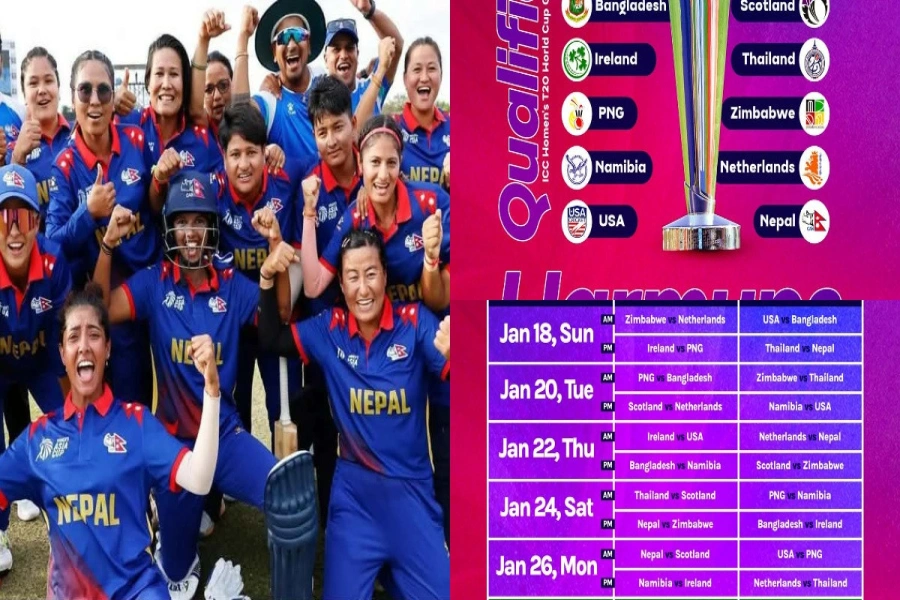
They not only enhance the skills that one has but also increase exposure and foster cognitive development. In this edition of chitchat, Republica sits down to discuss on the importance of extracurricular activities among the youth.[break]
“If one only gets indulged in studies then his/her mind will become dull, so extracurricular activities play an important role in honing the skills and broadening their vision,” says Sagar Budhathoki, 24, a student doing his final year Master’s in Anthropology at Tribhuwan University.
Sagar, who is also the president of Rotaract in Kupondole, adds, “I was quite an introvert back in college but I could see the change in me after I joined Rotaract, started networking with people and got involved in various extracurricular activities.”
Talking about his involvement in extracurricular activities, he adds, “I am also the Secretary of Himalayan Reader’s book club where we have monthly discussions on books at British Council. I have also been always interested in music and I play the guitar too.”
“Extracurricular activities always top my priority list,” says Arishma Shrestha, 21, who is doing her 2nd year Bachelor in Social Work at St Xavier’s College. Joining the conversation, she says, “I was quite an athlete during my schooldays and captained the basketball team back in school. I am still doing that in my college.”

Apart from basketball, Shrestha also plays the guitar; participate in dance and other activities. Shrestha, who also shares her passion for drama, is also involved in social awareness campaigns.
“I am also the proofreader of “The Advocate”; the journal at our department, and participate in various intercollegiate drama competitions,” she adds.
Anuj Singh, 22, a BBA student at Shanker Dev Campus, then puts in, “I think that extracurricular activities help raise our level of confidence. I am very active in extracurricular activities. I had played volleyball and table tennis both at the district level and in Kathmandu in my schooldays.”
Also executive member of an INGO, Public Health Action Nepal, Anuj is involved in organizing various programs like eye camp and blood donation besides captaining the cricket team of Shanker Dev Campus.
Complaining about the education system, he says that it is rigorous and encourages rote- learning. “My activities got halted in my +2 level since there was too much pressure to study and very little time left for sports.”
Supporting Anuj’s statement and talking about the Nepali education system, Arishma says, “It focuses more on theoretical knowledge from books than extracurricular activities. We should therefore encourage the students in extracurricular sports rather than just limiting them to academic world alone.”
Talking about his own experience, Sagar then adds, “I was not good academically but the extracurricular activities really helped me in my overall development.”
“If you focus properly on what you do and have the aptitude for it then that will be a good career move,” Anuj says, adding, “There’re so many platforms and youth-led clubs which youth can join to enhance their skills.
“Such activities help in developing PR skills, networking, public speaking and socializing,” argues Sagar. He also referred to what he said ‘edutainment’, which he said combined both education and entertainment. “We need to apply this in our education system and make our classrooms more interactive and pragmatic.”
Supporting his idea, Arishma puts in, “For instance, I am a student of Social Work and I also have to go to the field. So, I think what I have studied is being implemented which should be followed in other colleges too.”
Talking about his experience, Anuj adds, “I was schooled in Mahendranagar. The school did not have financial resource to implement extracurricular activities.” He shared that the focus was more on studies, and as a result, students were left with their own devices to initiate such activities outside the school curriculum.
Talking about modern schools, Sagar says, “Many schools have incorporated the concept of digital classrooms so every school should apply that methodology.”
“Education should be made creative and visual,” adds Anuj. But then Sagar bemoans, “We’ve neither music and sports clubs nor any environment for such activities where we could join according to our own interests.”
Meanwhile, Arishma shares, “Youth should not just complain that they don’t have the facilities for extracurriculars but should also seek out for themselves and utilize the resources that they already have.”
To Anuj, major problem lies with the student themselves who he said are unable to figure out their own interests. He further says guardians also don’t see their children’s future in extracurricular activities and therefore discourage them. “My father used to ask me what you would do after playing volleyball as it wouldn’t help build your career in a country like Nepal,” he adds.
Despite all the odds, youth should always find time to rejuvenate themselves and indulge in extracurricular activities. Arishma believes, “Extracurricular activities should begin early. Youth should not waste time in idleness but involve in different activities.” To this Anuj thinks that one should take their own initiative to find what their interests are. Sagar then concludes by saying, “You should explore, travel and learn.”
Related story
Bhaktapur introduces local curriculum



_20240227153501.jpg)