


Saturday, 27 July 2024 06:18 AM

OR
Login using
KMC Mayor’s 101-point plan: Tourism entrepreneurs not impressed
Published On: June 24, 2017 09:55 AM NPT By: Arpana Ale Magar
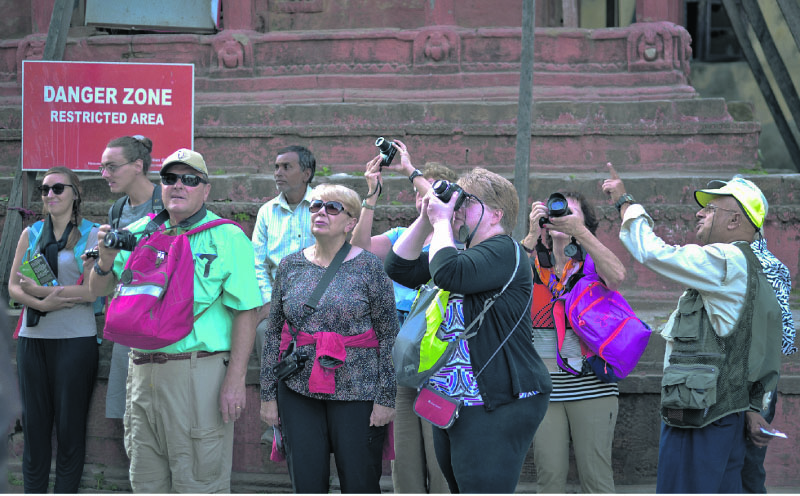
KATHMANDU, June 21: Tourism entrepreneurs say a 101-point plan announced by the newly-elected Kathmandu Metropolitan City (KMC) Mayor Bidya Sundar Shakya to be executed in the first 100 days has not prioritized tourism sector.
Saying that the tourism sector wants early restoration of heritage sites damaged by the 2015 earthquakes, regular clean-up campaigns, parking management and peaceful environment in the city, they say that the plan to provide free Wi-Fi Internet service was a misplaced priority.
Tourism expert and hotelier Karna Shakya said efforts should be made to provide hassle-free services to tourists. He also said that tourism establishments playing live music or running other musical shows should be made to install sound-proofing walls so that it does not disturb others.
Sameer Gurung, the president of Thamel Tourism Development Council (TTDC), said the metropolis should declare Thamel vehicle-free area. “There is also a need to manage tangled utility wires build proper roads,” he added.
Though bringing a work plan for development and promotion of cultural heritage sites features in the 101-point list, tourism entrepreneurs say nothing is being done in this direction.
However, Nama Raj Dhakal, the assistant spokesperson for KMC, said it was too early to comment on the mayor’s plan. “We are preparing detailed plan to execute his vision,” he added. “Wi-Fi is not meant for tourists only. If we are to develop Kathmandu as a smart city, we cannot leave Internet out,” he added. Dhakal also added that KMC was planning to launch tourist bus service in tourist areas.
Tourism entrepreneurs have urged the metropolis to execute programs for revival of tourism at the earliest. TTDC President Gurung said it was high time the government explored new tourist destinations. “Unfortunately, we are still tangled on the same old problem of infrastructure and pollution for the past many years,” he added.
Dhakal further said that restoration of cultural heritage sites is the metropolis’ first priority. “But it takes time to complete all works of restoration. I urge one and all to show patience; I assure you the KMC will bring change,” he added.
Stating that electricity problem has already been solved and problem of water supply and roads about to be sorted, tourism expert Shakya said time has come for all stakeholders to work in coordination to make the change sustainable.
Tourism stakeholders are hopeful that tourism will get priority in the metropolitan city’s policy and programs.
Dhakal said that KMC will consult with tourism entrepreneurs while formulating policy and programs for the tourism sector.
You May Like This
Mayors of three tourism destinations unveil plan for tourism development
KATHMANDU, Dec 14: Mayors of three major tourist destinations of the country have unveiled their plans and strategies for development promotion... Read More...
Tourism entrepreneurs demand tourism businesses be allowed to be operational following health standards
KATHMANDU, Jan 10: As COVID-19 cases continue to rise and the fear of another spell of lockdown looms large, tourism... Read More...
Trekking Trails on the rise
POKHARA, Dec 5: Around 70 percent of tourists visiting Nepal travel through different trekking trails in the country. Nepal is... Read More...

Ensuring Food Safety Amidst Challenges
21 hours ago
NRB unveils monetary policy
16 hours ago

NRB set to issue monetary policy today
18 hours ago
NEB to publish Grade 12 results next week
8 hours ago
NC defers its plan to join Koshi govt
10 hours ago
NRB to review microfinance loan interest rate
10 hours ago


Just In
- NRB to provide collateral-free loans to foreign employment seekers
- NEB to publish Grade 12 results next week
- Body handover begins; Relatives remain dissatisfied with insurance, compensation amount
- NC defers its plan to join Koshi govt
- NRB to review microfinance loan interest rate
- 134 dead in floods and landslides since onset of monsoon this year
- Mahakali Irrigation Project sees only 22 percent physical progress in 18 years
- Singapore now holds world's most powerful passport; Nepal stays at 98th
Leave A Comment