"With the Maoist party broken in two, Madhesi parties bogged down by multiple splits, now is the time for Nepali Congress. Politics has come back into NC’s hands,” a Sindhupalchowk-based Nepali Congress cadre told me recently. NC leaders don’t necessarily see things this way. They deny that weakening of a political party, whichever it is, can bode well for national politics, much less for NC. But it seems NC cadres in the lower rungs are upbeat, especially after the rapprochement between Sushil Koirala and Sher Bahadur Deuba factions. They believe if NC can fill the void left by internal disputes and splits in other parties, it could regain its lost pride. Speculations are rife that NC will reassert itself once more. Will the NC emerge powerful in national politics again? A lot depends on how it will conduct itself in the days to come. But for the moment, it has more strategic and political advantages than its rivals and even long-time allies.

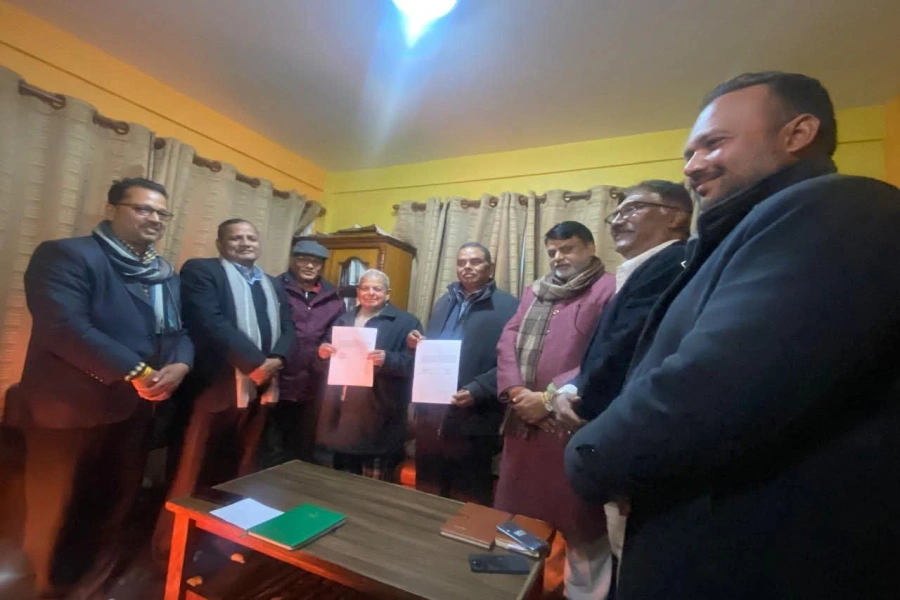
For one, Nepali Congress is the only party among the Big Four block that is united. Following UCPN (Maoist)’s vertical breakdown, Mohan Baidya-led party and mother party seem hell bent on destroying each other. Recent shootings in Chitwan could be a trailer of a bloody movie that is yet to unfold. This represents a big drawback for the Maoists but could prove advantageous for the GOP. Splitmania still rules Madhesi parties and serious disputes have weakened CPN-UML. While things are going from bad to worse for other parties, NC has patched up its differences between Deuba and Koirala. The two leaders have finally started to share a common platform and voice. This unity may prove transient, but, for the moment, it surely is a source of strength.
Another advantage for the party is that it has stayed away from government leadership since late Girija Prasad Koirala made way for Pushpa Kamal Dahal in 2008. Away from power, it has been able to stay free of blames that comes the way of incumbents. NC has little role in the rising level of impunity and corruption post 2008. This has allowed the party to hide its tainted past. After many years, NC has reached the position wherefrom it can boast: “Look, had we been in the government, things would have been different. We gave Maoists, Madhesis and UML a chance and this is what they gave us: Price hikes, impunity, insecurity but no constitution.”
NC has what other parties lack. It has a youth icon in Gagan Thapa who is untested and, therefore, trusted by many; he can sway public mood with his excellent oratory skills. It has a thinker of Pradeep Giri’s repute. The two have large audiences and admirers, both in and out of the party. If NC can cash in on these assets, it could exert great influence among the voters right across the country.
Then there is eroding credibility of Maoists, NC’s political arch-rival. People had huge expectations from UCPN (Maoist) before Constituent Assembly elections. Back then the party was untested, had promising agendas and was an antithesis of all ills for which NC and UML were blamed. Six years on, it has become no different from NC and UML. In fact, in terms of service delivery and maintaining rule of law, it has fared much worse than NC and UML during their heydays. The Maoists have suffered a big loss in credibility after the CA fiasco of May 27; a large constituency holds them responsible for the current deadlock as well as CA’s demise.
All this could make people look at NC as less a more palatable option. But there is always the risk. Once back in hot seat, NC could again lose its credibility as UCPN (Maoist) has. Besides, it has to do a lot to keep alive its long legacy. When its detractors say NC is apathetic to the cause of inclusive politics, statute through constituent assembly and women’s rights, among other progressive issues, it responds that it had raised these agendas back in the 1950s. When the detractors question its revolutionary credentials it retorts that its leaders were the first revolutionaries of the land. But when it comes to practicing what its founding fathers preached, it often balks. This is where NC needs course correction.
NC has little to be proud of in post-1990 politics. From 1990s to 2005 (when NC ruled the country most of the time), it was held responsible for economic and political malice. Late Girija Prasad Koirala was blamed for patronizing the corrupt and money men. Soon, NC’s version of democracy was fueling corruption, apathy toward the poor and deference to the elites. This cynicism of NC could have gone down a bit in recent times, but its past mistakes are still imprinted in people’s memories. The big challenge for the party is to prove through its actions that those mistakes won’t be repeated and that it is truly committed to politics of change and social justice.
NC needs to change its biased and condescending attitude toward left-leaning parties, Madhesis and janajatis. During the 1990s, GPK viewed communists as a greater threat than the royalists. This legacy still persists. For long NC saw Maoists as marauders, blood-thirsty bunch of rural poor capable of nothing but violence.
The GOP has the potential to reemerge as a strong force. But only if the party is ready to learn from its past mistakes.
Now it has alienated large sections of Janajatis and Madhesis, by design or default, by tagging them as agents of ethnic disharmony or as secessionists. This viewpoint needs urgent review because Madhesis and Janajatis have become a force to reckon in national politics and no political party can afford to overlook this vital constituency. Politics is not only about pleasing cadres and activists. It is also about taking opponents into confidence by winning their hearts and minds. It should not be forgotten that no political party has emerged victorious merely on the back of its loyalists and cadres. Part of the reason the Maoists emerged the biggest party in CA polls is that it had the support and sympathy of a large section of one-time NC and UML sympathizers.
In Nepal, parties are often elevated to power not on their own strength but owing to the weaknesses of their rivals. The perceived strength of NC comes from shortcomings and incompetence of UML, Maoists and Madheshi parties. NC needs to not keep itself away from the ills afflicting its rivals. But this might yet be a tall order for a party which seems to have learned very little from its past failures.
mbpoudyal@yahoo.com
Related story