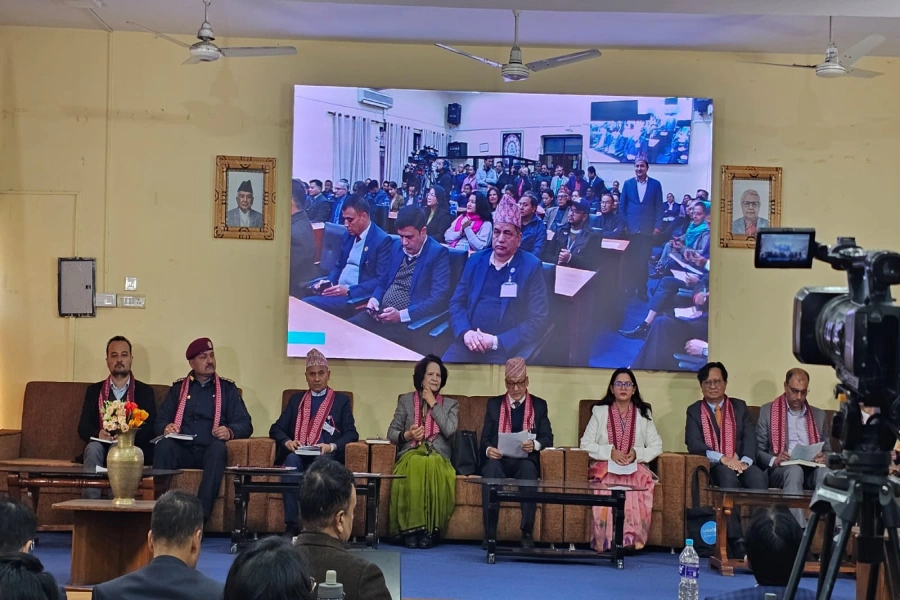
KATHMANDU, Dec 10: UNICEF and WHO have commended Nepal’s Ministry of Health and Population for launching the National Mental Health Campaign 2025, aimed at reducing stigma, empowering communities, and ensuring children and adults know how and where to seek mental health support.
According to a press release jointly issued by UNICEF and WHO, the campaign comes at a crucial time. National data indicate that 5.2% of adolescents (13–19 years) have diagnosable mental health conditions, while 18.3% of children (6–18 years) report emotional or behavioural difficulties. Suicide remains the third leading cause of death among young people aged 15–29. Despite this, most affected children and adolescents receive little or no support.
Mental Health and Human Rights

The launch coincides with the conclusion of the 16 Days of Activism against Gender-Based Violence, highlighting the growing impact of digital violence such as cyberbullying on adolescents’ mental wellbeing, the press release stated.
UNICEF and WHO praised the government’s progress under the National Mental Health Strategy and Action Plan 2020–2025, highlighting initiatives like the Helping Adolescents Thrive (HAT) Initiative, which has reached over 100,000 children, and the National Suicide Prevention Helpline 1166. WHO and UNICEF continue to support service integration, workforce training, telemental health expansion, and digital platforms such as U-Report and Machhuni chatbot.
“Prioritizing mental health through service integration and this campaign demonstrates meaningful progress and national commitment,” the press release quoted Dr Rajesh Pandav, Acting WHO Representative to Nepal. Alice Akunga, UNICEF Representative, said. “This campaign ensures children and adolescents receive the care and dignity they deserve, laying the foundation for a resilient mental health system.”
Despite progress, adolescents remain vulnerable to violence, poverty, parental mental illness, and other adversities. UNICEF and WHO emphasized the need for a multisectoral response, sustained financing, skilled workforce, and coordinated services across schools, health facilities, digital platforms, and communities.
The press release further stated that the campaign, led by the National Health Education, Information and Communication Centre (NHEICC) with UNICEF and WHO support, focuses on strategic communication, community engagement, and system strengthening to normalize help-seeking, reduce stigma, and involve families in promoting mental wellbeing.