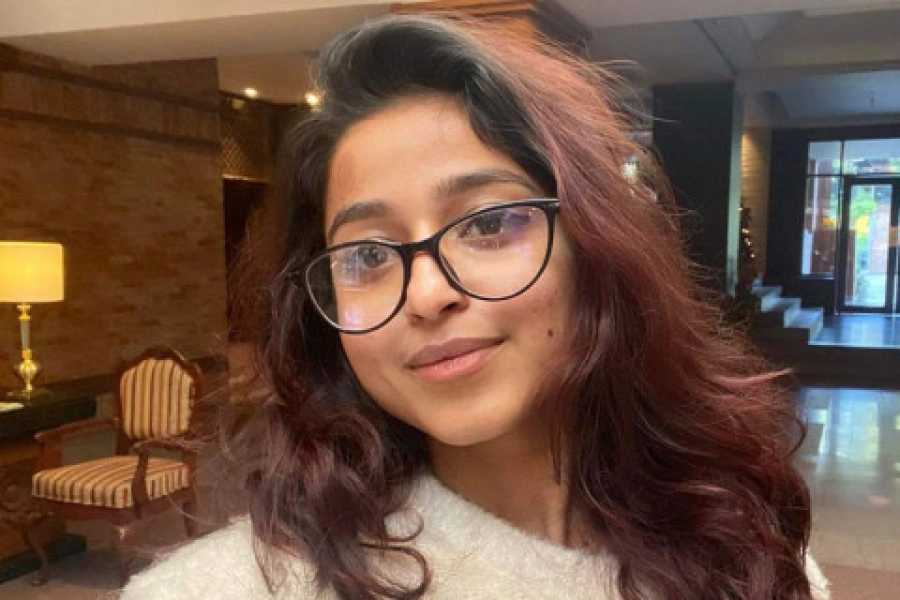
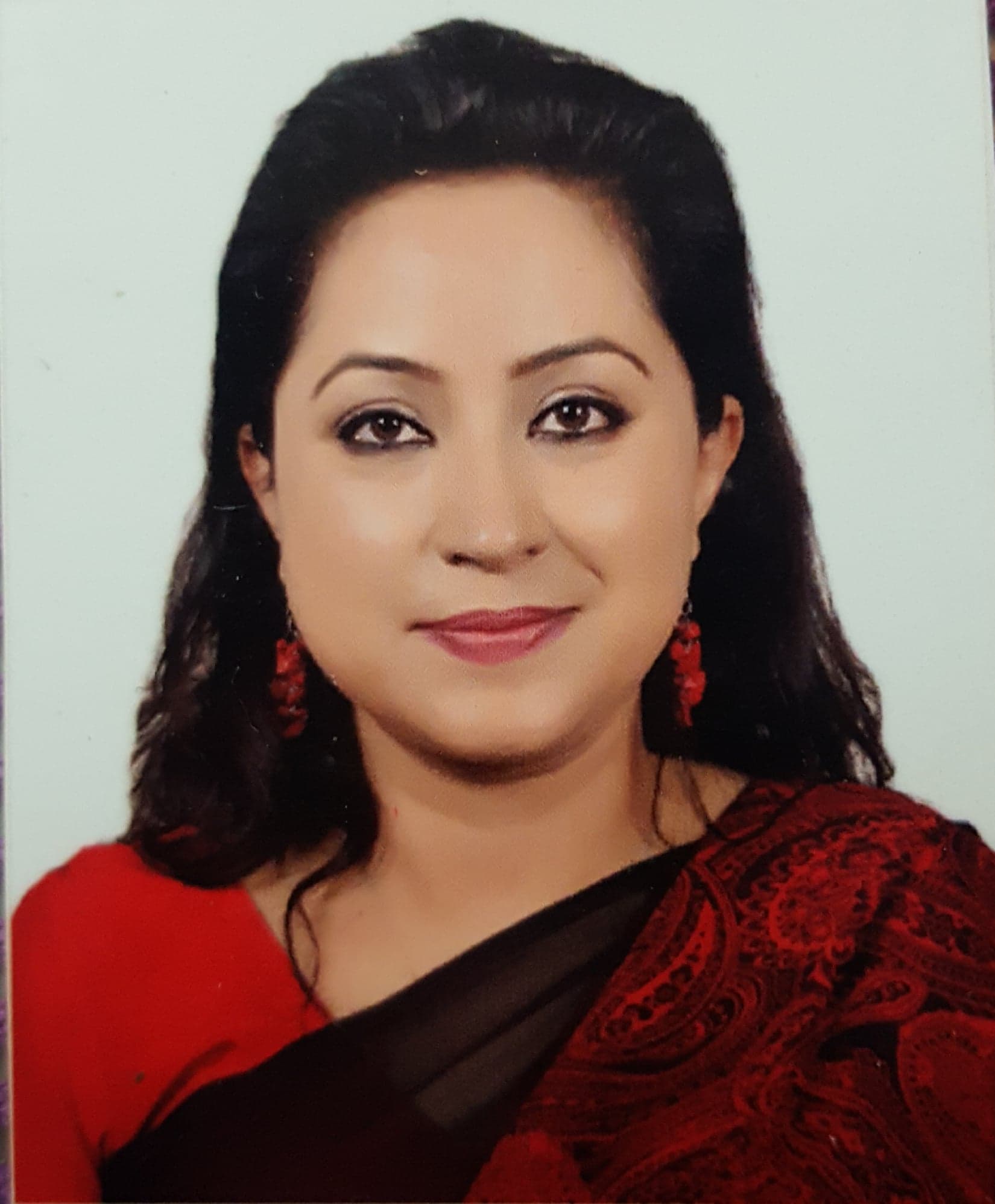
Shrestha holds a double major Bachelors degree in Design Technology and Visual Art from Bemidji State University in the USA. Maharjan completed his Bachelors of Arts from Lalit Kala Campus and is a former art teacher of Lincoln School.
Republica Arts caught up with the two to talk about art and on everything else concerning art.
“Art and creation are two different things,” states Maharjan and explains his view. “Everyone is creating, from an interior designer to a tailor, but it is the use of creativity, the exercising of thoughts, that makes a work of art.” People usually think that art doesn’t require thinking, but it requires as much as exercising of the brain as does science and mathematics, he opines.
“Art is a medium of bringing your thoughts into reality,” puts in Shrestha, standing in middle of the studio. When it comes to aesthetics of a work, while it is essential, she doesn’t believe that it is always the reason behind a successful piece of work.

“At a recent exhibition, one of my paintings was sold because it reminded the purchaser of her childhood,” she informs, adding that there were much more visually beautiful works in the same gallery. She herself connects to works that evoke her memory visually.
“And I think artists shouldn’t limit themselves in any way, be it the materials they use or the subject matter of their works,” expresses Shrestha, who appreciates the freedom of hand and still sketches out her images on paper before working on the computer. The material is more dependent on what the artist is trying to express and that can sometimes be a drawing or a sculpture.
However, Maharjan doesn’t necessarily agree with his friend’s viewpoint of being open to the use of various materials.
“I’ve been using clay for the past 10 years and it’s my weapon,” he claims with the conviction that if you know your material well enough, you can use it to express any thought.
Maharjan, who has dyslexia, was demoralized as a kid because he couldn’t read properly. “My teacher saw my drawings one day and showed it to everyone. It was art that uplifted me,” he confides.
While Maharjan asserts that sticking to one material doesn’t limit an artist, other boundaries, from social to economical, can refrain an artist to create ‘pure’ works and to become ‘free.’
“An artist’s work can only be pure if he or she can think freely,” Maharjan puts in. One such artist to him is Shashi Bikram Shah. “He makes his horses for himself and it doesn’t matter to him if people like it or not,” says Maharjan, who hopes to be a free artist and create pure works in the future.
Currently, Maharjan mostly makes commissioned works of portraits and confesses that they aren’t necessarily creative since they are reproductions. Nonetheless, he is highly attached to his life-sized sculptures, since families, who commission him, value them emotionally and not just aesthetically.
“Well, I for one think artists shouldn’t actually give themselves a title such as ‘The first modern artist of Nepal’,” Shrestha argues on the tendency of Nepali artists to brand their works and themselves.
Digressing into another topic, she apprises, “I never think that my works are complete because art to me is a process of learning and I continuously surprise myself with what I arrive at, during my explorations.”
Personal viewpoints aside, when asked the question ‘What is art to you, in a word?’ Maharjan says, without a pause, “Dream.” Shrestha laughs, “I was going to say ‘imagination’.”
Related story
UML removes 70-year age limit, paving the way for Oli to hold t...