KATHMANDU, Nov 7: The government has begun formulating a comprehensive election security strategy for the upcoming House of Representatives election on March 5, as security agencies warn of heightened threats in the aftermath of the Gen Z movement.
Officials say this election is likely to pose greater challenges than the November 2022 polls, citing serious security concerns following the September 9 vandalism during the Gen Z protests, when thousands of prisoners escaped and hundreds of weapons were stolen.
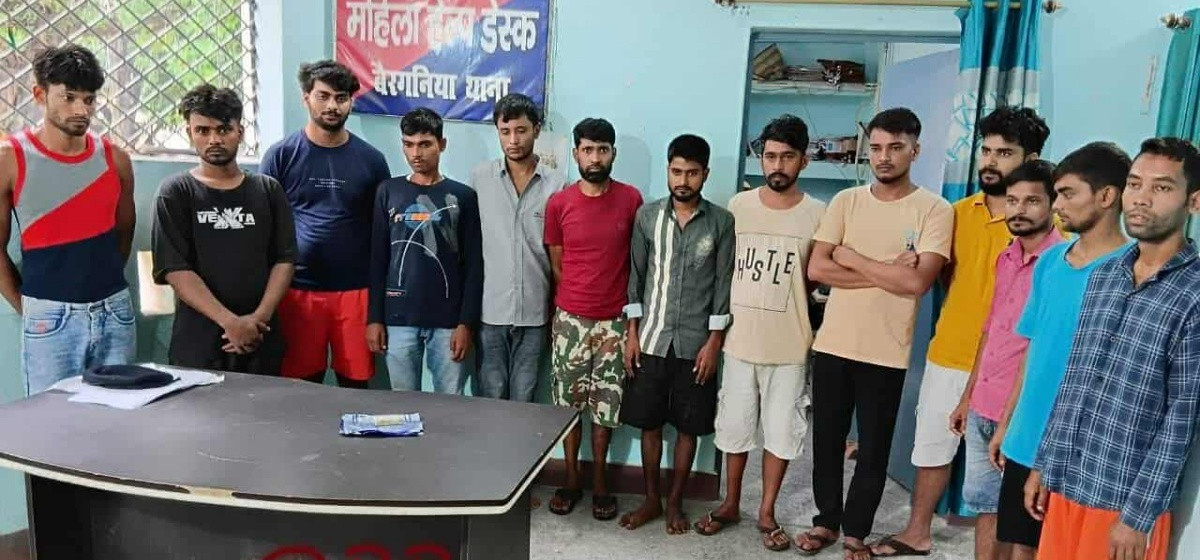
According to the security agencies, over 1,200 weapons were looted or burned during the unrest. Hundreds of weapons are still missing, raising fears they could be misused during the election period. Compounding the risk, about 5,000 escaped prisoners remain at large out of the 15,000 who fled custody.
Kavre jail prisoners demand transfer of their 'leaders'

Officials fear that both the missing weapons and escaped inmates could be exploited for political or criminal purposes. Home Minister Om Prakash Aryal had earlier warned political parties not to engage such individuals or make use of the stolen arms.
“Our analysis shows that those weapons have not reached any organized group and are scattered in an uncoordinated manner. We will recover them by any means possible,” Minister Aryal told journalists on October 19. “However, political parties must make a public commitment that they will neither use nor support escaped prisoners or these weapons for political purposes.”
In preparation for the elections, the Nepali Army has formed an Election Task Force to develop a comprehensive deployment and mobilization plan based on threat assessments and regional sensitivities. On November 2, Chief of Army Staff Ashok Raj Sigdel chaired a high-level meeting at Army Headquarters to discuss election security arrangements. The meeting was attended by the Inspectors General of Nepal Police and the Armed Police Force (APF) and the Chief Investigation Director of the National Investigation Department (NID).
The Ministry of Home Affairs (MoHA) has also formed a separate committee to coordinate the overall security plan. The committee, led by Joint Secretary Ananda Kafle, includes representatives from Nepal Police and the APF.
Each security agency — the Nepali Army, Nepal Police, and APF — will prepare its own security action plan and submit it to the Home Ministry’s coordination committee. Based on these inputs, the Central Security Committee will finalize a national Election Security Strategy in consultation with the Election Commission.
Once the central strategy is approved, each agency will establish its own internal units to implement the plan in alignment with the national framework.
Meanwhile, the Nepal Police Headquarters has instructed all District Police Offices to conduct detailed studies of polling station infrastructure and classify polling centers according to their level of security sensitivity — categorized as medium, sensitive, or highly sensitive. Police are also assessing the physical condition of polling sites that were damaged during the September 9 protest.
To address logistical challenges, the government has approved the purchase of 85 new four-wheelers ahead of the election. Procurement of other essential police equipment is also underway. In addition, the government plans to recruit temporary police personnel for election duties, following the regular practice used in previous national polls.