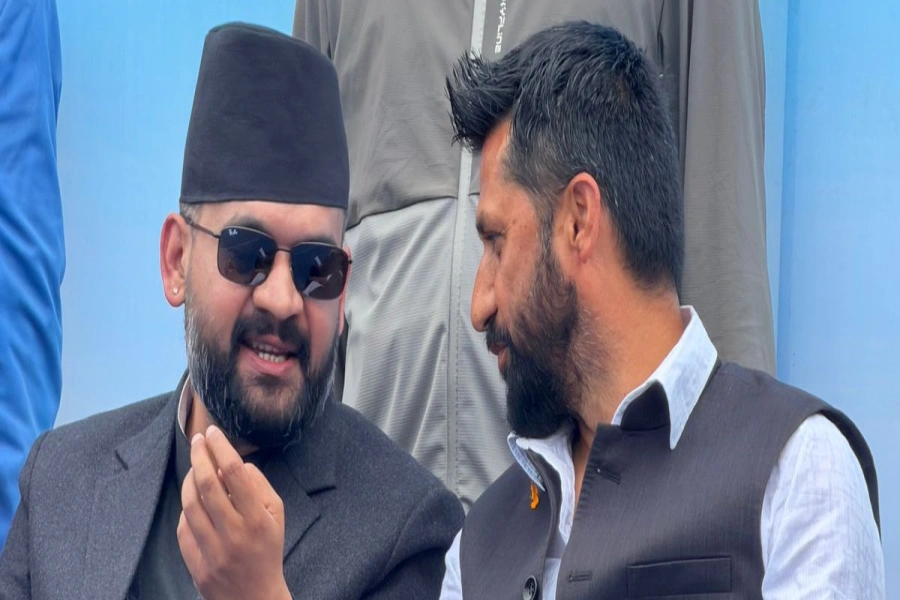
The Supreme Court should never have been bothered with the case of ‘hooliganism’. Nepal Police and the Home Ministry should have had the commonsense not to start such an inane initiative in the first place. Thankfully, better sense has prevailed among the two Supreme Court judges who on Sunday directed the police to immediately halt its misguided drive to check ‘hooliganism’ that it has been carrying out over the past few months. The joint bench of Sushila Karki and Kalyan Shrestha has rightly observed that “the clothes an individual chooses to wear or the decision to keep the hair or beard long is clearly a personal choice,” and “…this personal freedom cannot be violated in the name of controlling crime or any other excuse.” In a brazen mockery of rule of law, more than 1,000 men with long hair and/or wearing earnings have been arrested so far, mostly under the Public Offence Act for “making noise or loitering”.
This overzealous policing predictably came under a lot of heat. There is enormous public anger at the functioning of the country’s security organs, especially Nepal Police, which is easily among the most corrupt (and dysfunctional) government bodies. The police force is so toothless that even hardcore criminals convicted in a court of law are walking the streets in broad daylight. The campaign against long-haired men was perhaps aimed at driving the public attention away from its shortcomings. The apex court has halted this travesty of justice and set the right precedent by speaking out clearly in favor of personal freedom and basic rights, which cannot be curtailed under any circumstances in a functioning democracy. The police, hopefully, have learnt their lesson.[break]
The lesson is that people cannot be stereotyped on the basis of their looks, which could lead the country down a slippery slope of rights violations. Time and again, authoritarian regimes in the past have tried to justify brutal crackdowns on personal freedom in the name of saving the society from ‘hooligans’. This sort of state-sanctioned moral policing easily seeps down to the grassroots. Last year, a married woman and a man were banished from Ayodhyapur VDC in Siraha by local panchayat for allegedly having illicit relations. The villagers had shorn off their hair, smeared soot on their faces and garlanded them with shoes before parading them before the village, while the police looked on from the sidelines. Many women who have been harassed in public for such ‘illicit relationships’ have taken their own lives in utter humiliation. It is important to realize that these incidents are a reflection of the society we live in. We all are a part of this same society. As such, each of us needs to be aware of our deep-seated prejudices and make a conscious effort to abandon our judgmental lens, much like the two apex court judges on Sunday. After its path-breaking decisions on the rights of women and LGBT community in the past few years, the Supreme Court has once again acted as a bulwark of social transformation. At least something is working in this beleaguered country.
Related story
Civic Society in Dolpa helps mentally ill youth regain his sani...